

BLOG
Topical Authority On A New Blog

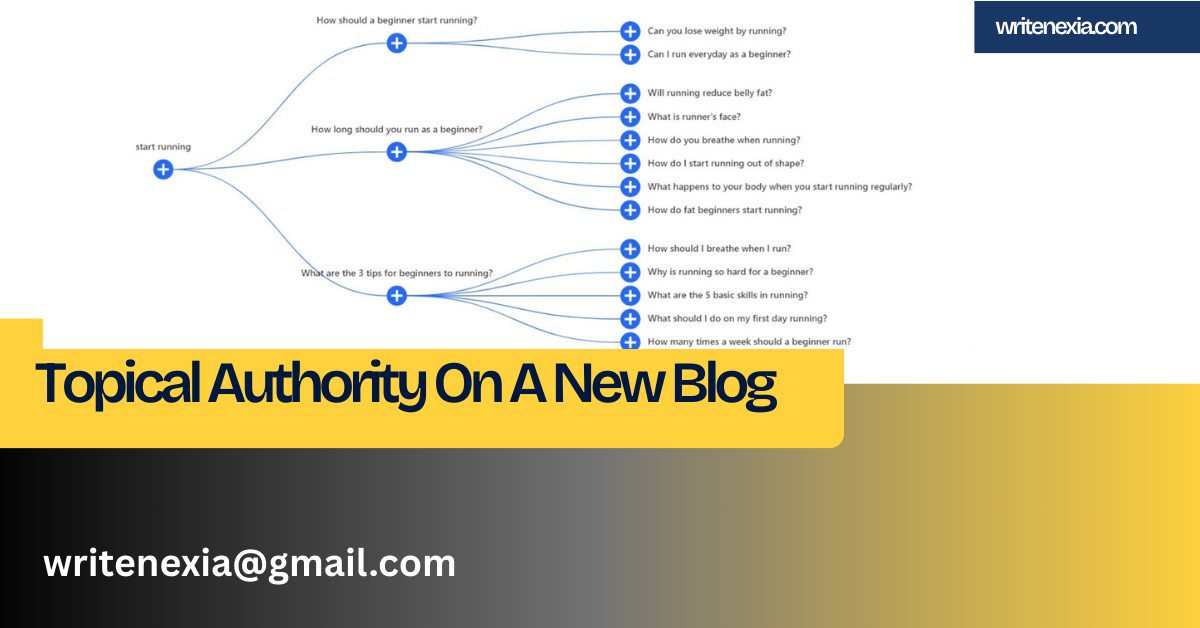

What is topical authority on a new blog ?
A focused blog demonstrates topical authority when its content set answers core questions, uses consistent vocabulary, and connects related pages so search engines and readers treat the site as a reliable source on that subject. This article explains stepwise planning, content structure, technical signals, and editorial practices that make a new blog grow credible coverage of a niche.
- How to do the best topical authority plan step by step?
- Plan in clear phases: niche definition, keyword map, content hub, internal linking, update cycle, measurement.
- Begin by defining a narrow topic cluster. Map primary and secondary keywords to pillar pages and supporting posts. Create an editorial calendar that sequences pillar content, deep dives, and evergreen updates. Add internal links that reflect hierarchical relationships. Track organic signals and user behavior to refine the plan.
- Plan in clear phases: niche definition, keyword map, content hub, internal linking, update cycle, measurement.
- What to Include in topical authority websites ??
- Include pillar pages, cluster posts, reliable citations, structured metadata, and a logical URL hierarchy.
- Pillar pages present the core topic with comprehensive coverage and links to narrower articles. Cluster posts explore subtopics and solve specific user intents. Add author bylines, date stamps, citations to credible sources, and clear navigation. Use structured data and sitemap entries so crawlers understand the content relationships.
- Include pillar pages, cluster posts, reliable citations, structured metadata, and a logical URL hierarchy.
- What is Effective topical authority growth?
- Effective growth comes from depth, breadth, freshness, and user satisfaction signals.
- Publish clusters that cover subtopics thoroughly instead of isolated posts. Update cornerstone content periodically. Encourage engagement via useful tools, examples, or templates. Monitor bounce, time on page, and search visibility to guide topic expansion.
- Effective growth comes from depth, breadth, freshness, and user satisfaction signals.
- What is the Search intent or purpose?
- Search intent groups queries by informational, navigational, transactional, and local purposes.
- Analyze representative queries for each keyword to determine what users expect. Match content format to intent: how-to guides for informational queries, comparison pages for purchase research, and local landing pages for geo-specific needs. Provide direct answers near the top and deeper resources further down the page.
- Search intent groups queries by informational, navigational, transactional, and local purposes.
- What are the Key elements of a mistake?
- Common mistakes include scattered topics, weak internal linking, shallow content, and neglected updating.
- Avoid posting unrelated content that dilutes topical focus. Use internal links to show topical hierarchy. Prioritize depth; short, shallow posts harm perceived expertise. Schedule audits to refresh outdated facts and fix broken links.
- Common mistakes include scattered topics, weak internal linking, shallow content, and neglected updating.
- What are the Focus words and phrases?
- Focus words are tightly related keywords and phrases that repeat across pillar and cluster content to signal semantic relevance.
- Choose a concise set of head terms and related long-tail phrases for each cluster. Use those phrases naturally in headings, intro paragraphs, and anchor text. Track synonyms and entity names so the content covers related language users employ.
- Focus words are tightly related keywords and phrases that repeat across pillar and cluster content to signal semantic relevance.
- What are the internal links and anchor texts?
- Internal links connect pillar pages to cluster posts and use descriptive anchors that reflect the linked page’s topic.
- Build a hub-and-spoke link pattern centered on pillar pages. Use anchor text that matches target keywords or clear descriptions rather than generic phrases. Limit deep links from unrelated sections; prioritize contextual links inside relevant paragraphs.
- Internal links connect pillar pages to cluster posts and use descriptive anchors that reflect the linked page’s topic.
- What are the External links?
- External links cite authoritative sources, data, or tools that support factual claims and improve credibility.
- Link out to primary research, government data, accepted standards, or niche authorities when necessary. Prefer stable, high-quality references. Clearly mark citations and avoid excessive outbound linking that distracts users.
- External links cite authoritative sources, data, or tools that support factual claims and improve credibility.
- What are the topical authority build types??
- Build types include vertical depth, horizontal breadth, multimedia authority, and community-driven authority.
- Vertical depth focuses on exhaustive coverage of a narrow niche. Horizontal breadth covers many adjacent topics with consistent quality. Multimedia authority adds videos, charts, and interactive tools. Community-driven authority grows from forums, user contributions, and reputation signals.
- Build types include vertical depth, horizontal breadth, multimedia authority, and community-driven authority.
- What are the topical authority websites outline?
- An outline groups pages by intent: pillar, how-to, comparison, case study, FAQ, and data resources.
- Start with a pillar page that defines the topic and links to core clusters. Add practical how-tos and troubleshooting posts for common tasks. Include comparisons and decision frameworks for evaluative queries. Finish with a maintained FAQ and data reference pages for long-term use.
- An outline groups pages by intent: pillar, how-to, comparison, case study, FAQ, and data resources.
- What are the FAQs?
- FAQs surface short answers to high-frequency queries and link to deeper resources inside the cluster.
- Compile genuine user questions from search queries, comments, and support logs. Provide concise direct answers, then link to fuller guides. Update FAQ entries as new patterns emerge and keep them crawlable with clear markup.
- FAQs surface short answers to high-frequency queries and link to deeper resources inside the cluster.
- What are the topical authority websites which avoid trust?
- Sites that lack citations, contain contradictory topics, use anonymous authorship, or host spammy ads lose trust quickly.
- Remove unverifiable claims and add author credentials. Keep page topics coherent and avoid off-topic content that confuses crawlers. Reduce intrusive ads and ensure contact and privacy pages exist to signal legitimacy.
- Sites that lack citations, contain contradictory topics, use anonymous authorship, or host spammy ads lose trust quickly.
- How to Calculate the Estimated Word Count?
- Estimate word counts by topic depth and SERP expectations: pillar pages require thousands of words; supporting posts require fewer.
- Check top-ranking pages for target keywords to set a competitive range. Use a target band rather than a fixed number: pillar pages often sit between 2,000 and 6,000 words depending on complexity. Match length to intent rather than length alone.
- Estimate word counts by topic depth and SERP expectations: pillar pages require thousands of words; supporting posts require fewer.
- What are the Target Keywords?
- Target keywords include a primary head term and a set of secondary, related long-tail phrases for each content piece.
- Choose a single primary keyword per pillar and 5–15 relevant secondary keywords for cluster posts. Prioritize terms with clear intent and manageable competition. Map keywords to content types and update targets as rankings change.
- Target keywords include a primary head term and a set of secondary, related long-tail phrases for each content piece.
- 1. How to Research the Primary Keyword?
- Research primary keywords by volume, intent, competition, and relevance to your niche focus.
- Use keyword tools to gather search volume and difficulty metrics. Verify intent by analyzing SERP features and top result types. Select a head term that aligns with your expertise and offers a realistic ranking path for a new site.
- Research primary keywords by volume, intent, competition, and relevance to your niche focus.
- 2. How to Identify Relevant Secondary Keywords?
- Identify secondary keywords from related queries, “people also ask,” and long-tail variations found in the SERP.
- Extract question phrases and modifiers that users add to head terms. Group secondaries by subtopic and use them as headings or inside supporting posts. Track performance and prune underperforming variants.
- Identify secondary keywords from related queries, “people also ask,” and long-tail variations found in the SERP.
- How to Turn Your Content Briefs Into High-Converting Blog Posts?
- Convert briefs into posts by using clear objectives, target keywords, conversion points, and a defined structure.
- Start with a strong headline and an opening that answers the search intent. Break content into scannable sections with action-oriented subheadings. Include CTAs tied to the user stage and test placement for conversion lift.
- Convert briefs into posts by using clear objectives, target keywords, conversion points, and a defined structure.
- What is the Title Tag ?
- Title tags summarize page topics in a compact, keyword-focused phrase that appears in search results.
- Keep titles concise and descriptive with the primary keyword near the front. Use branding sparingly at the end. Avoid clickbait; match the on-page content to the promised value to maintain trust.
- Title tags summarize page topics in a compact, keyword-focused phrase that appears in search results.
- What is the Meta Description ?
- Meta descriptions give a short preview of page content for search results and influence click behavior.
- Write a clear one- or two-sentence description that highlights the page benefit and includes a target phrase. Keep it under the pixel limit by staying concise. Align the description with the headline to reduce misleading expectations.
- Meta descriptions give a short preview of page content for search results and influence click behavior.
- What is the Article Outline?
- An effective outline lists the main sections, key points, and internal links before writing begins.
- Draft an opening that answers the core query. Add 3–6 focused sections that expand on subtopics. Include specific internal links, example snippets, and a closing that prompts the desired action. Use the outline to speed production and keep content consistent.
- An effective outline lists the main sections, key points, and internal links before writing begins.
- What are the Headings?
- Headings form the content hierarchy and communicate topical structure to readers and crawlers.
- Use one H1 per page, descriptive s for main sections, and /H4 for nested points. Include target phrases naturally in s and use s for supporting questions or examples. Keep headings scannable and consistent across the cluster.
- Headings form the content hierarchy and communicate topical structure to readers and crawlers.
- What are the Voice and Tone Guides?
- Voice defines persona; tone adapts to context. A guide aligns language, formality, and technical depth across content pieces.
- Document target audience, use case, level of technicality, and example phrases. Specify grammar preferences and banned words. Share concise voice examples so writers maintain a unified brand presence across posts.
- Voice defines persona; tone adapts to context. A guide aligns language, formality, and technical depth across content pieces.
- how to Shaping the content according to the target audience
- Shape content by audience knowledge level, job role, and the problem they want solved.
- Segment readers into personas and tailor examples and depth accordingly. Use plain language for beginners and annotated detail for experts. Add navigational cues like “for beginners” or “advanced tip” to serve multiple audiences on one page.
- Shape content by audience knowledge level, job role, and the problem they want solved.
- how to Defining and refining your content strategy
- Define strategy by goals, audience, editorial scope, KPI targets, and publication cadence; refine using performance data.
- Set measurable objectives such as organic traffic, leads, or rankings. Choose topics that map to business goals and audience needs. Review analytics monthly and adjust priorities based on user behavior and search trends.
- Define strategy by goals, audience, editorial scope, KPI targets, and publication cadence; refine using performance data.
- Tips for Producing a Great Copywriting Brief
- A strong brief contains target audience, goal, keyword targets, required links, and tone samples.
- Provide a clear one-sentence objective and the main conversion action. List primary and secondary keywords, required internal links, sources to cite, and any formatting rules. Include a sample paragraph to demonstrate the desired voice.
- A strong brief contains target audience, goal, keyword targets, required links, and tone samples.
- 1. Look For Ways to Stand Out From the Competition?
- Differentiate by unique data, original frameworks, or specialized examples that competitors lack.
- Add proprietary case studies, tools, or unique visuals. Offer step sequences, templates, or downloadable assets that add practical value. Distinctive content reduces direct comparison and increases shareability.
- Differentiate by unique data, original frameworks, or specialized examples that competitors lack.
- 2. Provide Context for the Writer Where Necessary?
- Context prevents misalignment and speeds accurate content production.
- Describe the audience, prior coverage, and specific gaps the writer must fill. Attach reference links and explain acceptable assumptions. State which claims require citations and which can be treated as opinion.
- Context prevents misalignment and speeds accurate content production.
- 3. Include Internal Links With Descriptive Anchor Text?
- Descriptive anchors clarify link targets and reinforce topical relationships.
- Provide a short list of recommended anchor phrases and matching target URLs in the brief. Use anchors that mirror the linked page’s subject. Avoid repetitive generic anchors.
- Descriptive anchors clarify link targets and reinforce topical relationships.
- How to Create Self-Sustainable B2B Content?
- Self-sustainable B2B content educates buyers, supports sales, and updates automatically with modular components.
- Build evergreen pillar content, templates, and data pages that sales teams reuse. Add schematized case studies and modular blocks that update as products change. Train internal teams to contribute updates and curate performance-driven refresh cycles.
- Self-sustainable B2B content educates buyers, supports sales, and updates automatically with modular components.
- How to Choose a Content Hub: 6 Types and Examples?
- Content hub types: pillar hub, resource library, tool hub, case study hub, FAQ hub, and community hub.
- Choose pillar hubs for deep topical coverage. Use resource libraries to collect data and downloads. Tool hubs host calculators or widgets. Case study hubs highlight customer results. FAQ hubs handle quick answers and channel-specific queries. Community hubs aggregate user contributions and build social proof.
- Content hub types: pillar hub, resource library, tool hub, case study hub, FAQ hub, and community hub.
- How Content Readability Affects SEO and Rankings?
- Readability influences user engagement metrics that search engines use as relevance signals.
- Clear, scannable content reduces bounce and increases time on page. Use short sentences, subheadings, lists, and examples. Improve accessibility and mobile reading to boost organic performance.
- Readability influences user engagement metrics that search engines use as relevance signals.
- What is the Privacy Preference Center?
- A privacy preference center lets users control cookies, tracking, and data usage in a transparent way.
- Implement a clear interface for consent choices and granular settings. Record consent and provide easy opt-out mechanisms. Link the center to the privacy policy and make it accessible from every page.
- A privacy preference center lets users control cookies, tracking, and data usage in a transparent way.
- Why Our Social Media Service Website Stands Out:?
- Distinction arises from niche focus, clear service descriptions, and topic-led educational content.
- Present case studies, role-specific guides, and a content hub that addresses common client problems. Use topical clusters that align with buyer journeys rather than scattered marketing pages. Highlight measurable outcomes and transparent processes.
- Distinction arises from niche focus, clear service descriptions, and topic-led educational content.
- How are friendly topical authority websites Used?
- User-friendly authority sites serve researchers, buyers, and community members through search-optimized, navigable content.
- Provide clear paths from high-level overviews to hands-on tutorials. Offer downloadable assets and FAQ sections for quick answers. Maintain consistent structure so returning users find related resources easily.
- User-friendly authority sites serve researchers, buyers, and community members through search-optimized, navigable content.
- Who Are You Writing This For?
- Identify primary personas and write to their knowledge level, goals, and preferred formats.
- List demographic and role details, common problems, and the preferred content type for each persona. Tailor examples and CTAs to personal tasks to increase relevance and conversions.
- Identify primary personas and write to their knowledge level, goals, and preferred formats.
- What Is Your Goal for Creating Content?
- Define a measurable goal such as organic traffic, lead conversions, or product adoption.
- Align topics and CTAs with that goal. Choose KPIs to evaluate success and set a testing cadence. Use goals to prioritize resource allocation across the editorial calendar.
- Define a measurable goal such as organic traffic, lead conversions, or product adoption.
- What Action Do You Want Users to Take?
- Define the exact conversion action—subscribe, request demo, download, or read another article—and place clear CTAs.
- Match the CTA to the page intent; use soft CTAs for informational pages and direct CTAs on buyer-focused pages. Measure CTA clicks and conversions to optimize placement and copy.
- Define the exact conversion action—subscribe, request demo, download, or read another article—and place clear CTAs.
- What is SEO Research?
- SEO research gathers keyword data, competitor signals, technical issues, and user intent to inform content decisions.
- Combine keyword tools, SERP analysis, and crawl reports. Identify gaps where your site can provide unique value. Prioritize opportunities by effort versus expected impact.
- SEO research gathers keyword data, competitor signals, technical issues, and user intent to inform content decisions.
- User Intent and SERP Analysis
- SERP analysis decodes the content types and features that satisfy user intent for a given query.
- Examine top results to see whether users expect lists, long-form guides, videos, or product pages. Note featured snippets, knowledge panels, and people-also-ask items. Use those signals to shape format and headings.
- SERP analysis decodes the content types and features that satisfy user intent for a given query.
- What is the importance of a topical authority plan?
- A plan accelerates consistent coverage, reduces duplicate effort, and directs resources to high-impact topics.
- Treat the plan as a roadmap that sequences pillar creation, link building, and updates. Plans prevent scattered content and concentrate ranking signals. Track progress against KPIs to validate investments.
- A plan accelerates consistent coverage, reduces duplicate effort, and directs resources to high-impact topics.
- What is blog authority?
- Blog authority emerges from consistent expertise, trustworthy sourcing, and strong on-site topical structure.
- Publish original analysis, cite reputable references, and build coherent clusters. Use author bios and external endorsements to amplify credibility. Maintain technical SEO and UX standards.
- Blog authority emerges from consistent expertise, trustworthy sourcing, and strong on-site topical structure.
- how to create authoritative content for google
- Authoritative content combines accurate facts, clear sourcing, expert perspective, and comprehensive coverage of related subtopics.
- Use primary sources and data whenever possible. Add author credentials and methodological notes. Cover common counterpoints and practical examples to demonstrate depth.
- Authoritative content combines accurate facts, clear sourcing, expert perspective, and comprehensive coverage of related subtopics.
- What is building authority?
- Building authority uses content quality, backlinks from relevant sites, user engagement, and consistent branding.
- Create resources that other creators reference. Promote content in relevant communities and on industry channels. Keep information current and respond to reader feedback.
- Building authority uses content quality, backlinks from relevant sites, user engagement, and consistent branding.
- What are authority methods?
- Methods include pillar-led content strategy, expert interviews, original research, and strategic outreach for backlinks.
- Run surveys or data analyses to produce unique assets. Publish whitepapers and synthesize findings into accessible posts. Use outreach to secure citations and guest placements on aligned sites.
- Methods include pillar-led content strategy, expert interviews, original research, and strategic outreach for backlinks.
- What are unique voice seo pillars?
- Unique voice pillars combine consistent perspective, branded terminology, repeatable examples, and a signature structure that differentiates content.
- Define a small set of tonal and structural rules that guide every post. Use recurring metaphors, frameworks, or checklist formats to build recognition. Train writers to apply the voice while preserving factual accuracy.
- Unique voice pillars combine consistent perspective, branded terminology, repeatable examples, and a signature structure that differentiates content.
- What are targeted serp seo pillars?
- Targeted SERP pillars focus on formats and features present in top results: snippets, lists, comparisons, and video.
- Optimize pillar pages to capture specific SERP features by providing structured answers, tables, and clear step sequences. Include schema where appropriate and offer multimedia to match user expectations.
- Targeted SERP pillars focus on formats and features present in top results: snippets, lists, comparisons, and video.
- how to create a topical map seo?
- A topical map lists main topics, subtopics, keywords, and content forms with internal link paths drawn between them.
- Start with the pillar topic and branch into logical subtopics. Assign each node a content type and target keyword set. Use the map to plan publishing order and internal link structure.
- A topical map lists main topics, subtopics, keywords, and content forms with internal link paths drawn between them.
- What are building brand authority seo?
- Brand authority via SEO ties consistent topical coverage to recognizable brand signals like recurring frameworks, authorship, and data assets.
- Publish signature content that hosts proprietary insights. Ensure site structure, navigation, and metadata reflect the brand’s expertise. Encourage external citations through partnerships and research.
- Brand authority via SEO ties consistent topical coverage to recognizable brand signals like recurring frameworks, authorship, and data assets.
- What are topical authority ahrefs?
- In Ahrefs, topical authority appears as clustered keywords, traffic to pillar pages, and backlinks to core content.
- Use Ahrefs’ site explorer and keywords explorer to identify cluster coverage and backlink patterns. Track the number of ranking keywords per topic and monitor growth over time to validate topic dominance.
- In Ahrefs, topical authority appears as clustered keywords, traffic to pillar pages, and backlinks to core content.
- define topical order ?
- Topical order is the prioritized sequence of publishing topics and subtopics to build coherent expertise quickly.
- Rank topics by strategic value, search demand, and ability to interlink. Publish foundational pillars first, then follow with supporting posts that feed traffic and internal authority to pillars.
- Topical order is the prioritized sequence of publishing topics and subtopics to build coherent expertise quickly.