
BLOG
24 Creative Science Room Decor for Your Classroom

Creating a visually engaging and educational science classroom is essential for inspiring curiosity and fostering a love for STEM among students. A thoughtfully designed environment encourages exploration, critical thinking, and hands-on learning, making complex scientific concepts more accessible and exciting. By combining interactive learning tools, colorful visuals, and functional setups, teachers can create a space that is both stimulating and organized. Well-designed science classrooms help students stay focused, motivated, and eager to participate in lessons and experiments.
Creative science room decor goes beyond aesthetics—it enhances comprehension and engagement while providing a structured and inspiring learning environment. Incorporating elements like themed bulletin boards, lab-inspired furniture, DIY project displays, and interactive charts transforms ordinary classrooms into dynamic STEM hubs. These 24 ideas offer teachers practical ways to integrate education with creativity, encouraging collaboration, experimentation, and problem-solving. A thoughtfully decorated science classroom not only supports learning objectives but also makes students feel welcomed, inspired, and excited to explore the wonders of science.
1. Periodic Table Wall
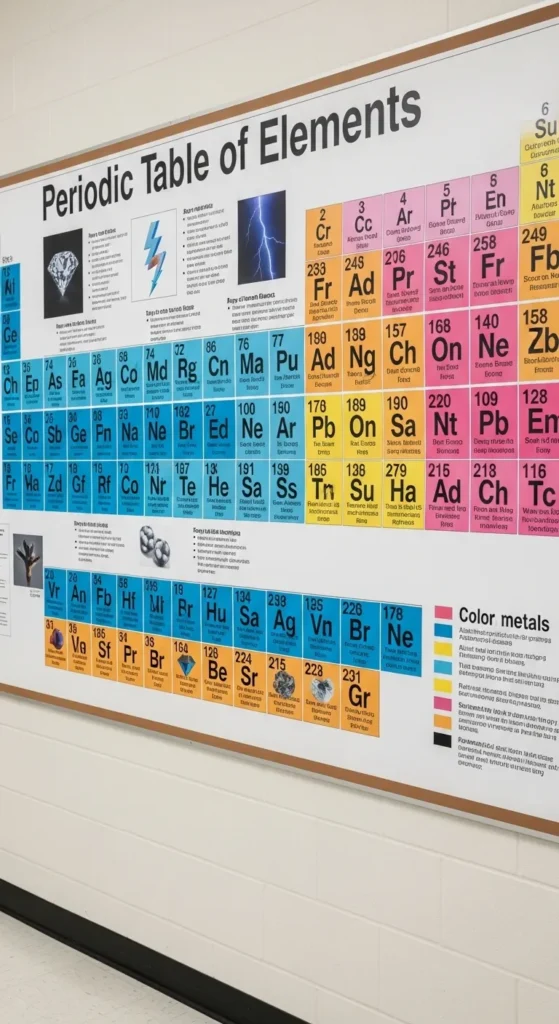
A periodic table wall acts as both an educational tool and a striking visual feature, instantly enhancing the look of a science classroom. Large, colorful displays with clearly labeled elements help students quickly identify key information while reinforcing concepts learned in lessons. Including images, diagrams, and fun facts adds context, making abstract chemistry topics easier to understand. This approach sparks curiosity, encourages observation, and promotes active engagement with the material, turning a static wall into a dynamic learning resource.
Teachers can expand the wall’s utility by integrating quizzes, interactive challenges, or group activities that involve locating elements, calculating atomic numbers, or discussing properties. Highlighting an “element of the week” or updating fun facts regularly keeps students interested and encourages ongoing exploration. This interactive and adaptable display not only supports comprehension but also elevates classroom aesthetics, making the periodic table wall a central, functional, and inspiring feature of creative science room decor.
2. Science-Themed Bulletin Boards
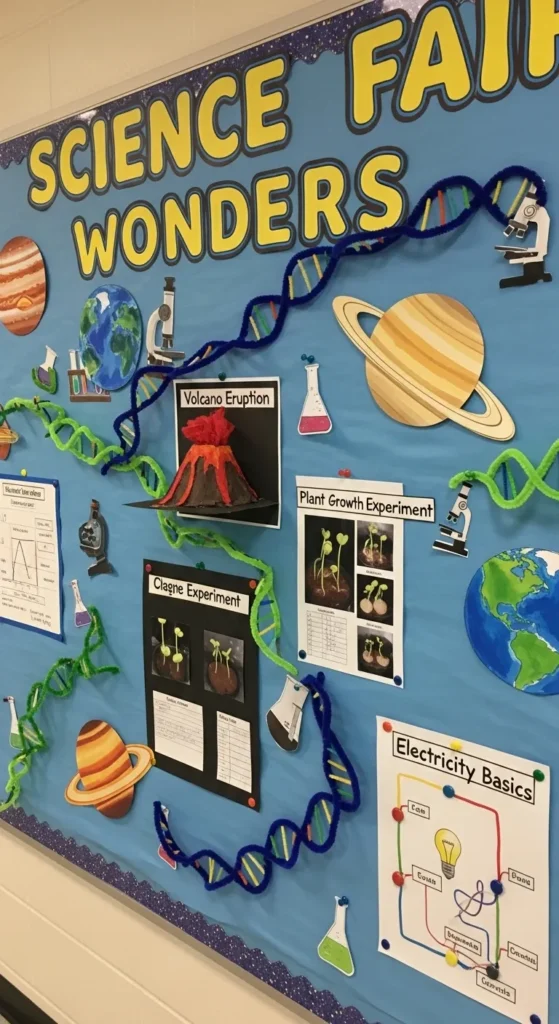
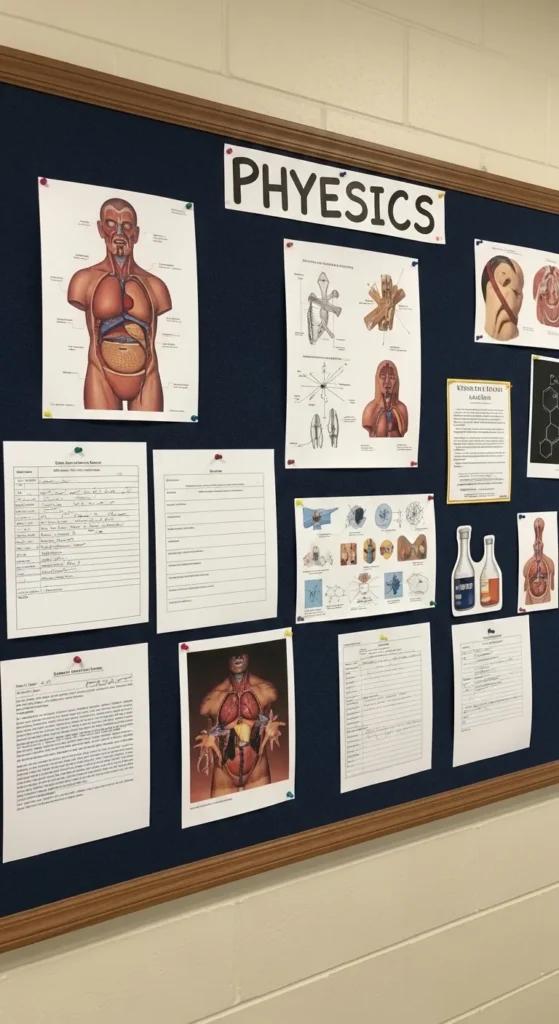
Science-themed bulletin boards are an excellent way to merge decoration with hands-on learning, transforming classroom walls into engaging educational tools. By displaying topics such as planets, DNA structures, lab equipment, or student-created projects, these boards provide a visually stimulating environment that reinforces key scientific concepts. Colorful backgrounds, layered visuals, and interactive elements make lessons more approachable, helping students better understand and remember information while keeping the classroom atmosphere lively, motivating, and inspiring curiosity about STEM subjects.
Teachers can maintain student interest by updating bulletin boards regularly to highlight new topics, showcase student achievements, or incorporate seasonal STEM themes. Adding interactive components like flaps, question prompts, or mini-experiments encourages active participation and critical thinking. These boards not only enhance learning but also foster creativity, collaboration, and engagement. As a versatile and dynamic element, science-themed bulletin boards are a cornerstone of creative science room decor, combining functionality, education, and aesthetic appeal.
3. Lab Equipment Displays
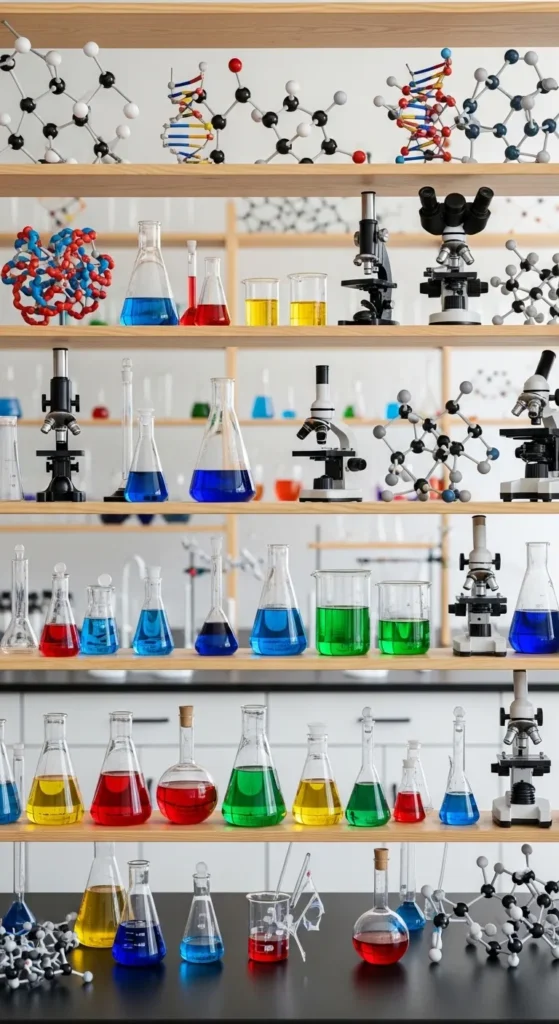
Displaying lab equipment in a classroom creates an immersive and authentic STEM environment that naturally sparks student curiosity. Neatly arranging beakers, microscopes, flasks, and chemical models on shelves allows learners to see and understand real scientific tools while connecting theoretical concepts to practical applications. These visual displays serve as constant reference points, reinforce lesson content, and encourage students to explore, question, and engage actively with the material, making abstract science concepts more tangible and approachable.
Teachers can enhance the educational impact by rotating the displays or introducing interactive models that students can handle safely under supervision. Pairing the setup with mini-experiments, demonstrations, or discussion prompts helps make lessons more engaging and hands-on. Lab equipment displays not only support comprehension but also contribute aesthetically to the classroom, making them a vital component of creative science room decor that blends functionality, inspiration, and learning seamlessly.
4. STEM Project Corners
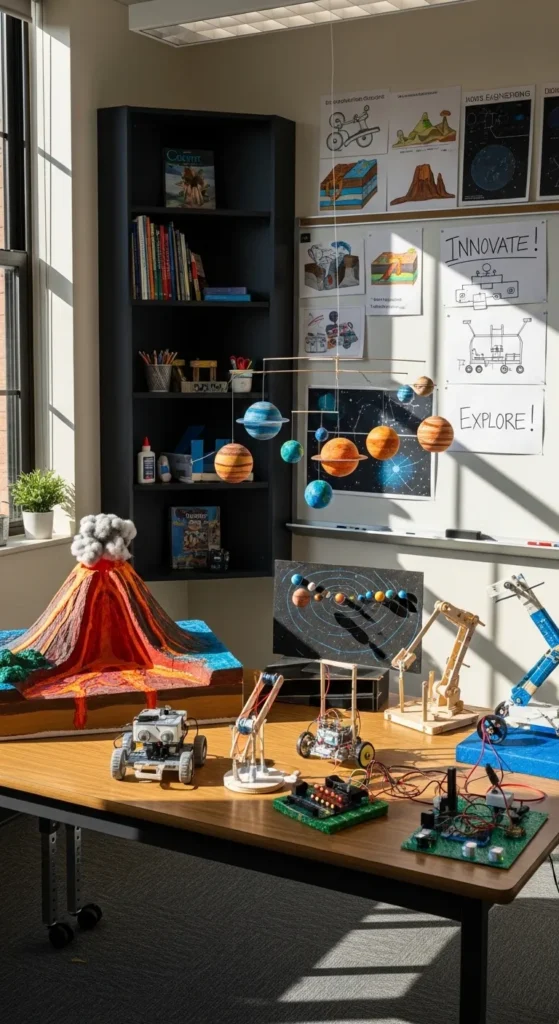
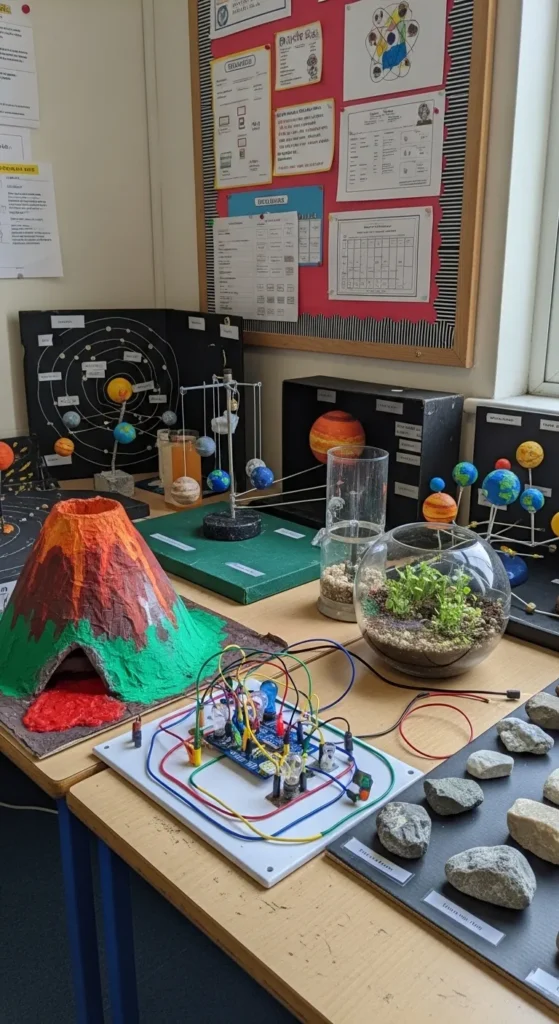
STEM project corners provide a dedicated space where students can engage in hands-on learning, explore scientific concepts, and express creativity. By displaying student-made models such as volcanoes, solar systems, robotics projects, or engineering experiments, these corners inspire peers to try new activities and develop critical thinking and problem-solving skills. The visual and practical reinforcement of scientific ideas makes lessons more memorable, while showcasing student work fosters a sense of pride and accomplishment, turning the classroom into an interactive and motivating STEM environment.
Regularly rotating the projects keeps the corner fresh, dynamic, and exciting for students, encouraging continuous participation and curiosity. Teachers can enhance the space by including step-by-step guides, prompts, or challenges that stimulate exploration and independent thinking. STEM project corners combine education, inspiration, and creativity, making them a fundamental element of creative science room decor. They provide an engaging platform for students to innovate, collaborate, and celebrate their learning achievements.
5. Interactive Science Charts
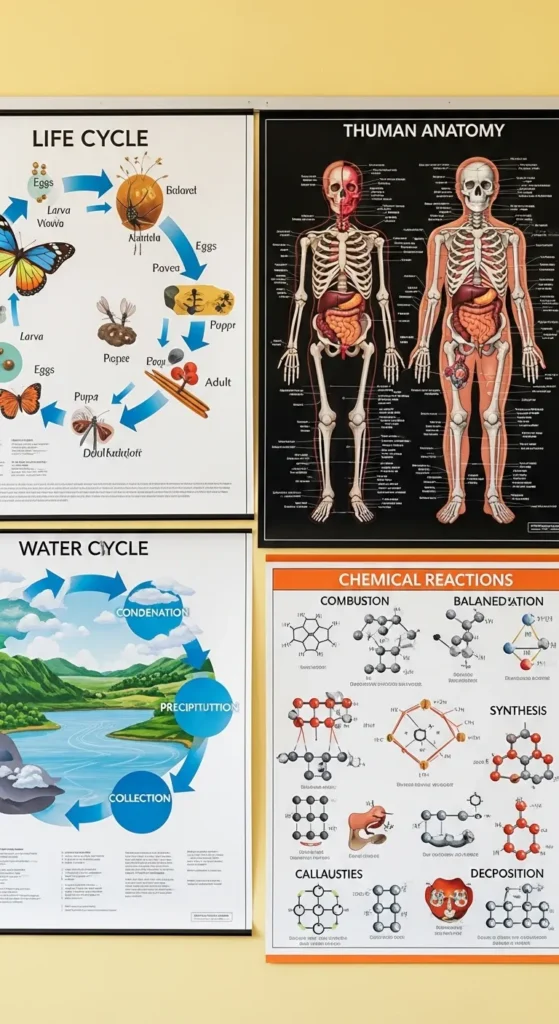
Interactive science charts are a powerful tool for helping students visualize and understand complex scientific processes. Charts illustrating topics like the water cycle, human anatomy, chemical reactions, or life cycles provide a constant visual reference, reinforcing key concepts taught in class. Using clear labels, colorful illustrations, and organized layouts makes abstract ideas more accessible, aiding memory retention and comprehension. These charts not only support learning but also enhance the classroom environment, making lessons engaging, informative, and visually appealing.
Incorporating interactive elements such as flaps, movable parts, or question prompts encourages students to engage directly with the material. Hands-on interaction allows learners to explore concepts, make observations, and answer questions, fostering active participation and critical thinking. Interactive science charts blend functionality with aesthetic appeal, making them both an educational and decorative feature. They are an essential component of creative science room decor, supporting student understanding while adding vibrancy and interactivity to the classroom.
6. Planet and Space Displays
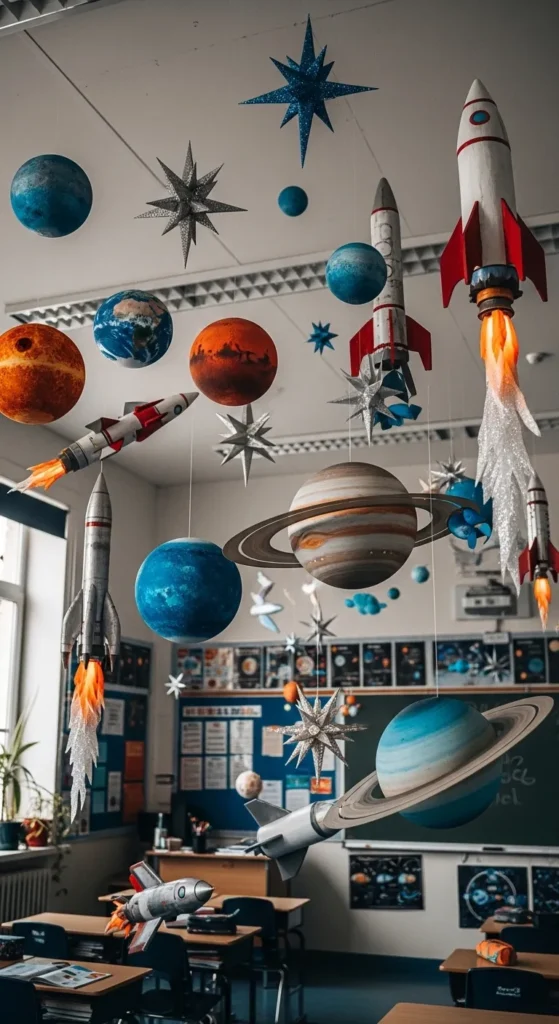
Planet and space displays transform a classroom into a captivating, immersive STEM environment. Hanging 3D planets, stars, and rockets from the ceiling inspires curiosity about astronomy and the universe. These displays allow students to explore celestial bodies visually and spark excitement for space-related topics.
Teachers can enhance the setup with interesting facts about planets, missions, or astronomical phenomena. Integrating interactive elements like small quizzes or observation prompts encourages students to explore actively. Space-themed displays are a popular and engaging component of creative science room decor, merging fun, aesthetics, and learning.
7. Lab Safety Posters
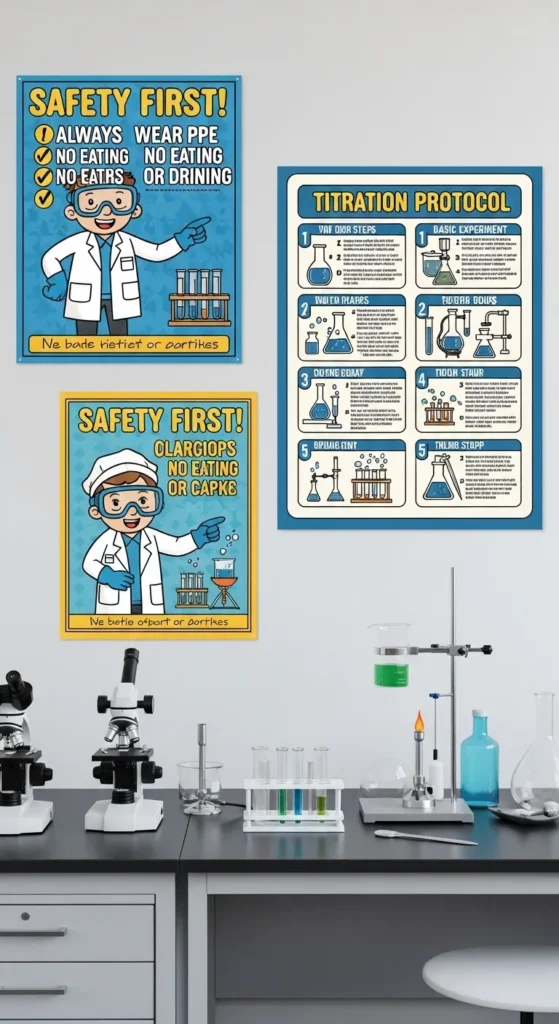
Lab safety posters are essential for educating students about proper handling of scientific equipment and chemicals. Bright, illustrated posters with clear step-by-step instructions make safety rules accessible and easy to remember. These visuals help prevent accidents and foster responsibility during lab activities.
In addition to promoting safe practices, lab safety posters also add a decorative and informative element to the classroom. Displaying them prominently reinforces their importance while enhancing the learning environment visually. They are a fundamental part of creative science room decor, blending safety education with aesthetic appeal.
8. Microscope Stations
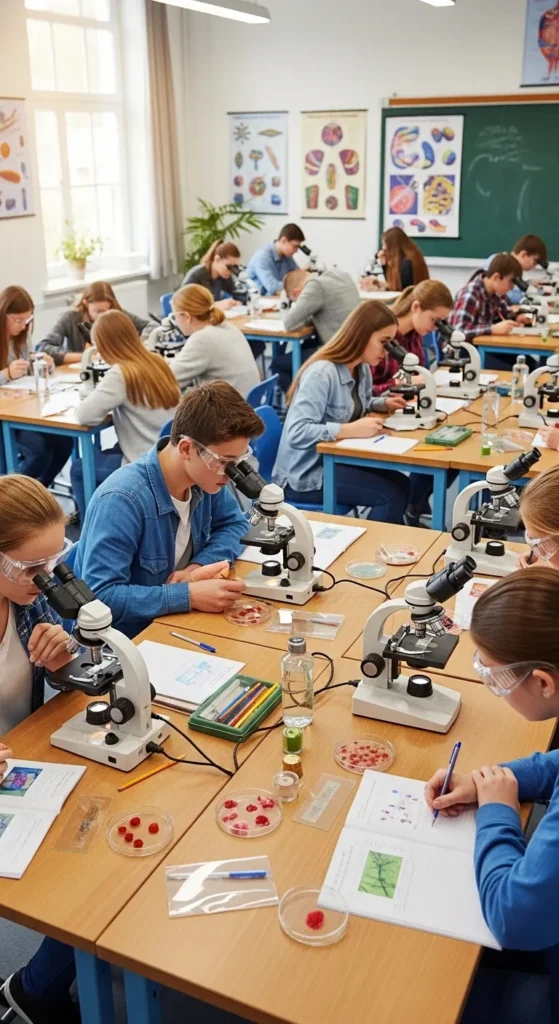
Microscope stations provide interactive, hands-on learning opportunities for students to explore cells, microbes, and small organisms. Organized stations with microscopes, slides, and samples encourage curiosity, observation, and critical thinking skills. These setups make biology lessons more engaging and practical.
Structured arrangements ensure safety and easy access while promoting collaborative learning. Teachers can rotate samples or introduce new specimens to maintain student interest. Microscope stations are an effective component of creative science room decor, combining functionality, exploration, and immersive scientific experience.
9. Science Quote Wall
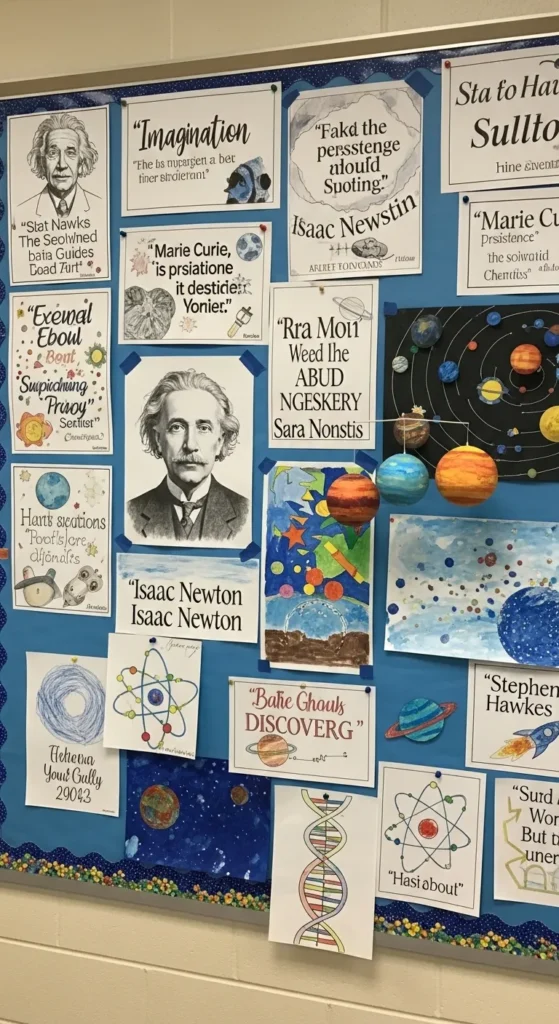
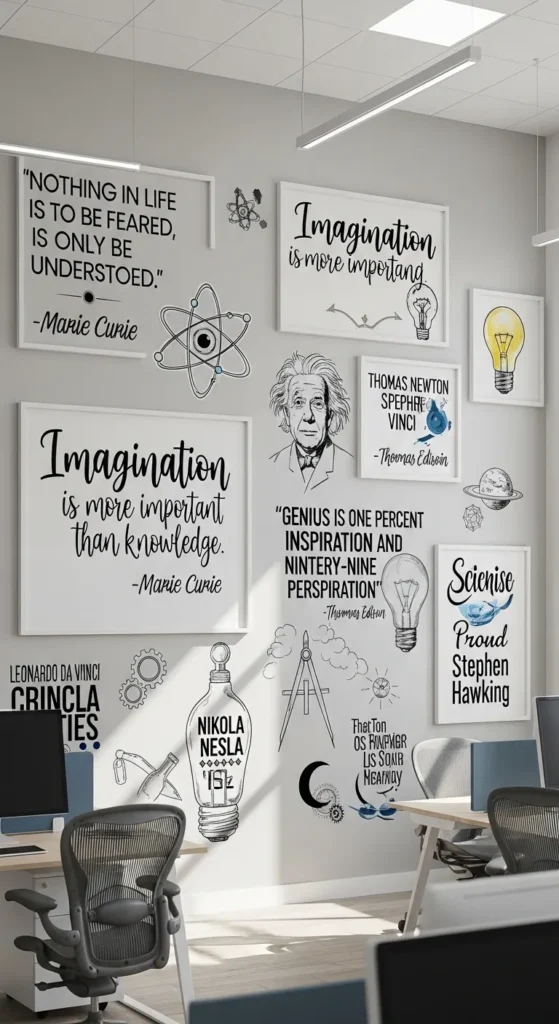
A science quote wall motivates students by highlighting the wisdom of famous scientists and inventors. Inspirational quotes alongside student artwork create a visually stimulating environment that emphasizes curiosity, perseverance, and innovation. Such displays reinforce the importance of exploration and learning.
Adding illustrations, framed designs, or thematic backgrounds makes the quote wall visually appealing and engaging. Teachers can rotate quotes periodically to align with lessons or achievements. Science quote walls are a simple yet impactful element of creative science room decor, blending motivation, inspiration, and aesthetic appeal.
10. Interactive Whiteboard Zones
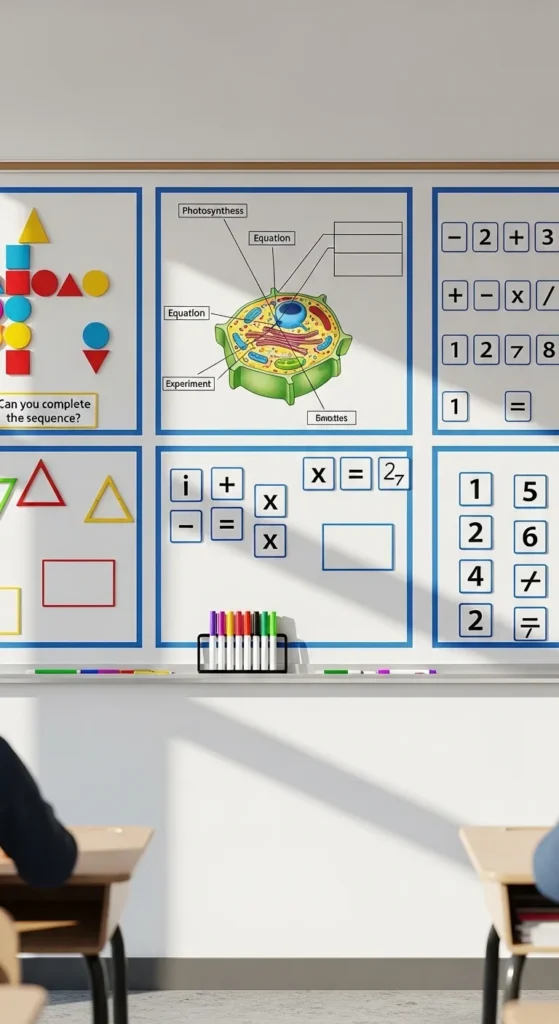
Interactive whiteboards allow students to engage with science concepts in a tactile, collaborative manner. Magnetized diagrams, diagrams, and challenge prompts encourage participation while helping students visualize processes such as chemical reactions or physics principles. These zones are dynamic and adaptable.
Flexible and reusable, interactive whiteboards support group work, experimentation, and problem-solving. Teachers can regularly update content to reflect new lessons or challenges. Interactive whiteboard zones are a practical, hands-on component of creative science room decor that fosters engagement and deeper comprehension.
11. 3D Models of Cells
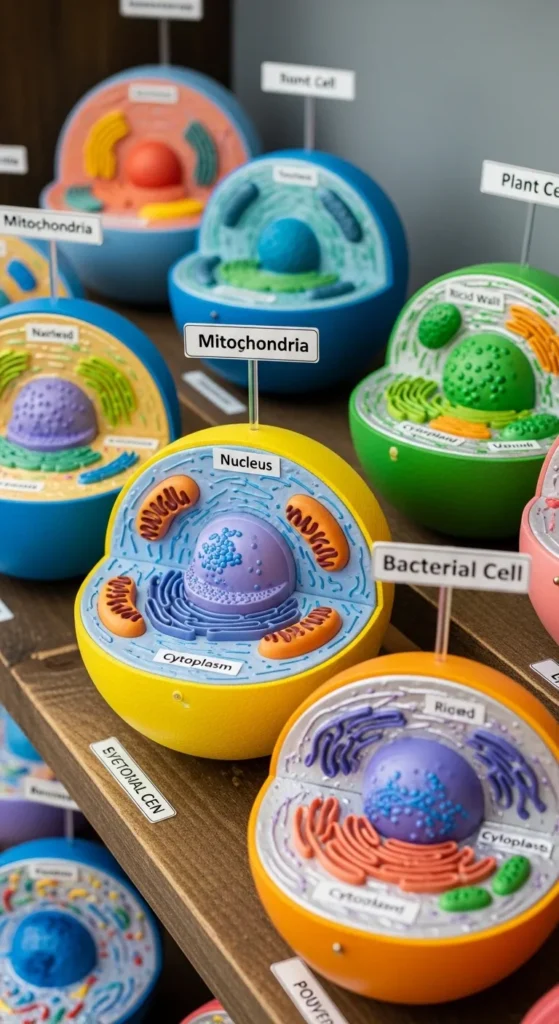
3D cell models make abstract biology concepts tangible for students. Detailed representations of organelles such as the nucleus, mitochondria, and cytoplasm allow students to explore structures in depth and reinforce understanding of cell function. These models also add a colorful, educational decor element.
Teachers can integrate models into lessons for demonstrations or interactive student exploration. Students benefit from tactile learning experiences, which enhance memory and comprehension. 3D cell models are an essential element of creative science room decor, blending visual appeal with effective science education.
12. Periodic Table Art
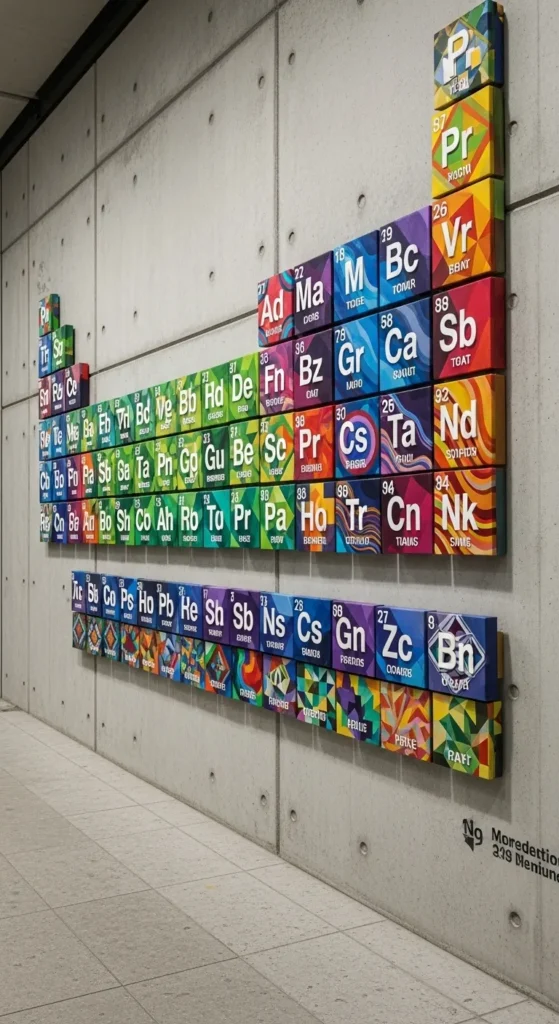
Periodic table art merges creativity with science education. Artistic displays of elements with vibrant colors, patterns, or themed designs make memorization and recognition enjoyable. Students are inspired to explore chemistry concepts in an interactive, visually stimulating way.
Incorporating artwork encourages discussion and engagement while enhancing classroom aesthetics. Teachers can involve students in creating these art pieces, fostering pride and participation. Periodic table art is an innovative addition to creative science room decor, combining education, creativity, and fun.
13. Science-Themed Bulletin Boards
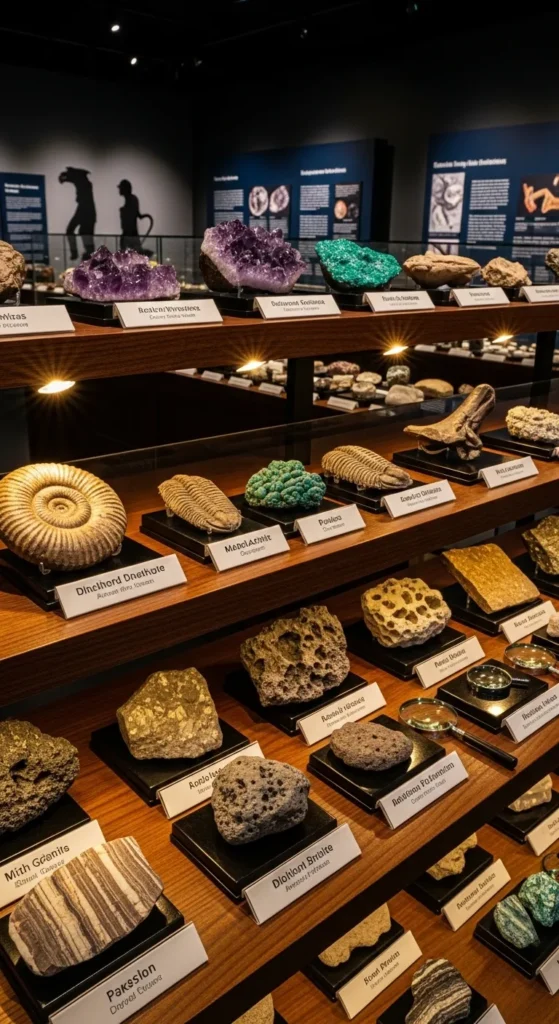
Fossil and rock displays provide tactile, hands-on opportunities for students to explore geology and Earth science. Labeled collections of minerals, fossils, and rock samples allow students to observe textures, colors, and patterns while connecting to classroom lessons.
Organizing displays thoughtfully enhances both educational value and visual appeal. Rotating specimens or adding student-contributed items keeps the corner dynamic and engaging. Fossil and rock displays are a practical and decorative component of creative science room decor that inspires curiosity about Earth sciences.
14. Fossil and Rock Displays
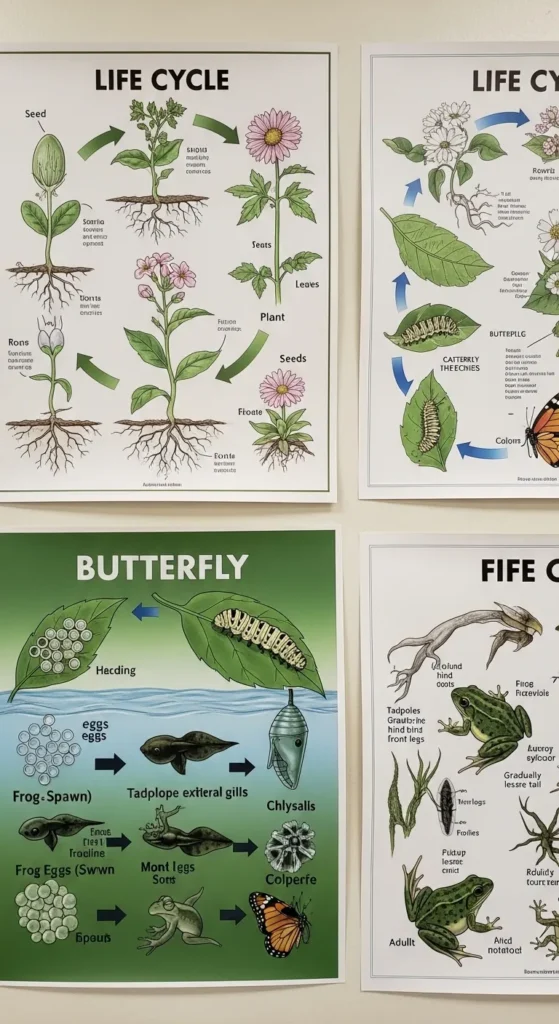
Life cycle posters visually illustrate biological processes like the development of plants, butterflies, and frogs. Labeled diagrams reinforce comprehension and allow students to reference key stages during lessons or hands-on activities. These posters help make abstract concepts more concrete.
Adding interactive flaps or discussion prompts increases student engagement and encourages active learning. Teachers can use posters for assessments, group work, or reflection activities. Life cycle posters are an integral element of creative science room decor, combining visual learning with educational enrichment.
15. Life Cycle Posters
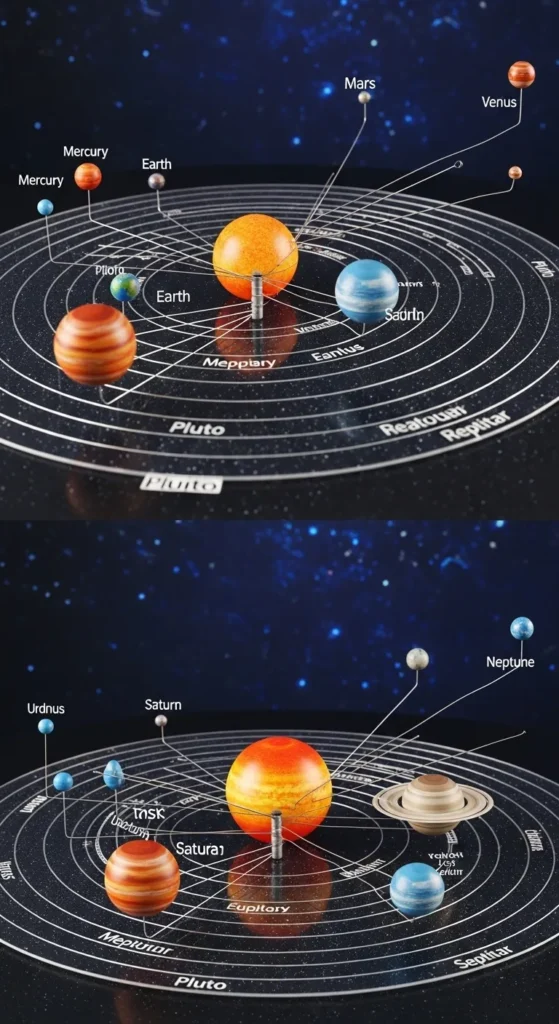
Solar system models provide a tangible, interactive way to explore astronomy. Hanging or tabletop models illustrate planets, orbits, and rotations, allowing students to visualize celestial mechanics. These models spark curiosity about space exploration and planetary science.
Teachers can incorporate fun facts, challenges, or observation exercises to enhance learning. Rotating models or updating displays keeps students engaged. Solar system models are a staple in creative science room decor, blending educational content with visually captivating design.
16. Solar System Models
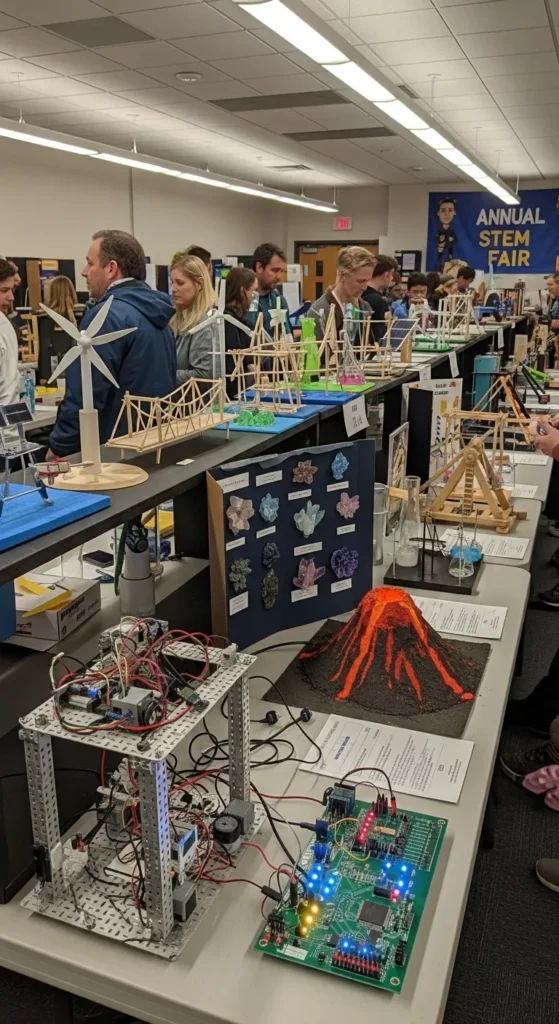
STEM project displays showcase student creativity and reinforce lessons in a practical way. Shelves or tables featuring robotics, engineering, or physics models highlight student accomplishments and provide inspiration for peers. This encourages problem-solving and hands-on learning.
Rotating projects regularly ensures variety and continued engagement. Teachers can organize displays by theme or lesson focus, making them a visual and educational focal point. STEM project areas are a dynamic, interactive element of creative science room decor that celebrates student work and learning.
17. STEM Project Display Areas
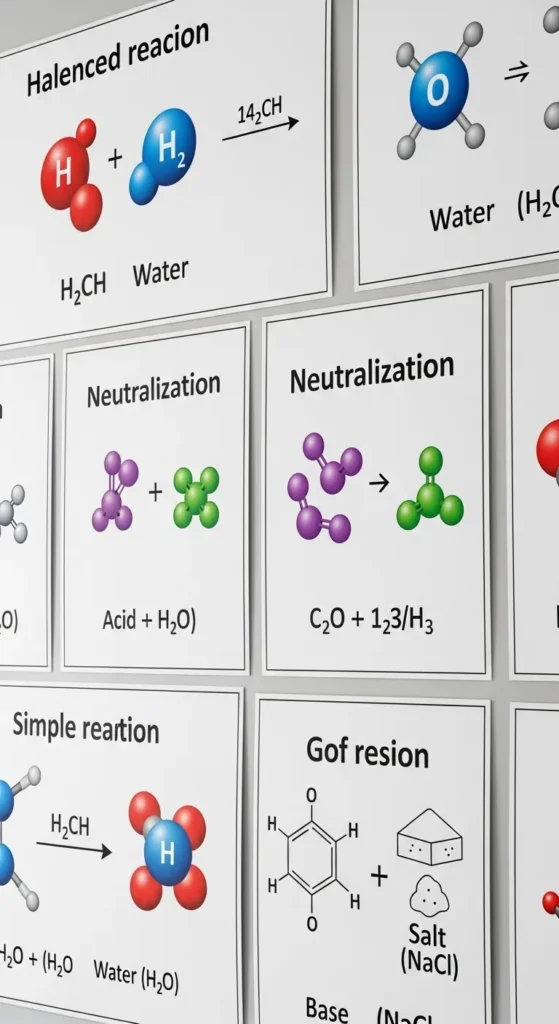
Chemical reaction posters illustrate concepts like mixing acids and bases, combustion, or synthesis reactions using diagrams, labels, and step-by-step visuals. These displays make abstract chemical processes tangible and accessible for students.
Teachers can enhance posters with interactive features such as QR codes linking to experiment videos. Students gain better comprehension while enjoying a visually appealing classroom environment. Chemical reaction posters are an educational and decorative element of creative science room decor.
18. Chemical Reaction Posters
Lab stations provide hands-on opportunities for students to conduct experiments safely. Fully equipped with beakers, test tubes, microscopes, and materials, they allow students to practice scientific procedures while reinforcing lesson content.
Organized layouts promote efficiency and safety while encouraging collaboration. Teachers can rotate experiments or introduce new challenges to maintain engagement. Science lab stations are a core component of creative science room decor, combining interactive learning with practical STEM experience.
19. Science Lab Stations

Displaying quotes from famous scientists and inventors motivates students to explore, persist, and embrace curiosity. Inspirational messages emphasize perseverance, discovery, and creativity, encouraging a positive mindset toward learning science.
Involving students in creating or selecting quotes adds a personal and interactive touch. Quote walls enhance classroom aesthetics while promoting engagement and reflection. Inspirational science quotes are a simple yet impactful component of creative science room decor.
20. Inspirational Science Quotes
Interactive science wall charts engage students through exploration of ecosystems, weather patterns, or physics principles. Movable flaps, tabs, or problem-solving prompts encourage active participation and reinforce understanding of key concepts.
Teachers can update charts with new topics or challenges, keeping the classroom environment dynamic. These charts make abstract concepts tangible and visually stimulating. Interactive wall charts are a practical and engaging element of creative science room decor.
21. Interactive Science Wall Charts
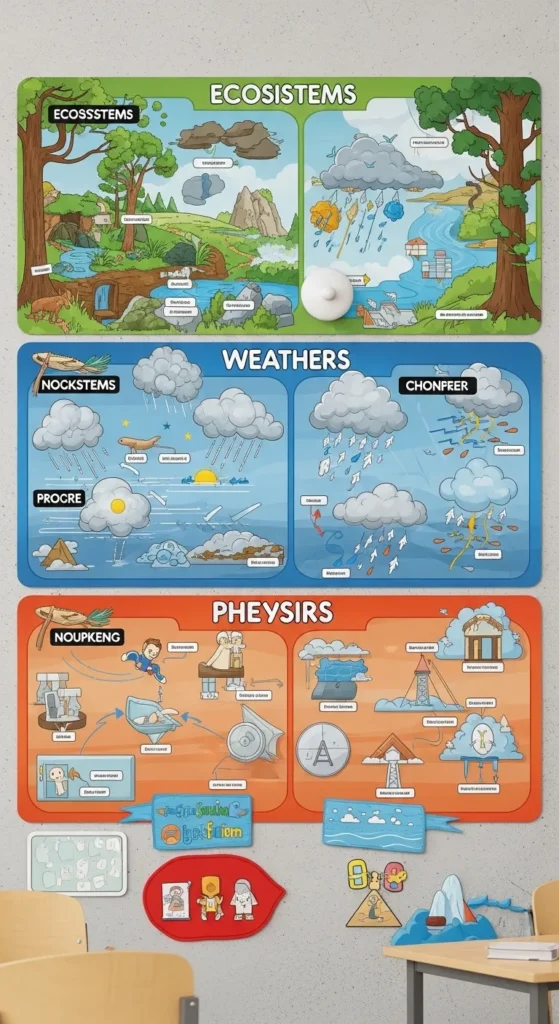
DIY science corners provide space for students to showcase personal experiments, including circuits, volcanoes, or chemical reactions. These areas encourage creativity, independence, and curiosity, letting students explore scientific principles in a hands-on way.
Rotating projects or challenges keeps the corner exciting and educational. Teachers can provide guidance while encouraging innovation and experimentation. DIY science corners are an interactive and inspiring element of creative science room decor, fostering enthusiasm and learning.
22. DIY Science Corners
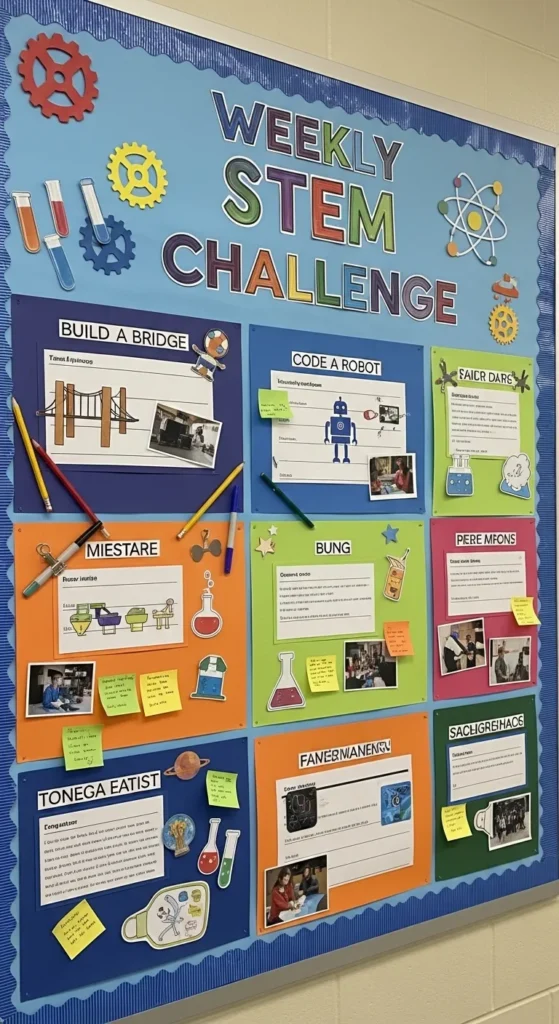
STEM challenge boards feature weekly prompts, puzzles, or problem-solving tasks that engage students in critical thinking and teamwork. These boards encourage hands-on exploration of engineering, physics, or math concepts.
Updating challenges regularly maintains excitement and motivation. Students can collaborate, compete, and share solutions, reinforcing learning through interactive activities. STEM challenge boards are an essential component of creative science room decor that encourages innovation and engagement.
23. STEM Challenge Boards
Themed door decor sets the tone for a science classroom and creates excitement as students enter. Doors decorated with planets, microscopes, chemical elements, or lab motifs provide a fun, welcoming, and inspiring first impression.
Teachers can rotate themes to match current topics or seasonal lessons, keeping the classroom visually fresh. Creative door decor is a simple yet impactful element of creative science room decor that sparks curiosity and enthusiasm for STEM learning.
24. Themed Door Decor
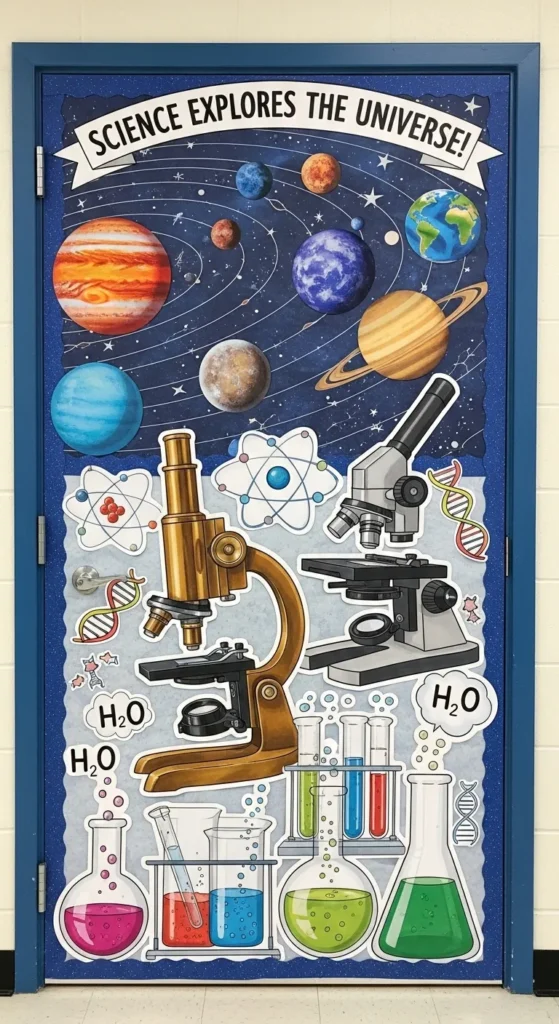
Content: Themed door decor sets the tone for a science classroom, welcoming students and creating curiosity. Creative visuals make entering the classroom exciting.
Teachers can rotate themes to align with current lessons. Door decor is a simple yet impactful component of creative science room decor.
Conclusion
Decorating a science classroom creatively enhances engagement, learning, and curiosity. By implementing these 24 creative science room decor ideas, teachers can transform their classroom into a visually stimulating, organized, and interactive STEM environment. From interactive charts and STEM corners to hands-on displays and inspiring quotes, each element fosters understanding, creativity, and enthusiasm for science. Applying these strategies creates a dynamic space where students are encouraged to explore, experiment, and grow academically while enjoying a visually appealing classroom environment.