

BLOG
Engineered Stone vs Quartz: What Is the Difference for Bathrooms?

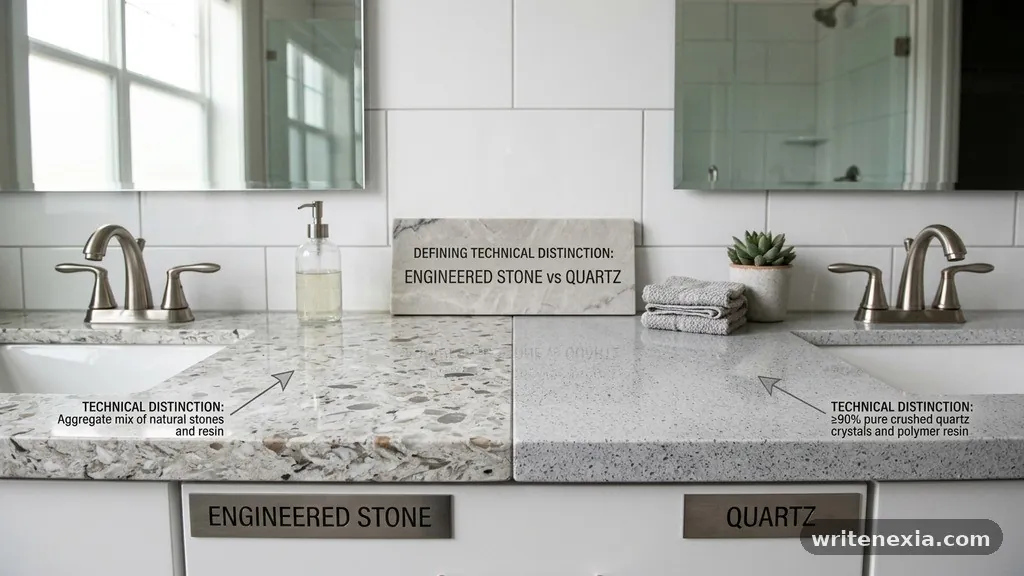
Comparing engineered stone vs quartz for bathroom renovations often leads to confusion because these terms are frequently used interchangeably in the industry. Both materials consist of crushed natural stone bound together with high-quality polymer resins to create non-porous, durable surfaces. While they share the same fundamental manufacturing process, the terminology shifts depending on the manufacturer and the specific mix of aggregates used.
Understanding these nuances helps you make informed decisions when selecting vanity tops or shower surrounds. This article breaks down the technical definitions, performance metrics, and aesthetic considerations to clarify the differences between these materials for your next home improvement project.
Defining the Technical Distinction
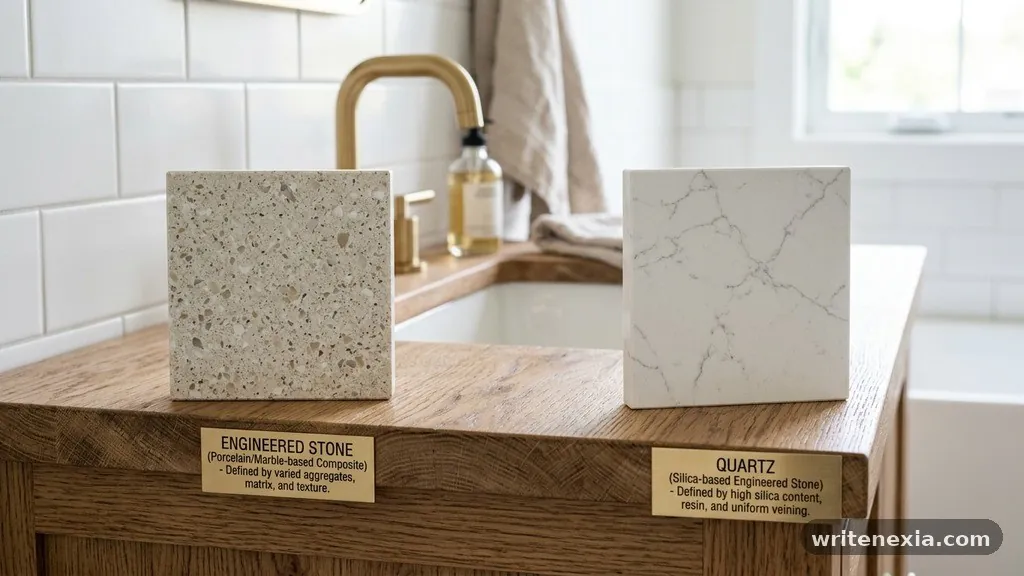
The primary difference between these categories is essentially linguistic rather than physical. Quartz is a specific mineral, and when manufacturers label their product as quartz, they are highlighting the primary aggregate in the composite. Engineered stone is a broader industry term that encompasses any surfacing product created by combining stone particles with binders.
If you are shopping for a bathroom vanity, you will find that most high-end products labeled as engineered stone are, in fact, quartz. The confusion arises because companies use these labels to differentiate their specific brand identity or proprietary resin formulas.
When you look at the composition, both materials typically contain roughly 90% to 93% crushed stone and 7% to 10% resin. This ratio is what gives them their trademark density and resistance to water absorption. In the context of a bathroom, where moisture is a constant threat, this structural similarity is a major advantage over porous natural stones like marble.
Whether a slab is marketed under one name or the other, the performance profile remains remarkably consistent across the industry. You are effectively looking at the same class of product regardless of the label on the crate.
Performance in High-Moisture Environments
Bathrooms are uniquely challenging environments for surfacing materials due to frequent exposure to water, steam, and chemical cleaners. Both engineered stone and quartz excel here because they are non-porous. Unlike natural stone, which requires periodic sealing to prevent stains and mold growth, these composites do not absorb liquids.
This makes them exceptionally hygienic, as they do not provide a breeding ground for bacteria or mildew. You can confidently install these materials around undermount sinks where water splashing is inevitable.
Beyond water resistance, these surfaces offer impressive chemical resilience. Bathroom vanity tops are often subjected to harsh substances like nail polish remover, hair dyes, and acidic cleaning agents. Quartz-based surfaces are designed to withstand these exposures without etching or permanent staining.
While you should still avoid leaving harsh chemicals to sit for extended periods, the material is significantly more forgiving than limestone or unsealed marble. This durability ensures that your bathroom maintains its appearance over many years of daily use.
Aesthetic Versatility and Design Options
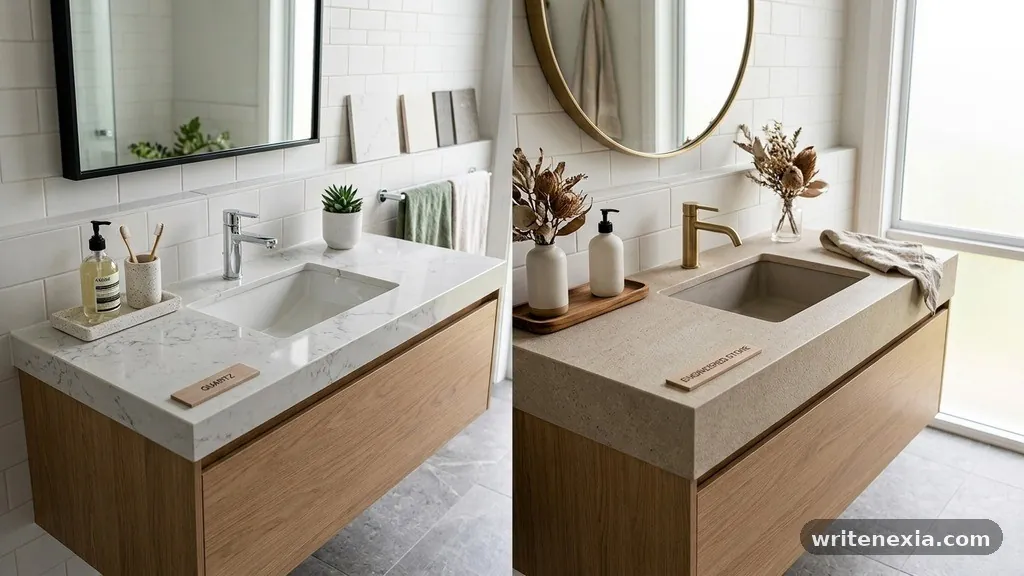
One of the most compelling reasons to choose these materials is the sheer range of visual options available. Manufacturers use advanced printing and mixing technologies to mimic the look of natural stone while offering more consistent patterns.
If you desire the appearance of white Carrara marble but want to avoid the maintenance, you can find quartz slabs that replicate those delicate veining patterns perfectly. This consistency allows for better planning during the design phase of a project, as you know exactly how the finished surface will look.
The manufacturing process also allows for the inclusion of various pigments, glass flecks, or metal shards. This capability means you can find surfaces that offer a modern, industrial, or minimalist look that would be impossible to source in nature. Designers often favor these products because they provide a stable color palette for a room.
You won’t have to worry about color variations between different pieces of the same material, which is a common headache when working with natural granite or soapstone. This predictability is a significant asset when you are trying to coordinate complex bathroom color schemes.
Comparative Cost and Value Analysis
Budgeting for a bathroom renovation requires a clear understanding of material costs and long-term value. While engineered stone and quartz are generally priced similarly, variations exist based on brand reputation, slab thickness, and complexity of the design.
You should expect these materials to fall into a mid-to-high price tier compared to basic laminate or ceramic tile. However, the initial investment is often offset by the lack of ongoing maintenance costs associated with natural stone.
| Material Category | Porosity Level | Maintenance Needs | Typical Cost Range |
|---|---|---|---|
| Quartz/Engineered Stone | Non-porous | Low (Soap & Water) | Moderate to High |
| Natural Marble | High | High (Annual Sealing) | High to Premium |
| Granite | Moderate | Moderate (Periodic Sealing) | Moderate to High |
The value proposition becomes even clearer when you factor in the lifespan of the installation. Because these surfaces are so hard and resistant to damage, they rarely require replacement unless you decide to remodel for aesthetic reasons. Many homeowners find that the durability makes them a smart long-term choice for master bathrooms.
The National Kitchen & Bath Association provides extensive resources on selecting materials that balance longevity with interior design goals. When you weigh the lack of sealing against the high durability, the return on investment for these surfaces is quite favorable.
Installation and Fabrication Nuances
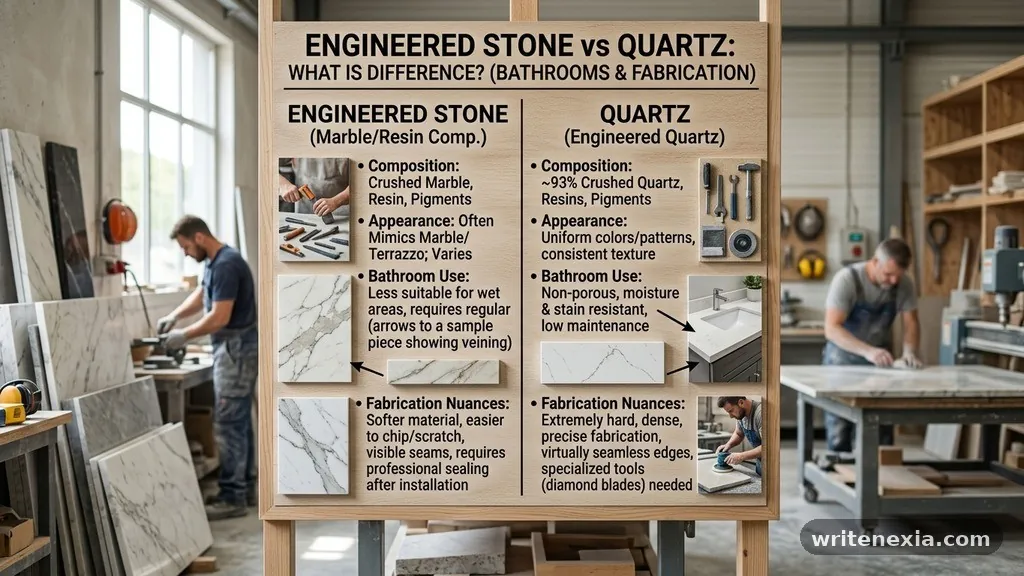
Installing these materials requires a level of expertise that differs from handling natural stone. Because the slabs are manufactured to be uniform, fabricators can cut them with high precision using CNC machinery. This allows for very tight seams that are almost invisible to the naked eye.
In a bathroom, where space is often limited and vanity designs can be complex, this level of precision is critical for a clean look. You should always work with a certified installer who has experience specifically with resin-bound composites.
Weight is another factor to consider during the installation process. These slabs are extremely dense and heavy, often requiring multiple installers to move them safely into the bathroom. You must ensure that your vanity cabinet structure can support the weight of the stone, especially if you are opting for a thick slab or a waterfall edge design.
Proper reinforcement of the vanity frame is a standard step for professional contractors. A well-installed surface should be perfectly level and securely anchored to ensure long-term stability and prevent cracking at the seams.
Maintenance and Daily Care Requirements
Keeping these surfaces looking pristine requires very little effort compared to other countertop materials. Because they are non-porous, you can simply wipe them down with a soft cloth and mild dish soap. You do not need to invest in expensive, specialized cleaners or undergo the tedious process of sealing the stone every year.
This convenience is one of the primary reasons homeowners choose these materials for busy family bathrooms. If you do encounter a stubborn residue, a non-abrasive household cleaner is usually sufficient to restore the shine.
It is important to avoid using abrasive scrub pads or scouring powders, as these can dull the finish over time. While the material is very hard, the resin component can be scratched if you are overly aggressive with cleaning tools. You should also be mindful of heat, although this is less of a concern in a bathroom than in a kitchen.
Curling irons and hair straighteners should be placed on a heat-resistant mat rather than directly on the surface. Taking these small precautions will preserve the factory-applied polish for the entire life of your bathroom.
Environmental and Health Considerations

As the popularity of engineered stone has grown, so has the focus on the health and safety of the manufacturing process. The production of these materials involves grinding stone, which releases silica dust into the air. Reputable manufacturers now implement strict safety protocols to protect workers from inhalation risks.
When shopping for your home, look for brands that provide transparency regarding their manufacturing standards and certifications. Choosing products from well-regarded, ethical manufacturers ensures that your purchase aligns with modern safety expectations.
Many consumers are also interested in the VOC (volatile organic compound) emissions of the resins used in these products. Modern manufacturing techniques have significantly reduced the presence of harmful chemicals in the final cured slab. Most high-quality quartz products are now certified as low-emission, making them safe for use in indoor environments like bathrooms and bedrooms.
If you have specific concerns about indoor air quality, you can ask your supplier for the product’s GREENGUARD certification or similar environmental documentation. This information provides peace of mind that your home improvement project is safe for your family.
Common Myths vs Reality
There is a significant amount of misinformation circulating regarding the differences between these materials. One common myth is that engineered stone is “fake” while quartz is “natural.” In reality, both are man-made composites that rely on natural raw materials for their structural integrity.
Another misconception is that one is significantly harder than the other. Because they share similar resin-to-stone ratios, their hardness levels on the Mohs scale are virtually identical.
* Myth: Engineered stone is more prone to cracking than quartz. Fact: Both have similar structural properties and are equally susceptible to thermal shock if abused.
* Myth: You can use any cleaner on these surfaces. Fact: Both require avoiding high-pH cleaners that can degrade the resin binder over time.
* Myth: One is better for shower walls than the other.
Fact: Both are excellent for wet areas due to their lack of porosity and resistance to mold.
* Myth: The color will fade in sunlight. Fact: High-quality UV-stabilized resins prevent significant color shifting even in bright, window-filled bathrooms.
Addressing these myths helps you focus on what actually matters: the color, the pattern, and the price. By ignoring the marketing jargon that tries to force a distinction where none exists, you can make a choice based on your personal design preferences.
Whether a sample is labeled as engineered stone or quartz, you are evaluating the same high-performance material class. Focus your attention on the supplier’s reputation and the specific aesthetic finish of the slab.
Frequently Asked Questions
Is engineered stone as good as quartz for a vanity top?
Yes, they are essentially the same product. The terms are used interchangeably in the industry, and both offer the same high level of durability, water resistance, and aesthetic consistency required for a bathroom vanity.
What are the main downsides of using these materials in a bathroom?
The primary downsides are the potential for damage from extreme heat, such as from hot hair styling tools, and the fact that they cannot be repaired as easily as solid surface materials if they suffer a deep chip or crack.
Does the surface need to be sealed periodically?
No, one of the biggest advantages of these materials is that they are non-porous and do not require any sealing, unlike natural stone options like marble or granite which must be sealed regularly to prevent staining.
What is the best way to clean these surfaces daily?
A simple mixture of warm water and a small amount of mild dish soap applied with a soft microfiber cloth is the most effective and safe way to keep the surface clean and maintain its original luster.
Can these materials be used inside a shower enclosure?
Absolutely, they are an excellent choice for shower walls and niches because they are non-porous, meaning they resist water absorption and are much less likely to develop mold or mildew compared to traditional tile and grout.
Summary and Next Steps
Choosing the right material for your bathroom comes down to balancing your aesthetic vision with the practical requirements of a moisture-prone space. Since engineered stone and quartz are essentially the same high-performance composite, you should feel confident selecting whichever specific color or pattern best fits your design.
Their shared non-porous nature provides the durability you need to keep your vanity and shower areas clean and beautiful for years to come. By focusing on quality brands and professional installation, you eliminate the risks associated with porous natural stones.
To move forward with your project, start by visiting local showrooms to view large samples in person. Lighting in a store can differ from your home, so always request to take a sample into your bathroom to see how it interacts with your existing fixtures. Once you have narrowed down your color choice, get quotes from at least three local fabricators to compare pricing and service.
Investing in a quality installation is just as important as the material itself. You are now well-equipped to make an informed decision that will serve your home for many years.
Been playing here for a few months and the experience is genuinely smooth. The welcome bonus hits different and withdrawals are actually processed fast. Love how the customer support feels like talking to a buddy who knows their stuff. Keep up the great work. lastbetcasino
mqfleo