
BLOG
22 Ways to Arrange Furniture for the Perfect Living Room Layout

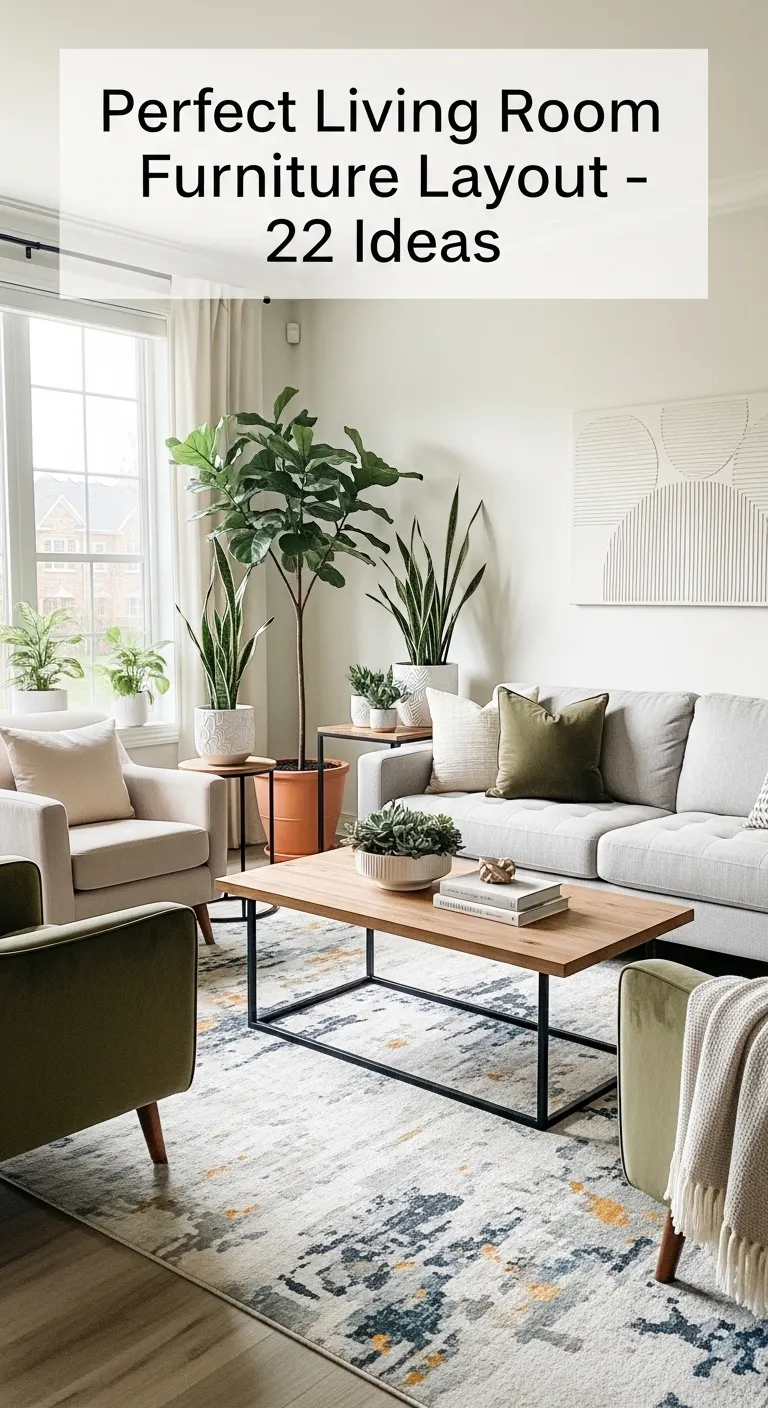
Arranging furniture in your living room can completely transform the way the space feels and functions. Creating the Perfect Living Room starts with choosing the right furniture layout that improves flow, maximizes comfort, and highlights your home’s best features. A thoughtful arrangement helps define areas for relaxing, entertaining, and everyday living while keeping the room balanced and visually appealing.
Whether you have a large open-plan area or a cozy compact room, these 22 furniture arrangement ideas will help you design the Perfect Living Room for both style and practicality. From cozy conversation corners to functional layouts for entertaining guests, these tips will inspire you to arrange furniture in ways that make your living room inviting, comfortable, and aesthetically pleasing.
1. Symmetrical Seating
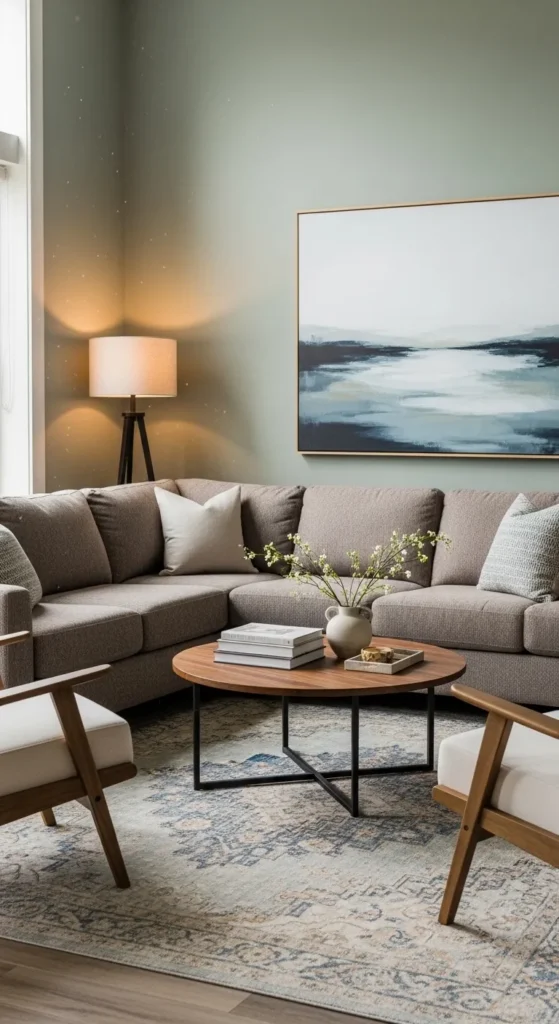
Symmetrical seating is a classic approach that brings balance and elegance to your living room. Placing identical sofas or chairs facing each other around a coffee table creates a cohesive and welcoming atmosphere. This layout works particularly well in formal living rooms where conversation and interaction are a priority.
By using symmetry, the room feels organized and visually appealing. Accessories like matching lamps, rugs, and artwork enhance the harmony, making the space look polished and well-thought-out. This layout is perfect for both entertaining guests and daily family use.
2. L-Shaped Arrangement
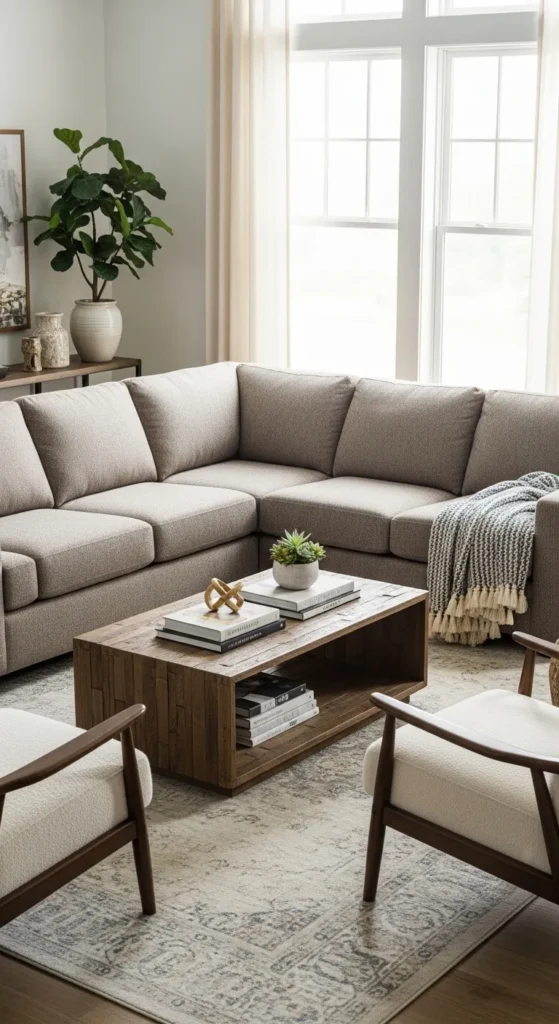
An L-shaped arrangement makes the most of corner spaces, offering ample seating while keeping the area open and inviting. This layout is ideal for families or open-plan living rooms, as it naturally defines the seating area without creating clutter.
Pair the sectional with a coffee table and optional accent chairs to create a cozy gathering space. This setup encourages conversation, provides clear traffic paths, and works well with a variety of room sizes and shapes. L-shaped arrangements balance comfort and practicality effortlessly.
3. Floating Furniture Layout
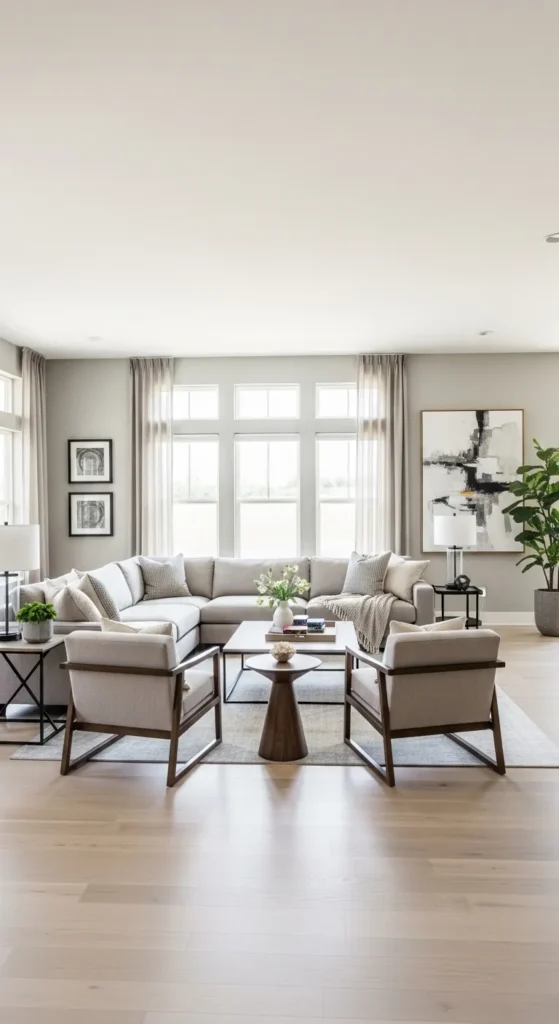
Floating furniture involves positioning your seating and tables away from walls, allowing movement around the furniture and better flow throughout the room. This approach works well in large living rooms or open-plan spaces, giving a modern and airy feel.
Floating layouts create multiple pathways and visual interest. It allows you to define distinct areas within the same room, such as a reading nook or media zone, while keeping the space versatile. Accessories like rugs or lighting can help anchor the arrangement.
4. Corner Conversation Area
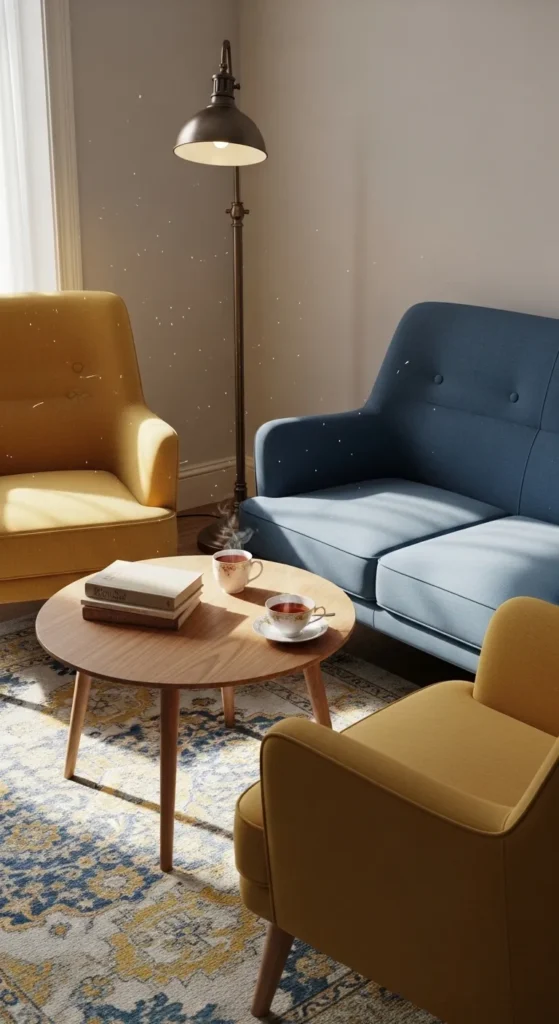
Corner conversation areas turn underutilized corners into intimate seating zones. By angling chairs and small sofas toward one another, you create a cozy nook perfect for chatting, reading, or relaxing.
This layout encourages connection without overwhelming the room. Use a round or square table to anchor the space and add decorative elements like a lamp or plant. Corner conversation setups work well in living rooms of any size.
5. Open-Plan Sectional
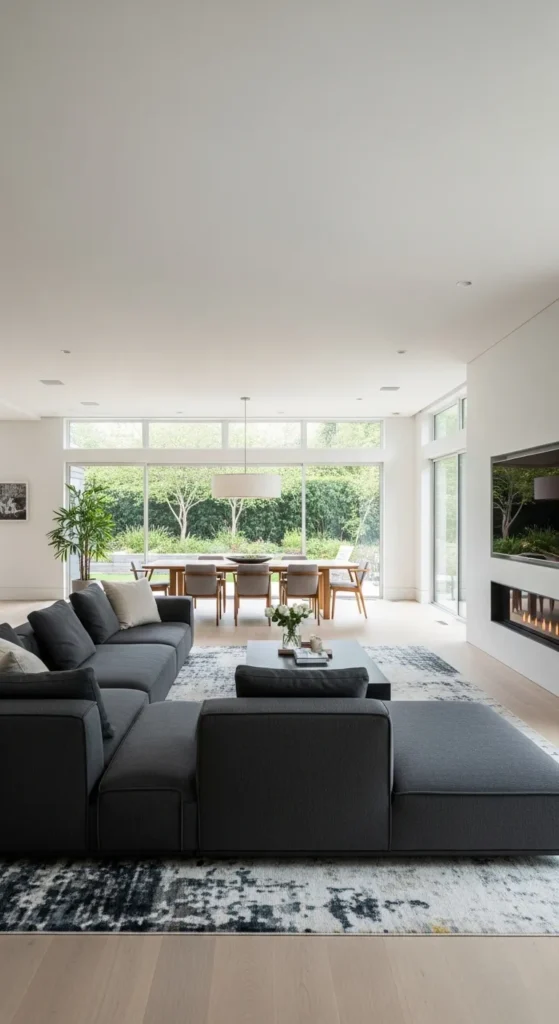
In open-plan homes, a sectional sofa can define the living area while keeping the space visually open. Positioning the sectional strategically allows for both separation and flow, creating distinct functional zones.
Combine with a rug, coffee table, and accent chairs to anchor the area. This layout is perfect for modern homes that value openness and flexibility. The sectional creates a comfortable and social seating arrangement suitable for families and entertaining guests.
6. Diagonal Placement
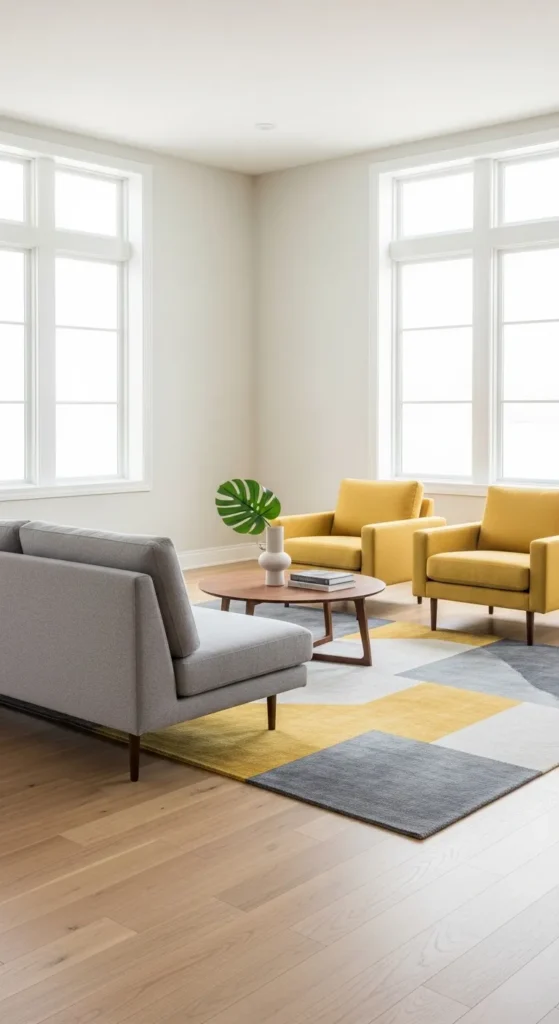
Placing furniture diagonally adds a unique, dynamic feel to the living room while maximizing floor space. It works especially well in square rooms or rooms with unusual shapes, making the layout feel less rigid.
This approach encourages creative positioning of rugs, tables, and lighting. Diagonal arrangements can draw attention to focal points like fireplaces, windows, or artwork while maintaining a cozy seating zone. It’s perfect for homes with modern or eclectic styles.
7. U-Shaped Seating
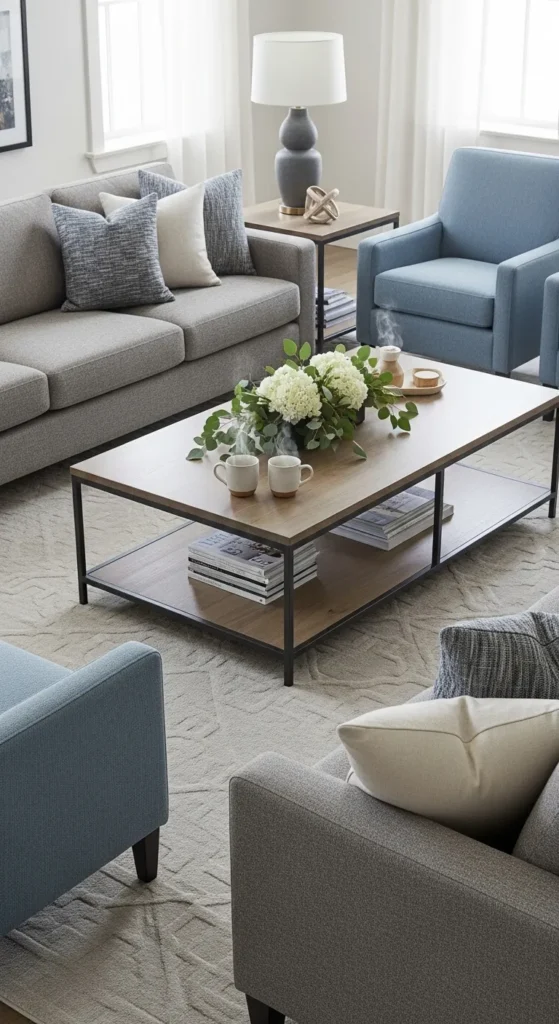
U-shaped seating is ideal for creating a social environment, with sofas and chairs arranged around a central coffee table. This layout encourages conversation and is perfect for entertaining or family gatherings.
Adding ottomans or side tables enhances flexibility and comfort. U-shaped arrangements work best in larger living rooms, offering multiple seating options while keeping everyone engaged. This layout balances functionality and intimacy seamlessly.
8. Centered Around a Focal Point
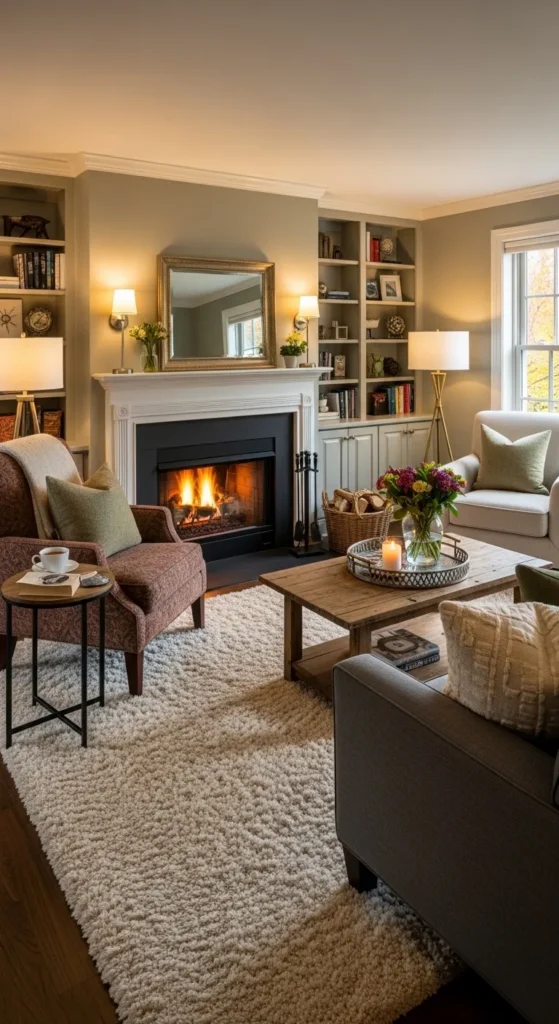
Centering furniture around a focal point, like a fireplace or entertainment system, creates a cohesive and purposeful layout. The eye naturally gravitates to the centerpiece, while seating arrangements support both aesthetics and practicality.
This approach ensures that all seating faces the main feature, making the room inviting and functional. Complement with rugs, lighting, and accent pieces to further highlight the focal area. Perfect for both formal and casual living rooms.
9. Asymmetrical Layout
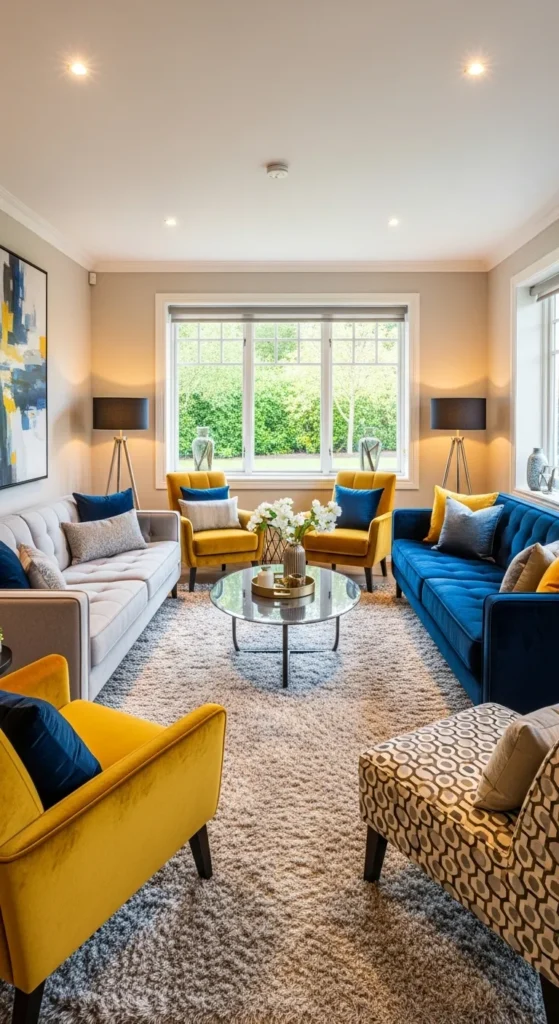
Asymmetrical layouts break away from rigid patterns, offering a casual, relaxed vibe. By mixing furniture sizes and placements, you can create an engaging, dynamic space without feeling cluttered.
Use this method to highlight statement pieces or art. Complement with rugs, lighting, and accessories to balance the look. Asymmetry works well in modern, eclectic, or artistic interiors, adding personality and flexibility to your living room.
10. Divided Zones
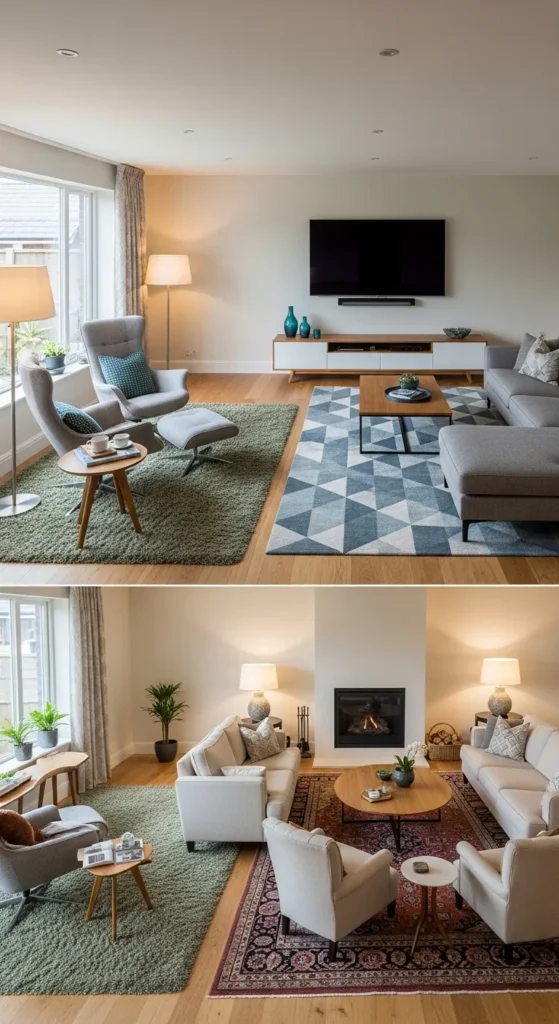
Dividing your living room into functional zones helps accommodate multiple activities in one space. Use sofas, chairs, and rugs to define areas for TV, reading, or socializing, while maintaining a cohesive aesthetic.
This layout improves flow and organization, ensuring each zone feels intentional. Accessories like bookshelves, lighting, or screens can reinforce boundaries without overcrowding. Divided zones are perfect for multi-functional spaces, especially in open-plan homes.
11. Minimalist Layout
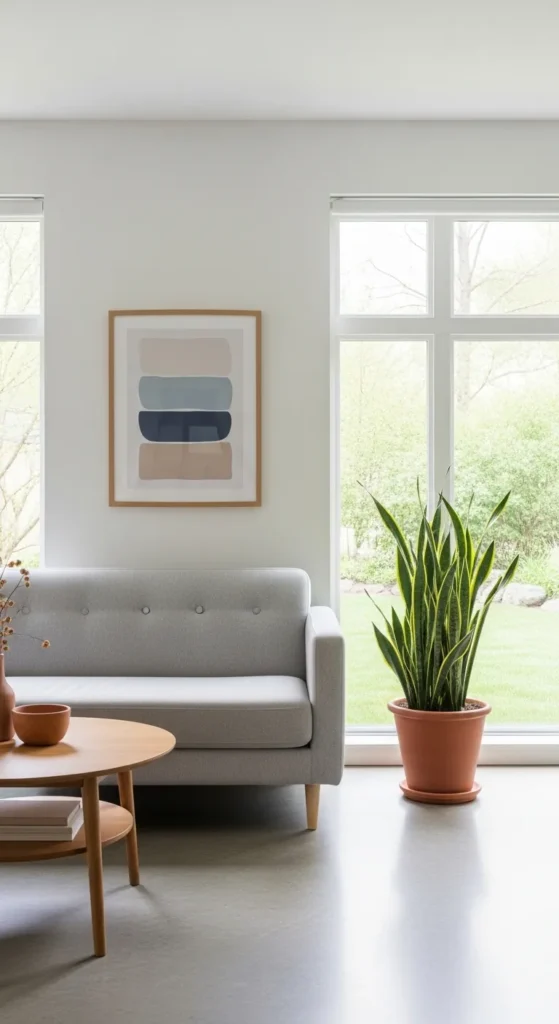
Minimalist layouts focus on open space and essential furniture, creating a calm and clutter-free environment. Each piece serves a purpose, while the open areas enhance movement and visual simplicity.
Use neutral tones, sleek furniture, and limited décor. Minimalism works well in smaller living rooms or contemporary interiors. This layout emphasizes comfort and function without sacrificing style, perfect for a serene, modern living space.
12. Mixed Seating Types
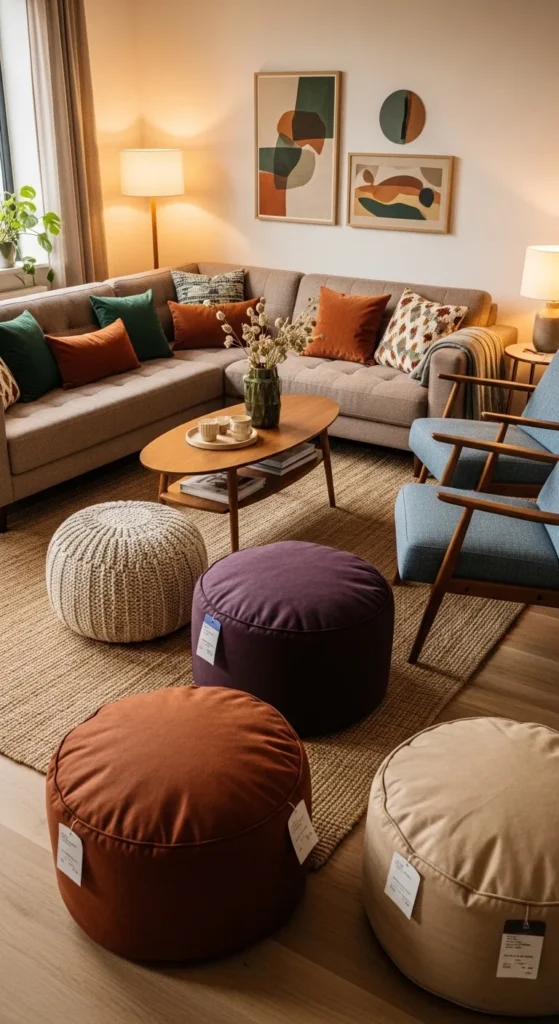
Combining different seating types adds flexibility and visual interest. Sofas, chairs, and poufs create a versatile space suitable for lounging, entertaining, or casual gatherings.
This layout allows for easy rearrangement based on occasion. Mix textures, colors, and styles for a layered, dynamic look. Ideal for living rooms that host both family and guests, offering both style and practicality.
13. Fireplace-Centered Layout
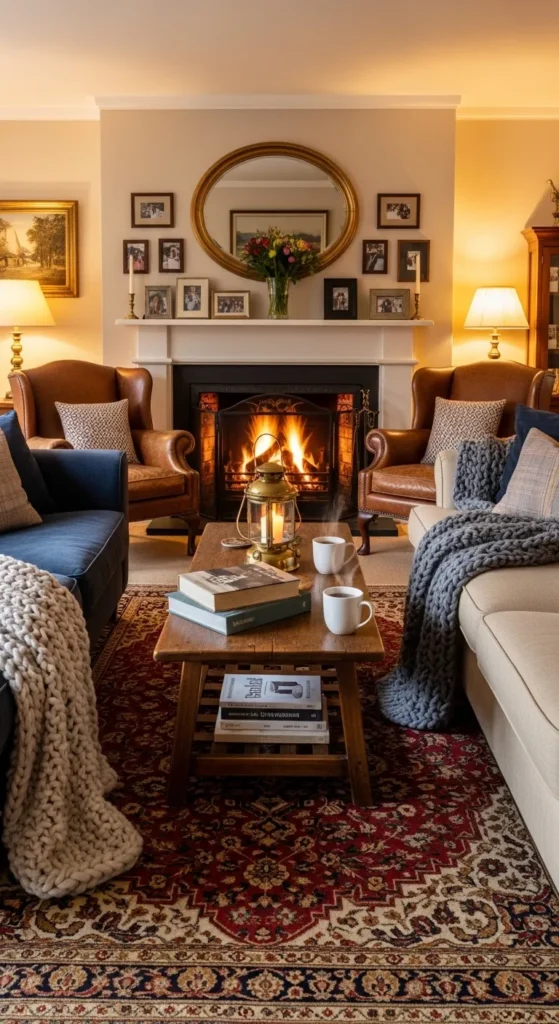
Centering furniture around a fireplace creates warmth and a natural gathering point. This layout encourages conversation while showcasing the fireplace as a focal feature.
Add rugs and lighting to enhance comfort. Fireplace-centered layouts are perfect for cozy living rooms, giving both style and functional seating. Accessories like throw blankets or ottomans complete the inviting look.
14. TV-Centered Arrangement
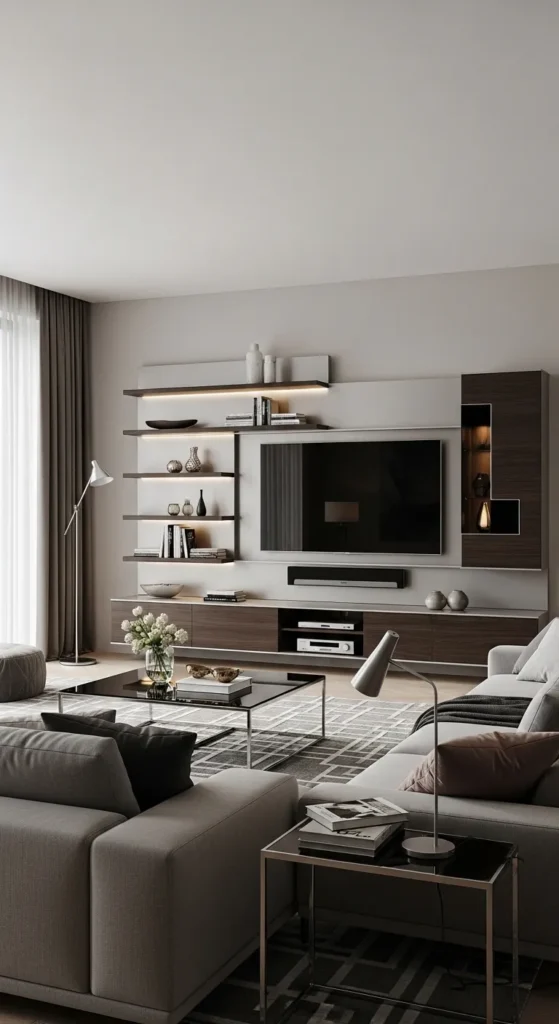
TV-centered layouts prioritize media enjoyment, with sofas and chairs oriented toward the screen. This setup is ideal for family rooms or entertainment areas.
Add side tables and lighting for convenience. Ensure clear pathways for movement. TV-centered arrangements combine comfort with functionality, creating an organized and practical space for watching shows or gaming.
15. Floating Sectional
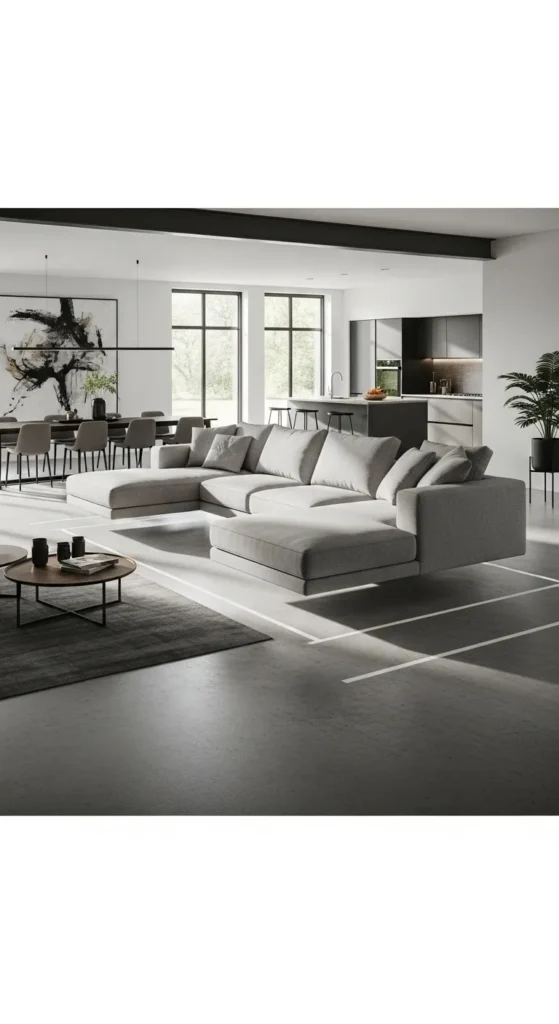
Floating sectionals act as room dividers while maintaining openness. Placing a sectional away from walls creates a natural boundary between living and dining or work areas.
This arrangement encourages flow around furniture and highlights focal points. Floating sectionals work well in open-plan spaces, offering comfort, style, and flexibility without crowding walls.
16. Gallery-Style Layout
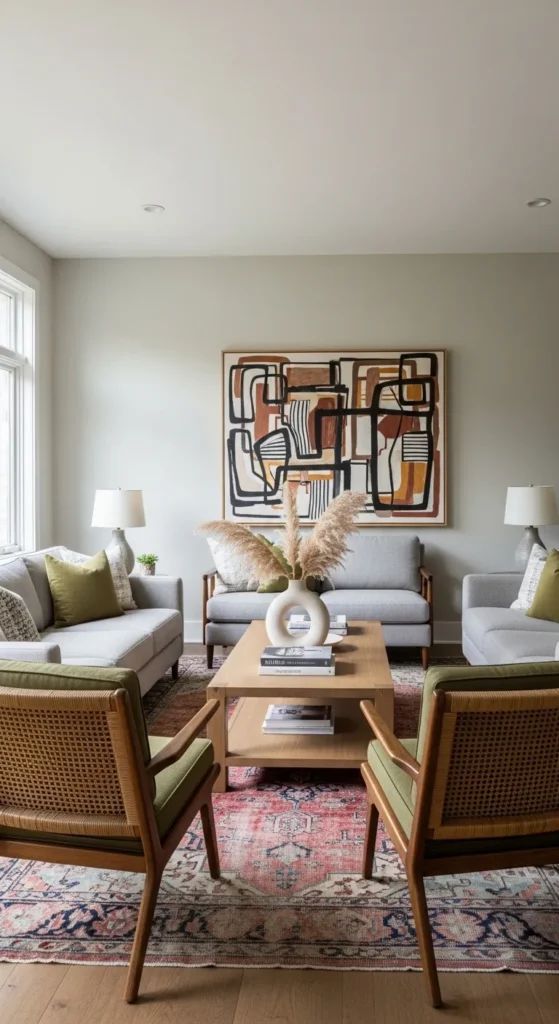
Gallery-style layouts focus on showcasing art or décor as the central element. Furniture placement supports the display while maintaining comfort and usability.
Use rugs and lighting to anchor the space. This arrangement is perfect for artistic homes or modern interiors, where visual interest is key. Seating remains functional while highlighting the room’s personality.
17. Multi-Level Layout
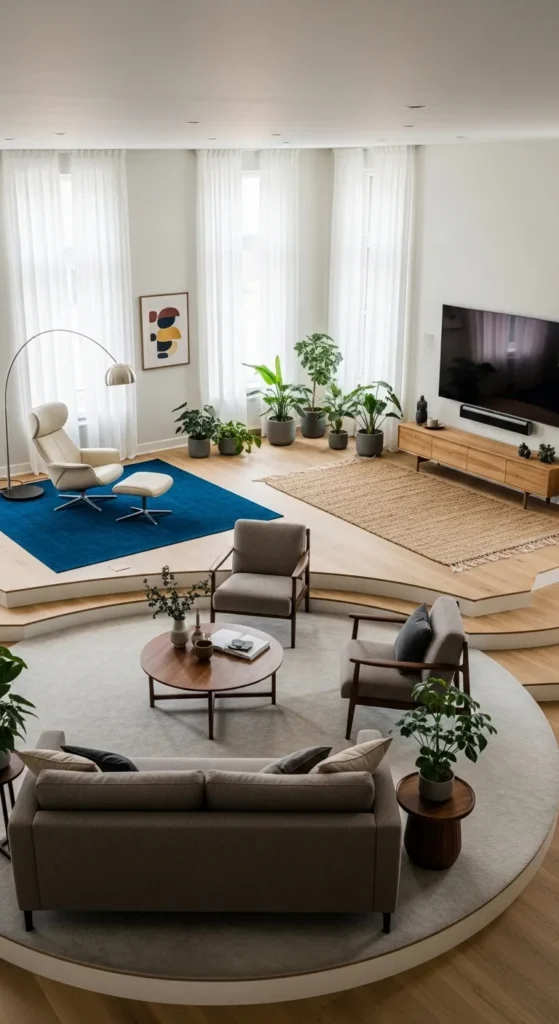
Image Prompt: A living room with furniture arranged on slightly raised platforms or rugs to define levels and areas.
Multi-level arrangements create visual separation using platforms, rugs, or furniture heights. It adds depth and distinction without walls, ideal for open-concept homes.
Define areas for conversation, reading, or dining. This layout enhances aesthetics and functionality while guiding movement. Multi-level setups give dynamic dimension to living rooms of any size.
18. Cozy Nook Layout
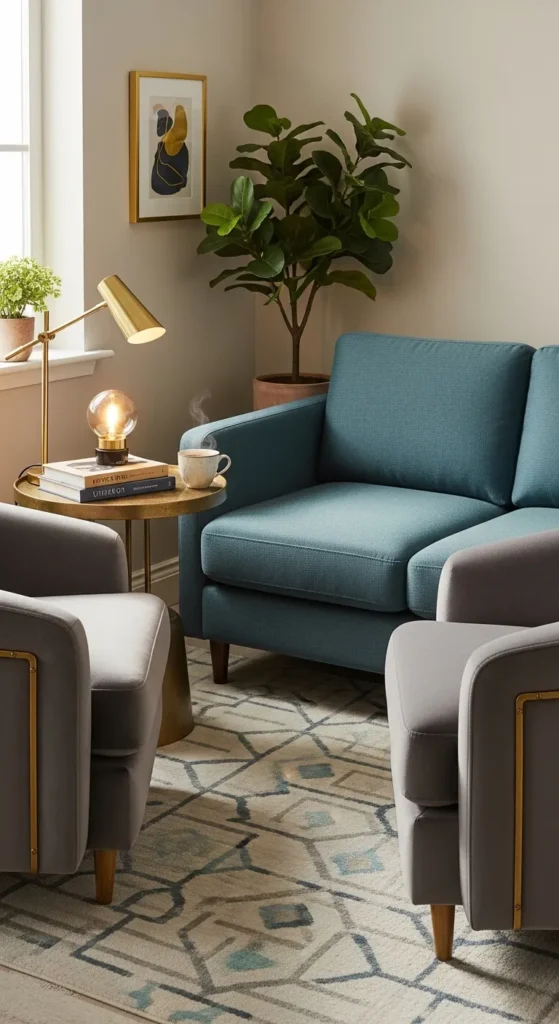
Image Prompt: A small seating nook with armchairs, a small sofa, and a side table tucked into a corner.
Creating a cozy nook turns corners or small spaces into intimate seating areas. Perfect for reading, coffee, or quiet conversation.
Add soft lighting, cushions, and small tables to enhance comfort. Cozy nook layouts maximize underused space, providing a retreat within larger living rooms.
19. Circular Seating
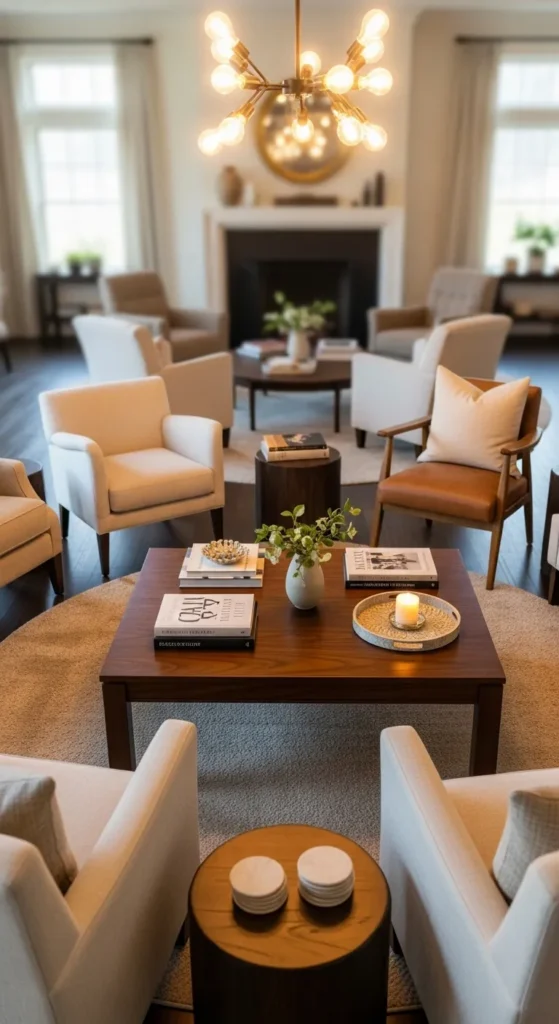
Image Prompt: Chairs and sofas arranged in a circle around a central coffee table to encourage conversation.
Circular seating promotes engagement and interaction, ideal for entertaining or family gatherings. It creates an inclusive and balanced arrangement.
Use a round rug and central table to anchor the circle. This layout fosters connection, making the space functional and sociable without sacrificing style.
20. Corner Sectional Layout
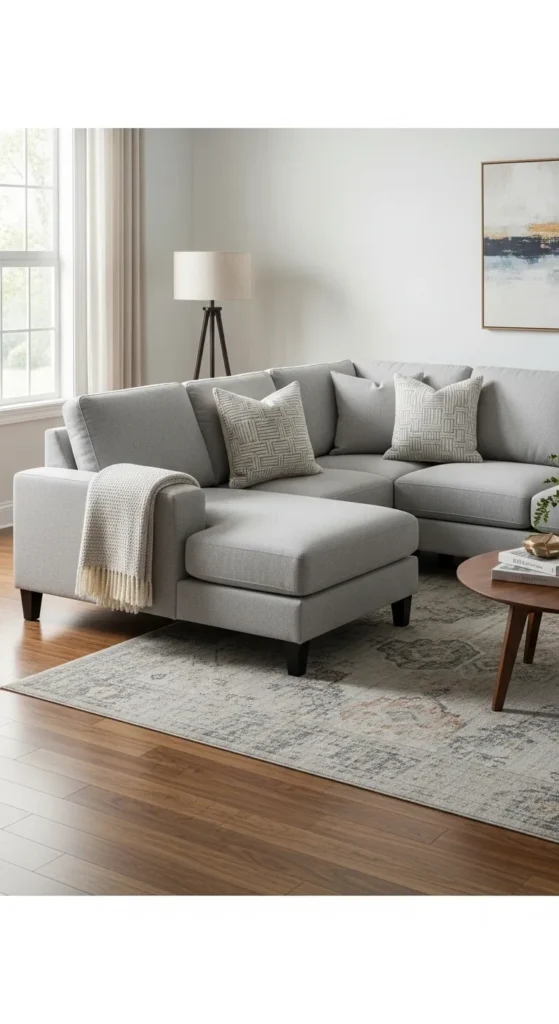
Corner sectionals maximize seating without overwhelming space. Placing it in a corner frees up open areas for walking or additional furniture.
Pair with a coffee table and accent chairs for balance. This layout works well in compact or large rooms, combining efficiency with comfort and style.
21. Split Seating Layout
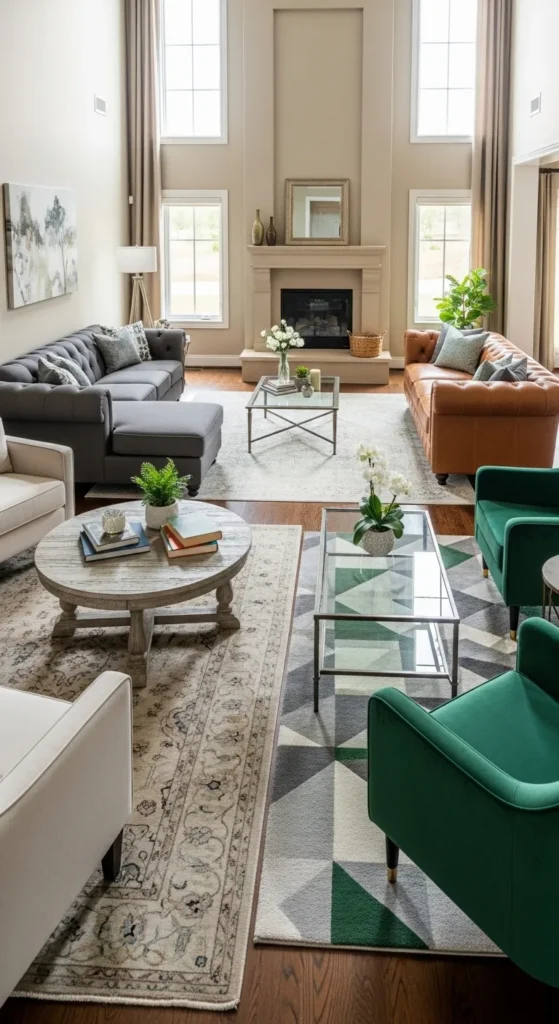
Split seating creates multiple functional areas within one space, ideal for large living rooms. Each zone can serve a different purpose, such as relaxing or reading.
Use rugs and lighting to define each area. This layout allows versatility and organization, ensuring the room feels purposeful and inviting for multiple activities.
22. Minimal Cluster Layout
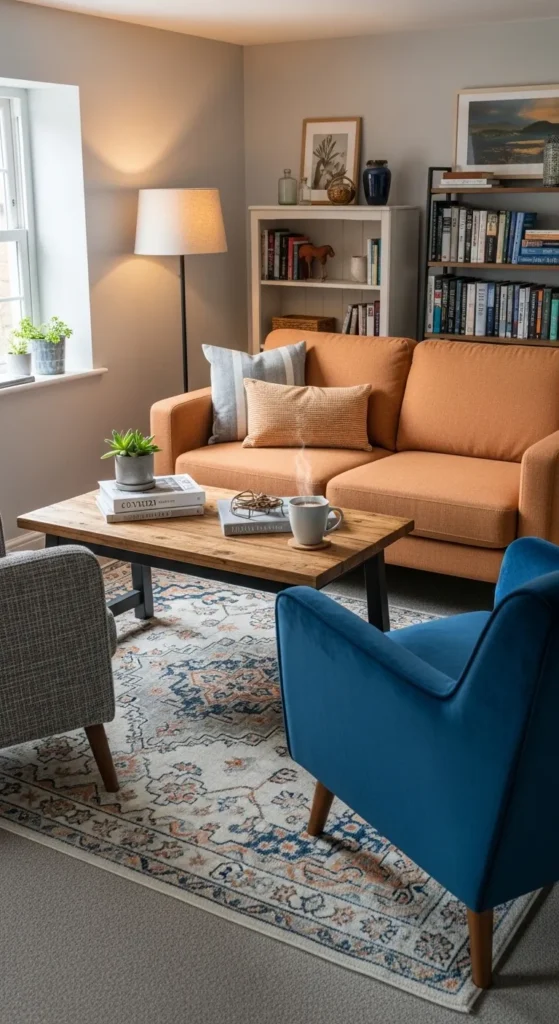
Minimal clusters focus on essential furniture pieces grouped together to create functional seating without clutter. Ideal for small living rooms.
This arrangement promotes intimate conversation while keeping pathways open. Use a rug and central table to anchor the cluster, creating a cozy, efficient, and stylish living area.
Conclusion
Arranging furniture thoughtfully transforms your living room into a functional and stylish space. Whether you prefer symmetry, cozy nooks, or open-plan layouts, these 22 ideas help you optimize flow, highlight focal points, and create a welcoming atmosphere. By considering scale, function, and aesthetic balance, you can make your living room comfortable, practical, and visually appealing. Experiment with different layouts to discover the perfect arrangement that suits your lifestyle and enhances your home’s overall design.