

BLOG
Selecting the right surface for your bathroom renovation often comes down to a battle between aesthetics and utility. When evaluating Quartz vs Cultured Marble Vanity Tops, the primary concern for many homeowners involves how these materials handle the inevitable spills of daily grooming products. Makeup, hair dyes, and nail polish removers contain harsh chemicals that can quickly ruin a porous surface.
Understanding the chemical composition of your vanity top is the first step toward protecting your investment. This article examines the durability, stain resistance, and long-term performance of these two popular choices to help you make an informed decision for your home.
When considering Quartz vs Cultured Marble Vanity Tops, the clear winner for stain resistance is engineered quartz. Quartz is non-porous and manufactured with resins that create a high-performance barrier against liquids and pigments. In contrast, cultured marble is a man-made blend of crushed stone and polyester resin, protected by a thin layer called a gel coat.
While this gel coat offers some protection, it is susceptible to micro-abrasions and chemical etching from common bathroom substances. If you frequently use heavy makeup or reactive hair products, quartz offers a significantly more reliable defense against permanent discoloration.
The Chemical Composition of Quartz
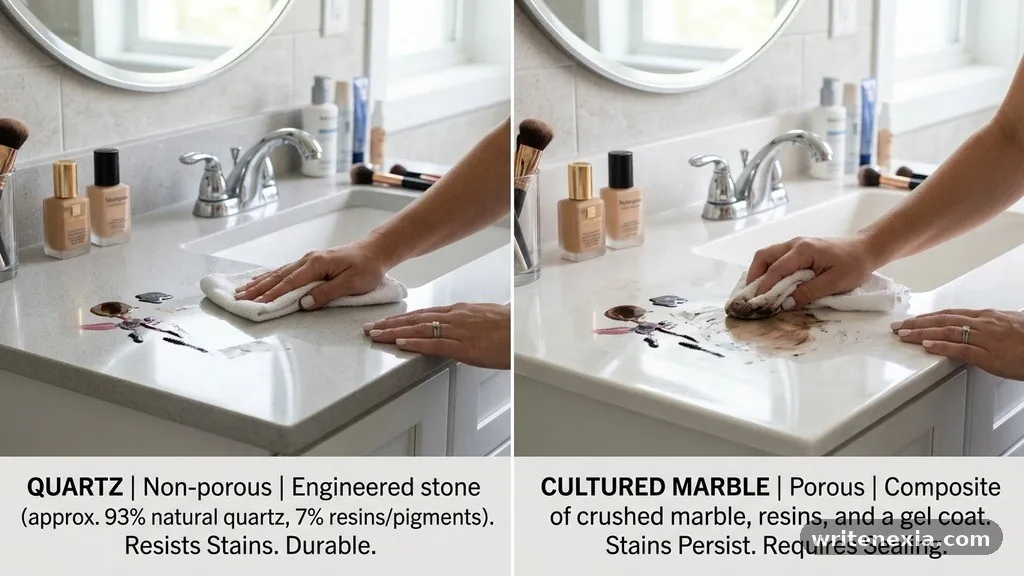
Engineered quartz is a high-tech material composed of approximately 90 to 93 percent crushed natural stone and 7 to 10 percent polymer resins and pigments. This combination is cured under intense heat and pressure to create a slab that is extremely dense and virtually non-porous.
Unlike natural stone, there are no microscopic fissures or veins for liquids to penetrate. Because it lacks these gaps, pigments from makeup or dyes simply sit on the surface until they are wiped away.
The manufacturing process ensures that the material is consistent throughout the entire slab. You do not have to worry about a protective coating wearing off over time because the integrity of the surface is inherent to its structure.
This makes it an ideal candidate for high-traffic bathrooms where spills are a daily occurrence. You can clean it with mild soap and water, and it generally does not require the periodic sealing that natural granite or marble vanity tops demand.
Understanding Cultured Marble Construction
Cultured marble is distinct from natural stone because it is a composite material formed in a mold. It consists of a base of pulverized limestone or marble dust mixed with liquid polyester resin.
Once this mixture cures in a mold, it is coated with a clear, protective layer known as a gel coat. This top layer provides the glossy finish and the initial barrier against moisture and stains.
The weakness of cultured marble lies in the vulnerability of this outer shell. While the gel coat is designed to be durable, it can be scratched by abrasive cleaning pads or etched by acidic substances like harsh makeup removers or vinegar-based cleaners.
Once the gel coat is compromised, the porous interior of the vanity top is exposed to moisture and pigments. This can lead to deep-seated stains that are nearly impossible to remove without professional refinishing.
Comparing Stain Resistance Performance
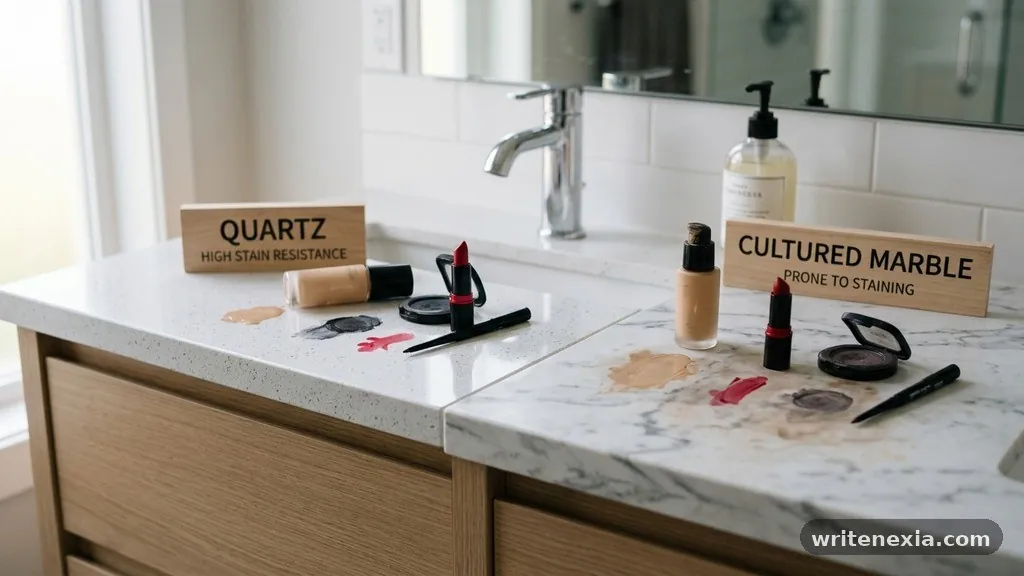
To visualize how these two materials handle common bathroom hazards, consider the following breakdown of their physical properties. While both are engineered, their reaction to household chemicals differs based on their surface chemistry. The table below highlights key performance indicators for each material.
| Feature | Engineered Quartz | Cultured Marble |
|---|---|---|
| Porosity | Non-porous | Low (if gel coat is intact) |
| Chemical Resistance | High | Moderate |
| Surface Hardness | Very High | Moderate |
| Stain Vulnerability | Low | High (if scratched) |
As shown in the table, the primary difference is how they handle the “life cycle” of a vanity top. Quartz maintains its resistance for decades because it is solid throughout.
Cultured marble relies entirely on the integrity of the thin gel coat. If your bathroom routine involves products that can scratch or dissolve this coating, your vanity top will gradually lose its ability to repel stains.
The Impact of Makeup and Cosmetic Chemicals
Makeup products, particularly liquid foundations and bold lipsticks, often contain oils and synthetic pigments designed to adhere to skin. These same properties make them highly effective at staining household surfaces.
On a quartz vanity, these pigments remain on the surface, allowing for easy removal with a simple microfiber cloth. If a smudge dries, a mild household cleaner is usually sufficient to dissolve the residue without leaving a mark.
Cultured marble is more sensitive to the solvents found in nail polish remover or certain hair treatments. If these substances sit on the surface, they can soften the resin-based gel coat. Once the surface texture changes, it becomes “tacky,” which traps makeup particles more effectively.
Over time, this creates a dull, stained patch that cannot be wiped clean. For more information on how different materials react to household pollutants, you can review the Environmental Protection Agency resources on indoor materials.
Maintenance Requirements for Long-Term Beauty
Maintaining a quartz vanity is remarkably straightforward because it does not require specialized care. Because it is non-porous, bacteria and mold struggle to find a foothold, which is a major advantage in a humid bathroom environment. You simply need to avoid harsh scouring powders or steel wool that could potentially dull the finish over many years of use.
Cultured marble requires a more delicate touch to preserve its aesthetic appeal. You must avoid abrasive cleaners entirely, as they will degrade the gel coat and expose the material beneath.
If you choose this material, frequent cleaning is necessary to ensure that makeup residue does not have time to set. Owners of these vanities often find that they need to be more vigilant about wiping down the counter after every use to prevent long-term discoloration.
Aesthetic Versatility and Design
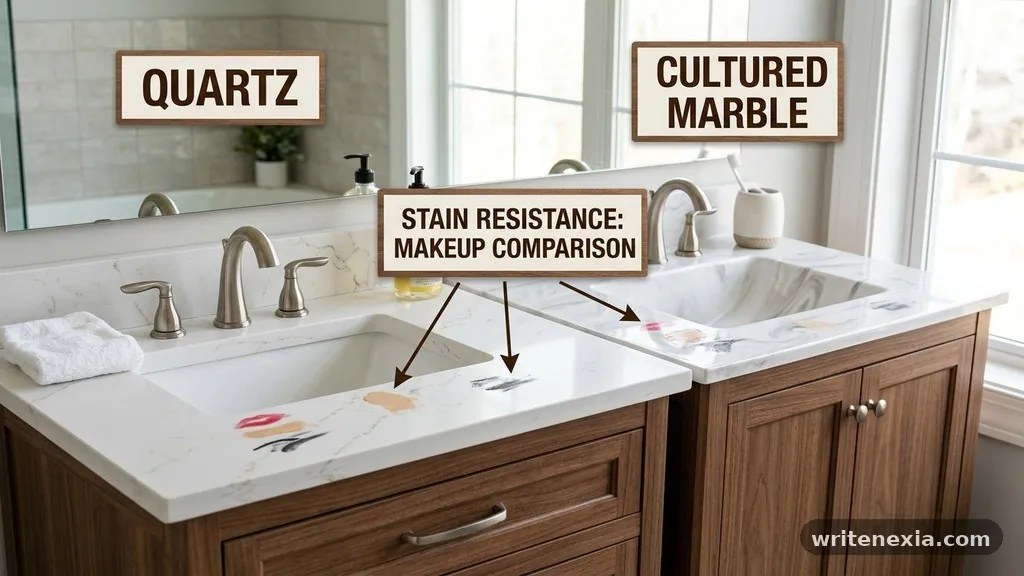
Both materials offer a wide range of visual options to suit different bathroom styles. Quartz is highly prized for its ability to mimic the look of natural stone while offering superior performance. You can find options that feature complex veining or subtle flecks, allowing you to achieve a high-end, luxurious look without the risks associated with natural marble.
Cultured marble is also available in a vast array of colors and patterns. Because it is cast in a mold, it can be manufactured with an integrated sink bowl, which eliminates the seam between the counter and the basin.
This seamless design is a major advantage for cleanliness, as it removes the crevices where makeup and debris typically accumulate. However, the trade-off is that you are locked into that specific integrated shape, whereas quartz allows for a variety of undermount or vessel sink installations.
Factors Influencing Your Final Decision
When deciding between these options, you should evaluate your daily habits and the amount of traffic your bathroom receives. If your vanity is used by multiple people, particularly children or teenagers who may not be as careful with makeup or hair products, quartz is the safer, more durable choice. Its resistance to heat and scratching makes it a “set it and forget it” material that holds up well under pressure.
Cultured marble is often chosen for guest bathrooms or secondary baths where the aesthetic preference for an integrated sink outweighs the need for extreme chemical resistance. It is often more budget-friendly than premium quartz, providing a cost-effective way to update a space. If you are prepared to follow a stricter maintenance routine and avoid abrasive cleaners, it can remain beautiful for a long time.
Common Myths About Surface Staining
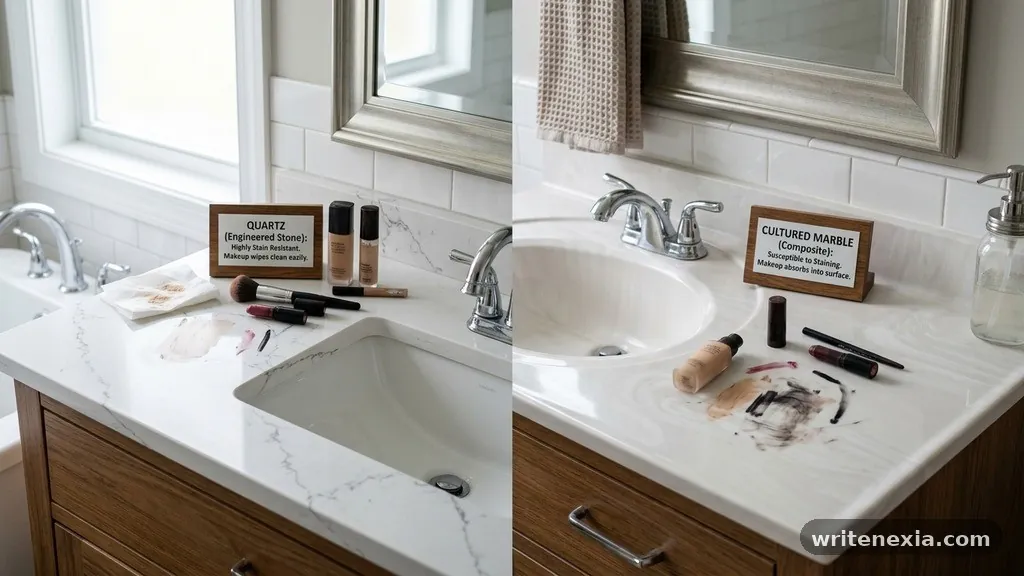
There is a common misconception that all stone-like materials are equally difficult to keep clean. Many people assume that because cultured marble contains the word “marble,” it shares the same high-maintenance requirements as the natural stone. In reality, it is a plastic-based composite, which behaves more like a hard resin than a natural mineral.
Another myth is that quartz is “indestructible.” While it is highly resistant to stains, it is not impervious to everything.
Extremely high heat can damage the resins in quartz, and prolonged exposure to very harsh chemicals like paint strippers can eventually etch the surface. However, when comparing Quartz vs Cultured Marble Vanity Tops, the threshold for damage is significantly higher with engineered quartz.
Strategies for Preventing Permanent Stains
If you decide to install a vanity top that is more prone to staining, you can take proactive steps to protect the surface. Using decorative trays for your makeup bottles is a simple way to prevent spills from touching the counter directly. This creates a physical barrier that keeps the surface clean and organized.
Additionally, establishing a “wipe-down” routine is essential. Even with the most stain-resistant materials, letting makeup residue sit for days can make removal more difficult.
Using a gentle, pH-balanced cleanser ensures that you aren’t stripping the finish of your vanity top while you clean. By keeping the surface clear of standing liquids, you significantly extend the lifespan of your bathroom fixtures.
Common Questions Regarding Vanity Surfaces
Is it possible to repair a stained cultured marble vanity top?
Yes, minor stains and surface scratches can often be buffed out using specialized polishing compounds designed for gel-coated surfaces. However, if the stain has penetrated the gel coat into the underlying material, it may require professional refinishing or a complete replacement of the top.
Can I use bleach on my vanity top to remove makeup stains?
You should generally avoid using bleach on both quartz and cultured marble. Bleach is too harsh for the resin components in both materials and can cause discoloration, dullness, or even structural damage to the protective finish over time.
Does the color of the vanity top affect its stain resistance?
While the material composition is the primary factor, lighter colors often show stains more readily than darker, patterned surfaces. However, because quartz is non-porous, even white quartz will resist staining better than a dark-colored cultured marble that has been scratched.
Are integrated sinks better for preventing makeup buildup?
Integrated sinks are excellent for hygiene because they remove the caulk line between the sink and the countertop, which is a common site for grime accumulation. If you choose a material with an integrated sink, you eliminate the risk of makeup getting trapped in the junction.
How often should I seal my quartz vanity top?
One of the primary benefits of engineered quartz is that it never requires sealing. The manufacturing process creates a non-porous surface that is ready for use immediately upon installation and stays that way without additional maintenance.
Evaluating the Long-Term Investment
Choosing between Quartz vs Cultured Marble Vanity Tops requires balancing your immediate budget with your long-term maintenance expectations. Quartz represents a higher upfront cost but offers superior durability and peace of mind, especially in households where makeup and grooming products are used daily. Its non-porous nature makes it exceptionally resistant to the pigments and chemicals that typically cause staining in a bathroom.
Cultured marble remains a popular choice for those who value the convenience of an integrated sink and a more approachable price point. While it is more susceptible to surface damage, careful use and routine cleaning can keep it looking pristine for many years.
Ultimately, your choice should reflect your lifestyle, your design preferences, and the level of maintenance you are willing to commit to. If you prioritize a surface that will remain essentially unchanged by your daily routine, investing in high-quality engineered quartz is the most effective way to ensure your bathroom vanity remains as beautiful as the day it was installed.