

BLOG
Top 10 Front Yard Designs: Do House Curb Appeal Ideas

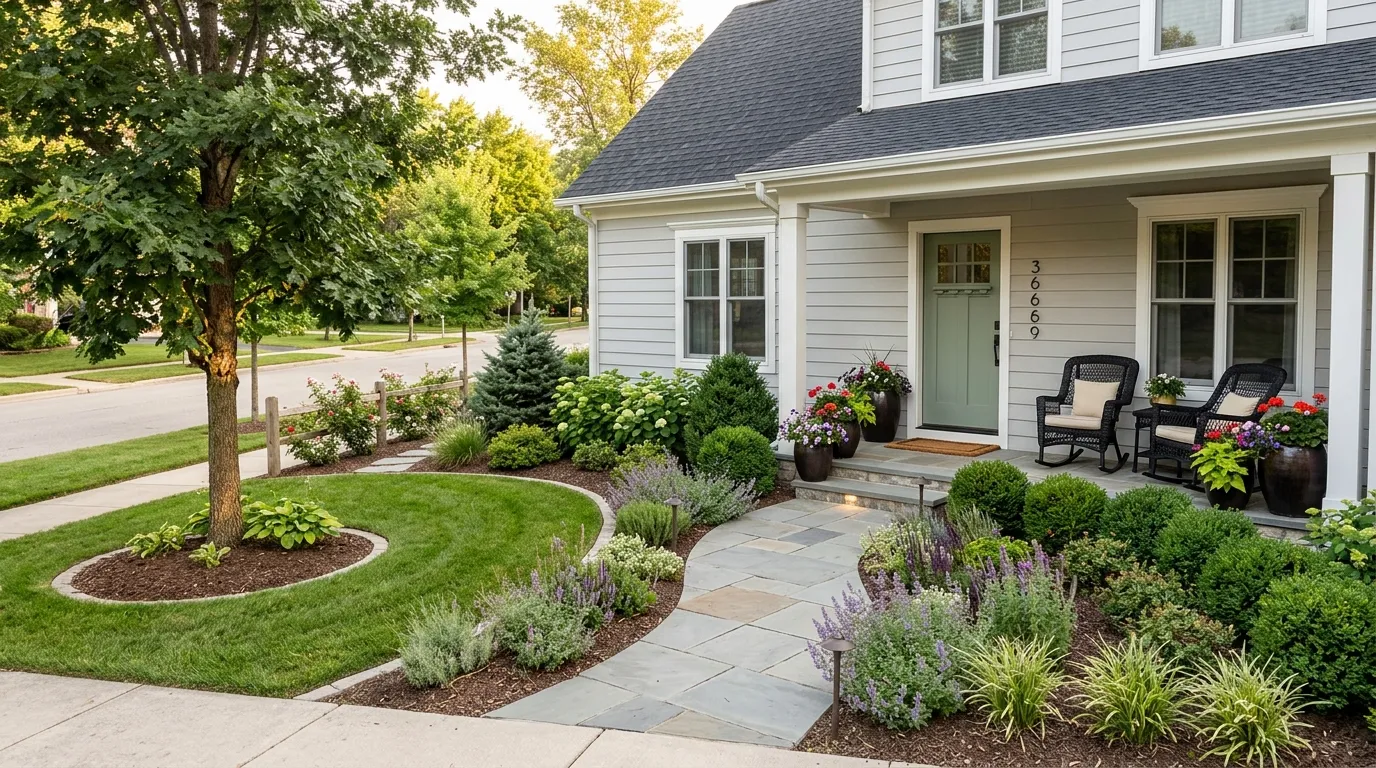
Introduction
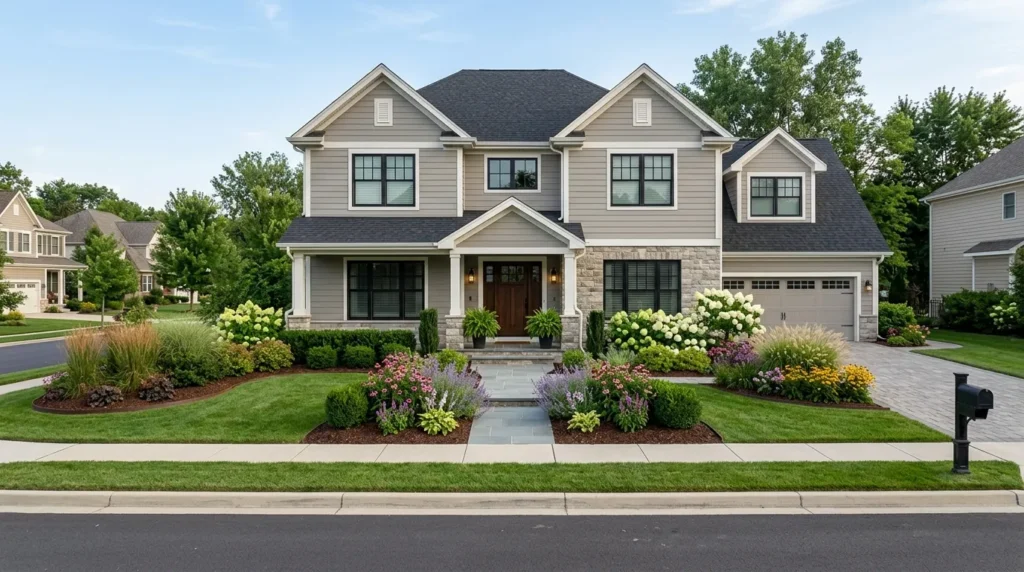
Your front yard is the first thing people notice before they ever step inside your home. It frames the house, sets the mood, and quietly tells visitors whether the property feels cared for, stylish, and welcoming. For USA homeowners, curb appeal matters for daily pride, neighborhood charm, and even resale value. The best updates do not always require a full renovation. Sometimes a cleaner walkway, layered plants, better lighting, or a stronger entryway can completely shift the way a home looks from the street. These Front Yard Designs focus on practical beauty, easy maintenance, and Pinterest-worthy styling.
1. Layered Walkways
Bullet Points:
- Use stone, brick, pavers, or gravel to guide the eye toward the entrance.
- Add low plants along both sides for softness and structure.
- Keep the path wide enough for comfortable daily use.
- Use lighting to make the walkway safer and more polished at night.
- Choose materials that match the home’s exterior color and style.
Paragraph 1:
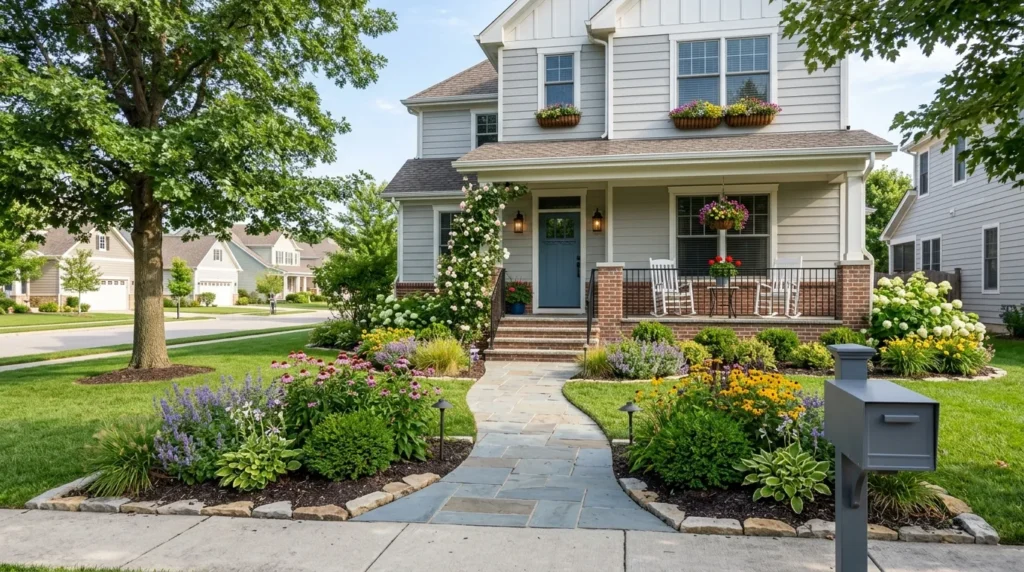
A beautiful walkway can make the entire home feel more intentional from the street. Instead of letting visitors cross plain grass or cracked concrete, a layered path creates direction, movement, and charm. In my experience, curved paths feel softer for cottage and traditional homes, while straight stone or concrete paths suit modern houses better. Materials like flagstone, brick, pea gravel, and large concrete pavers all work well when paired with clean edging. The goal is to make the entry feel clear, welcoming, and visually connected to the house.
Paragraph 2:
This idea transforms the front yard by giving it structure before you add anything else. A walkway can divide planting beds, highlight the front door, and make a small yard feel more spacious. Add low-growing plants like creeping thyme, liriope, boxwood, or ornamental grasses along the edges for a finished look. Solar path lights can add evening warmth without complicated wiring. When the path, plants, and lighting work together, the yard feels organized, polished, and easier to maintain throughout the year.
2. Foundation Planting
Bullet Points:
- Use shrubs to soften the base of the house.
- Layer plants by height for a fuller, balanced look.
- Choose evergreens for year-round curb appeal.
- Add seasonal flowers for color without overwhelming the design.
- Leave space between plants and siding for airflow and maintenance.
Paragraph 1:
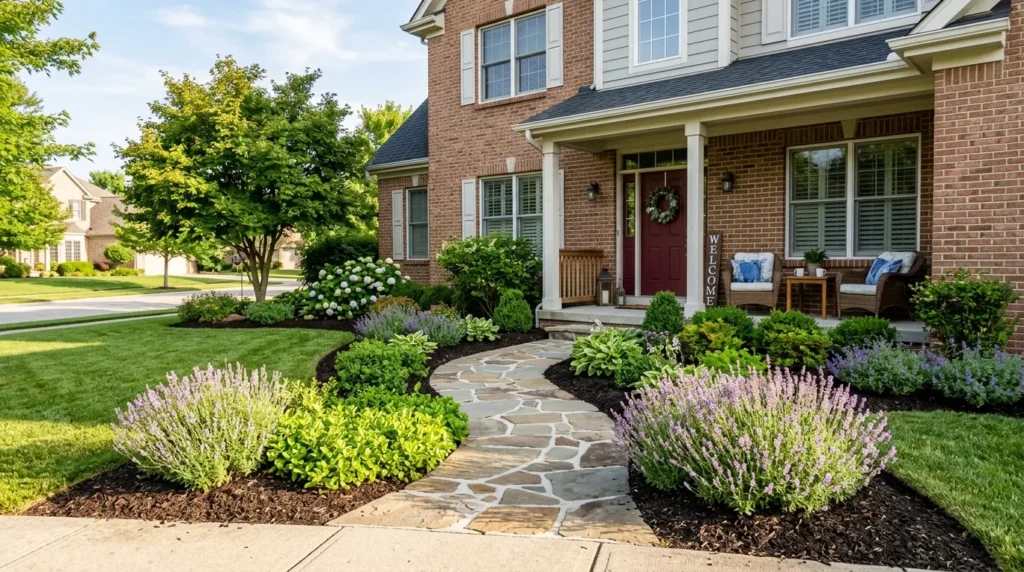
Foundation planting is one of the easiest ways to make a house look settled and complete. Bare walls, exposed crawl spaces, and empty beds can make even a nice home feel unfinished. That’s why many designers recommend mixing evergreen shrubs, flowering plants, and soft ground covers around the base of the home. Boxwood, hydrangeas, dwarf hollies, hostas, lavender, and ornamental grasses are popular choices across many USA climates. The trick is to avoid planting everything in one flat row and instead create layers that frame the house naturally.
Paragraph 2:
The result is a front yard that feels softer, fuller, and more connected to the home’s architecture. Taller shrubs should sit toward the back, medium plants in the middle, and smaller flowers or ground covers near the front edge. This layered approach adds depth and keeps the design from looking stiff. Use mulch or decorative stone to control weeds and create a clean background. With the right spacing, foundation planting improves curb appeal while still allowing windows, siding, and walkways to remain accessible.
3. Porch Planters
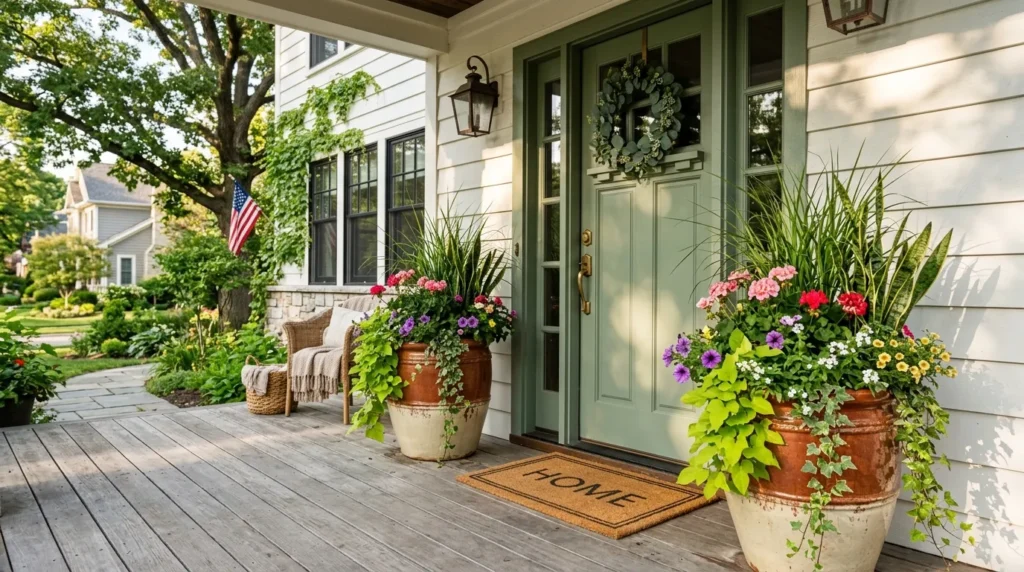
Bullet Points:
- Place matching planters beside the front door for symmetry.
- Use tall plants, trailing greenery, and seasonal blooms together.
- Choose weather-resistant pots in ceramic, resin, concrete, or metal.
- Refresh flowers by season for year-round visual interest.
- Match planter colors with the door, trim, or porch furniture.
Paragraph 1:
Porch planters instantly make an entryway feel warmer and more styled. Even if the yard itself is small, a pair of well-filled containers can add height, color, and personality right where guests look first. I’ve noticed that the most attractive planters use a simple “thriller, filler, spiller” formula: one tall plant, several full middle plants, and trailing greenery over the edge. For spring and summer, try petunias, geraniums, coleus, sweet potato vine, or ferns. For fall, mums, ornamental cabbage, and grasses look beautiful.
Paragraph 2:
This update works because it gives the front door a finished, photographed look without major landscaping. Large planters can frame the entry, balance porch columns, and create color even when garden beds are simple. Choose pots that feel proportionate to the door rather than tiny containers that disappear from the street. Self-watering planters are useful for hot climates or busy homeowners. With seasonal swaps, porch planters keep the entry fresh, welcoming, and easy to update for holidays, guests, and everyday curb appeal.
4. Modern Lawn Edges
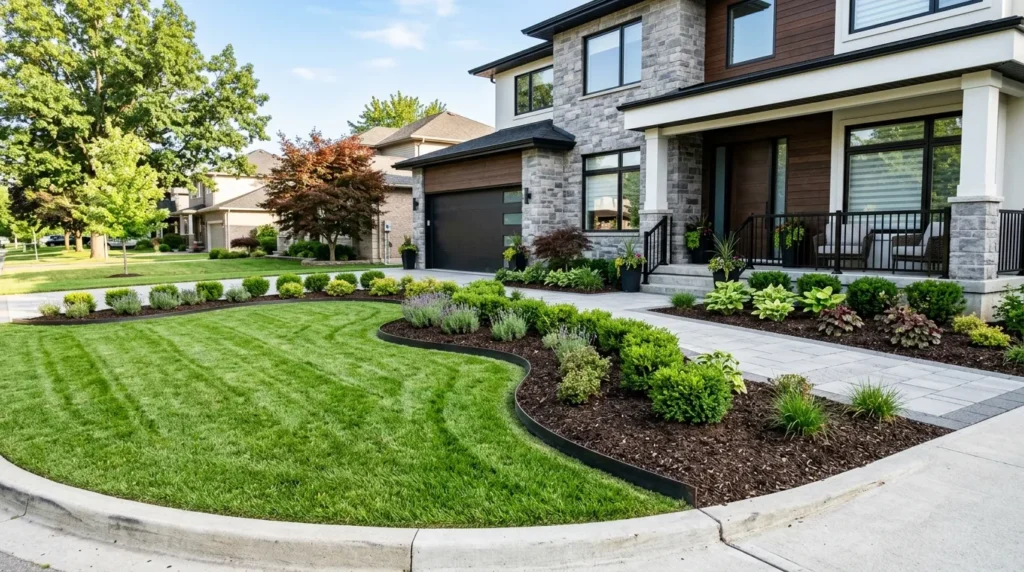
Bullet Points:
- Use metal, stone, brick, or concrete edging for clean borders.
- Separate grass from flower beds to reduce messy overgrowth.
- Keep curves smooth and intentional for a designer look.
- Use dark mulch or light gravel to create contrast.
- Maintain edges regularly for a crisp curb appeal upgrade.
Paragraph 1:
Clean lawn edges can make a front yard look professionally designed, even with simple plants. Messy borders, spreading grass, and uneven mulch lines often make a yard feel neglected. A defined edge creates instant order by separating lawn, beds, walkways, and driveway areas. Steel edging works beautifully for modern homes, while brick or stone suits traditional and cottage styles. In my experience, this is one of the most underrated upgrades because it improves the entire landscape without requiring expensive new plants or major construction.
Paragraph 2:
The transformation is subtle but powerful because neat edges sharpen every other feature. Flower beds look more intentional, grass appears healthier, and the yard gains a clean visual rhythm. Use mulch for a warm, classic look or gravel for a modern, low-maintenance finish. If your yard has curves, keep them wide and smooth rather than tight and wavy. This makes mowing easier and improves flow from the sidewalk to the porch. Good edging also helps reduce weeds and keeps maintenance more manageable.
5. Flower Bed Borders
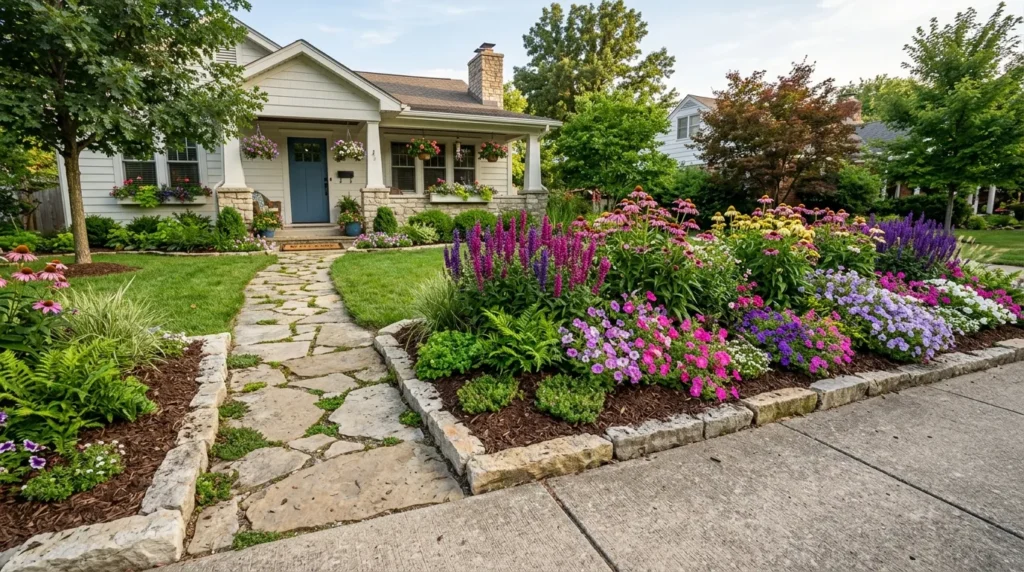
Bullet Points:
- Add colorful beds near walkways, fences, or porch steps.
- Mix perennials and annuals for lasting beauty and seasonal color.
- Use repeating colors to avoid a cluttered appearance.
- Add mulch to hold moisture and create a tidy base.
- Choose flowers suited to your sunlight and local climate.
Paragraph 1:
Flower bed borders bring personality and color to the front of the home. They can soften hard edges, brighten plain lawns, and create a more welcoming path toward the entrance. I’ve seen this work well in many homes when the flower palette is simple instead of random. Choose 2 or 3 main colors and repeat them throughout the bed for a cohesive look. Popular options include salvia, black-eyed Susans, coneflowers, begonias, impatiens, marigolds, and petunias, depending on sun exposure and region.
Paragraph 2:
A well-planned border can make the yard feel cheerful without becoming high-maintenance. Place taller blooms toward the back and shorter plants near the front so every layer is visible. Perennials provide structure year after year, while annuals let you refresh the color each season. Add mulch, stone edging, or low boxwood borders for a cleaner finish. The best flower beds look full but not crowded, colorful but not chaotic, and practical enough to water, trim, and refresh when the seasons change.
6. Statement Trees
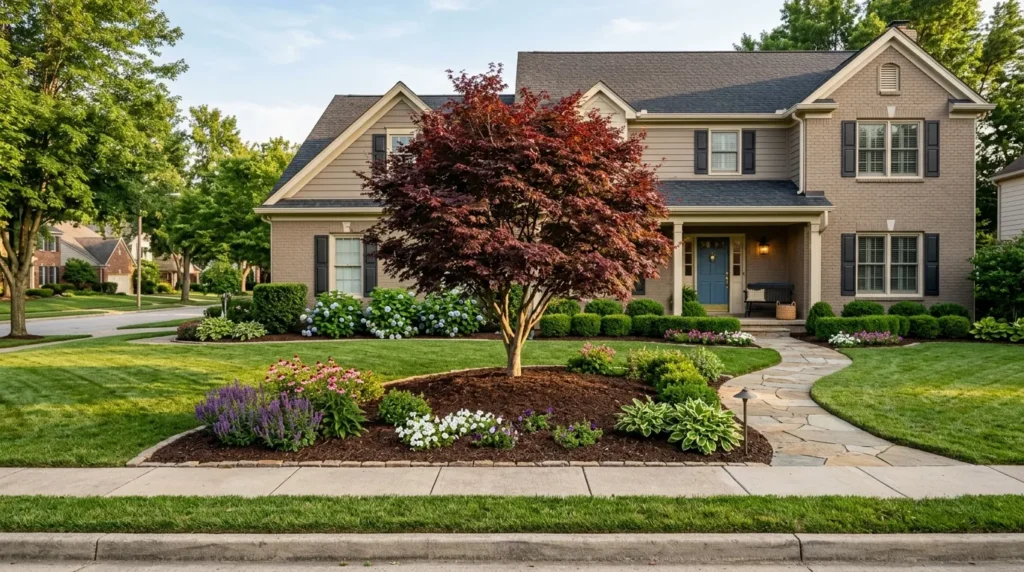
Bullet Points:
- Use one small ornamental tree as a strong focal point.
- Choose varieties that fit the yard size at maturity.
- Place trees where they frame the home, not block it.
- Add mulch rings or low flowers around the base.
- Select trees with seasonal interest, blooms, bark, or fall color.
Paragraph 1:
A statement tree can anchor the entire front yard with natural beauty and height. Instead of filling every empty space with small plants, one carefully chosen tree can create balance and visual impact. Many homeowners in the USA use Japanese maple, dogwood, redbud, crape myrtle, serviceberry, or dwarf magnolia for this purpose. The key is choosing a tree that suits your climate, soil, and available space. A tree that grows too large can block windows, damage walkways, or overwhelm the home.
Paragraph 2:
When placed correctly, a statement tree makes the landscape feel mature and thoughtfully designed. It can frame the porch, soften a blank wall, or create gentle shade near a walkway. Add a clean mulch ring, low perennials, or decorative stones around the base to make it feel intentional. Seasonal flowers or fall foliage can give the yard changing color throughout the year. This idea adds vertical interest and long-term value while keeping the rest of the landscape simple and balanced.
7. Driveway Borders
Bullet Points:
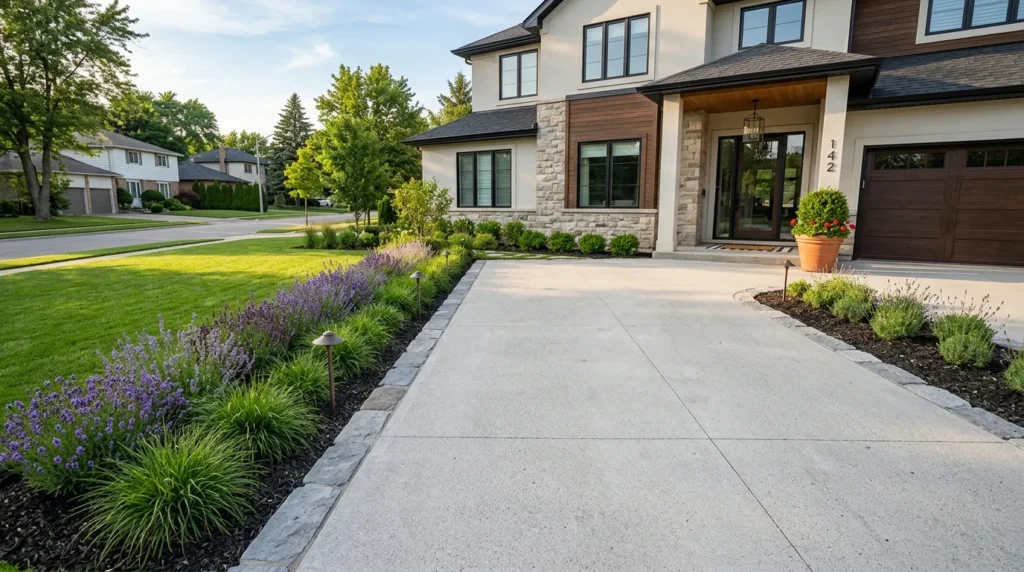
- Line driveway edges with plants, gravel, or low lighting.
- Use tough plants that handle heat, runoff, and foot traffic.
- Keep plant height low near the street for visibility.
- Add stone borders to prevent mulch from spilling onto pavement.
- Match the border style with the walkway and home exterior.
Paragraph 1:
Driveway borders can turn a plain parking area into a polished part of the landscape. Many front yards lose curb appeal because the driveway feels disconnected from the rest of the design. By adding low plants, stone edging, gravel strips, or simple lighting, the driveway becomes part of the overall curb appeal plan. I’ve noticed that hardy plants like liriope, lavender, dwarf grasses, sedum, and compact evergreens work especially well because they tolerate heat and occasional runoff from pavement.
Paragraph 2:
This upgrade creates a cleaner transition between hardscape and greenery. A bordered driveway feels more finished and helps guide the eye toward the garage, porch, or walkway. Low lighting can make evening arrivals safer while adding a soft upscale feel. Keep the design practical by avoiding plants that grow too tall or spill heavily onto the pavement. Stone or metal edging helps contain mulch and prevents messy maintenance. With thoughtful materials, the driveway becomes attractive instead of purely functional.
8. Entry Lighting
Bullet Points:
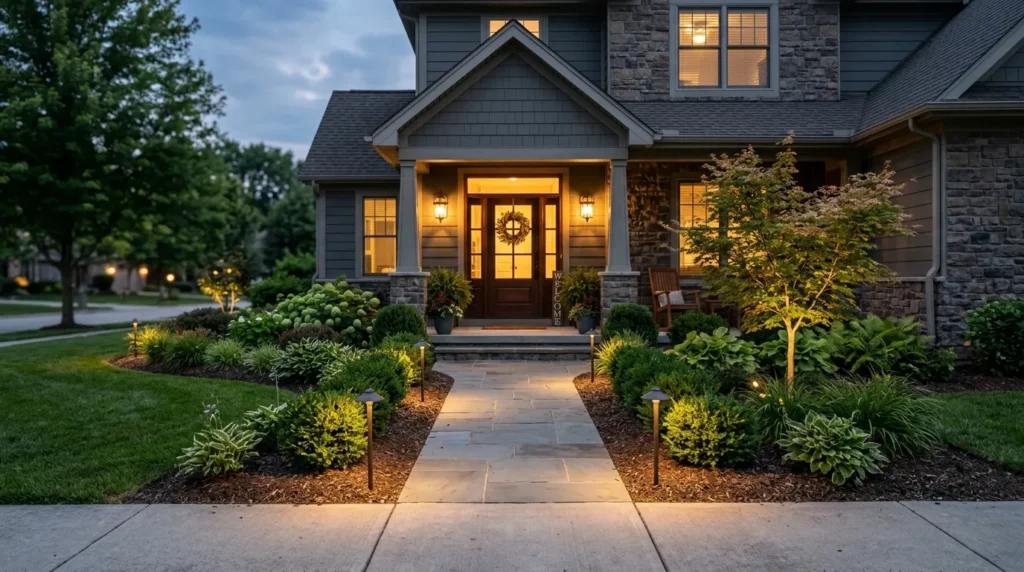
- Use path lights, porch sconces, and uplights for layered brightness.
- Choose warm white bulbs for a welcoming look.
- Highlight trees, steps, walkways, and architectural details.
- Use solar lights for simple installation.
- Keep lighting balanced so the yard feels elegant, not harsh.
Paragraph 1:
Good lighting can completely change how a front yard feels after sunset. It improves safety, highlights landscaping, and gives the home a warm, inviting glow. Instead of relying only on one porch light, layer different lighting types throughout the entry area. Path lights guide visitors, uplights highlight trees or stonework, and porch sconces frame the front door. That’s why many designers recommend warm, low-level lighting instead of bright, cold bulbs that make the yard look harsh or flat.
Paragraph 2:
The transformation is especially noticeable in the evening when the house feels more welcoming from the street. Lighting can make steps safer, show off plants, and create depth across the landscape. Solar path lights are simple for beginners, while wired lighting offers a more permanent, professional result. Place lights where they serve a purpose rather than scattering them randomly. When lighting is soft, layered, and well-positioned, the front yard feels elegant, secure, and beautifully finished.
9. Rock Garden Beds
Bullet Points:
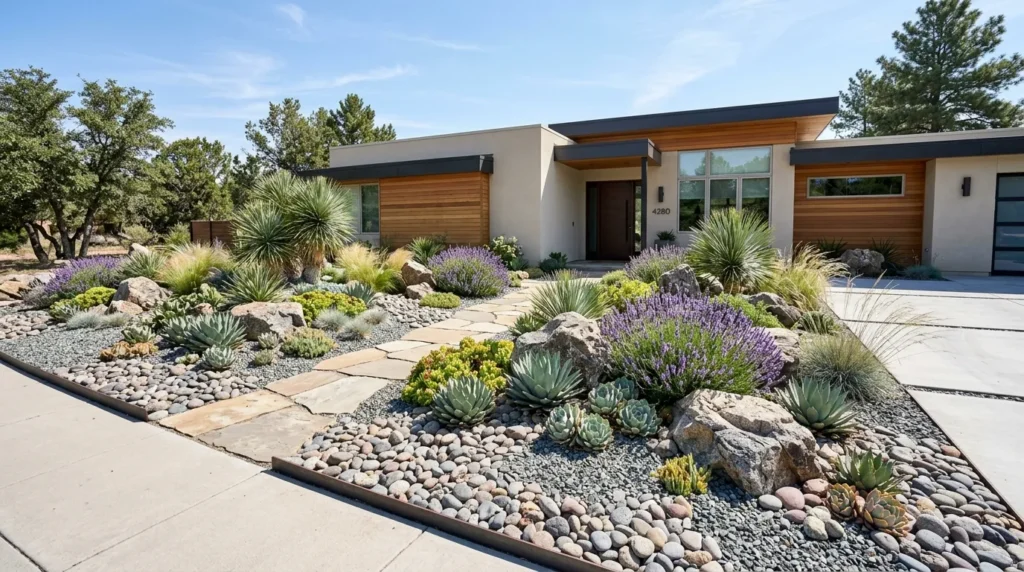
- Use decorative stone, boulders, gravel, and drought-tolerant plants.
- Choose succulents, grasses, lavender, yucca, or native plants.
- Create texture with different rock sizes and colors.
- Use weed barrier fabric under gravel for easier care.
- Keep the layout simple for a clean, modern look.
Paragraph 1:
Rock garden beds are a smart option for homeowners who want curb appeal with less watering. They work especially well in dry climates, sunny yards, and modern home styles. Instead of relying only on mulch and flowers, rock beds use gravel, river stones, boulders, and drought-tolerant plants to create texture. I’ve noticed that the best rock gardens mix stone sizes carefully so the design feels natural, not flat. Plants like sedum, yucca, lavender, blue fescue, and agave can add shape and color.
Paragraph 2:
This layout creates a front yard that feels clean, durable, and easy to maintain. Decorative stone helps control weeds, reduces muddy areas, and gives the landscape a neat finish. Larger boulders can act as focal points, while smaller gravel fills open areas beautifully. Use edging to keep stones contained and avoid mixing too many colors. Rock gardens are especially practical for busy homeowners because they stay attractive through heat, dry weather, and seasonal changes with less daily attention than traditional flower beds.
10. Symmetrical Entry
Bullet Points:
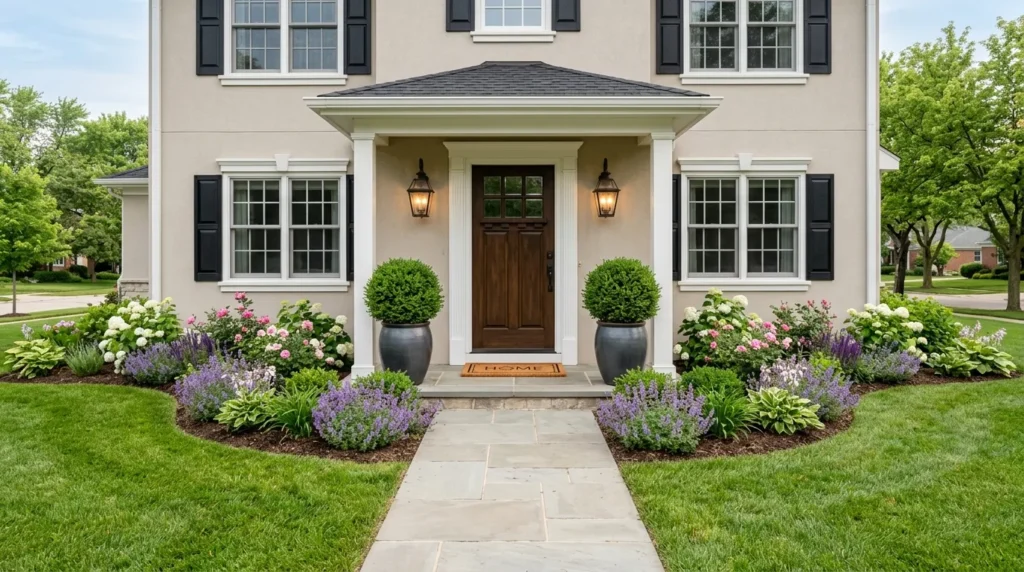
- Use matching plants, planters, or lights on both sides of the door.
- Keep the layout balanced but not overly stiff.
- Choose simple shapes like round shrubs or rectangular planters.
- Add a clean walkway to strengthen the centered design.
- Use symmetry to make small homes feel more polished.
Paragraph 1:
A symmetrical entry gives the front of the home an instantly polished look. Matching planters, shrubs, lights, or flower beds on each side of the door can make even a modest house feel more elegant. In my experience, symmetry works best when the front door is the main focal point. Use paired boxwoods, tall planters, lanterns, or small trees to frame the entrance. The design should feel balanced and welcoming, not overly formal or crowded with too many repeated elements.
Paragraph 2:
This approach improves curb appeal because it creates order that is easy to understand from the street. Visitors immediately know where to walk, where to look, and where the entry begins. A symmetrical layout also photographs beautifully for Pinterest because it feels clean and intentional. Add a fresh doormat, updated house numbers, and simple porch decor to complete the look. When plants, lighting, and hardscape align around the entry, the home feels finished, inviting, and carefully maintained.