

BLOG
Silicone vs Acrylic Latex Caulk for Bathroom Sink Countertops

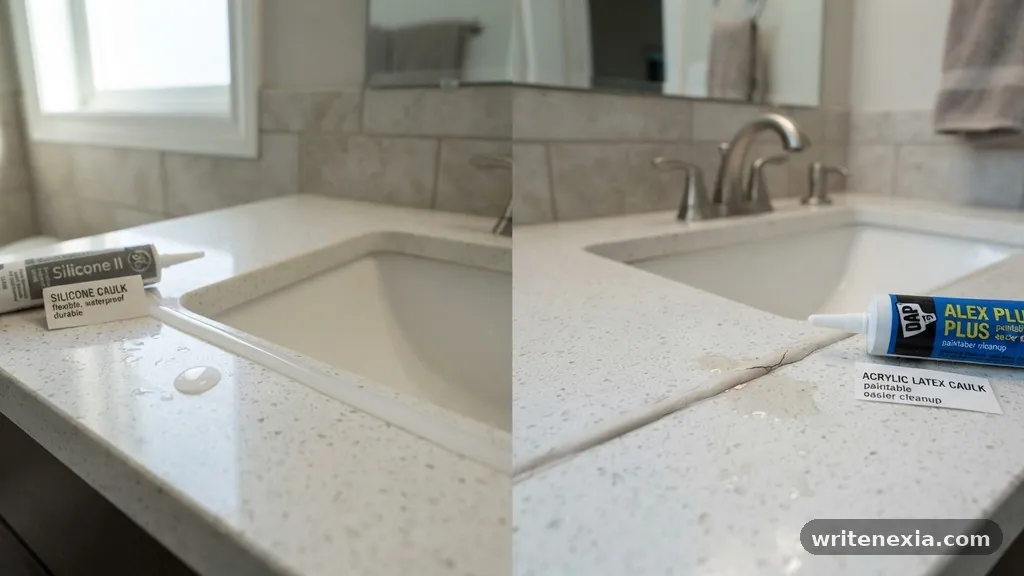
Choosing between silicone vs acrylic latex caulk for bathroom sink countertops is a decision that impacts the longevity of your vanity and the health of your home. Bathroom environments are notorious for high moisture levels, which can quickly degrade inferior sealants and lead to water damage behind your walls or under your cabinetry.
Whether you are performing a quick repair or installing a new sink, understanding the physical properties of these two materials is essential for a successful project. This article clarifies the performance differences and ideal use cases for each sealant, helping you select the right product to ensure a durable, water-resistant finish that stands up to daily wear.
When to Choose Silicone Over Acrylic

If your priority is absolute water resistance, 100% silicone sealant is the industry standard for wet areas. It forms a rubber-like, non-porous barrier that is virtually impervious to liquid penetration.
Because bathroom sinks are constantly exposed to splashes, standing water, and high humidity, this level of protection is often non-negotiable. Silicone remains flexible over time, meaning it can handle the minor expansion and contraction of your sink and countertop materials without cracking or pulling away from the joint.
This flexibility is particularly important where different materials meet, such as a porcelain sink against a stone or laminate countertop. These surfaces expand and contract at different rates as the bathroom temperature fluctuates.
Silicone absorbs this movement effortlessly, maintaining a tight seal that prevents water from seeping into the sub-countertop structure. While it is more difficult to apply and clean up than latex alternatives, the long-term performance benefits in high-moisture zones make it the superior choice for most sink-to-countertop applications.
Understanding Acrylic Latex Performance
Acrylic latex caulk, often referred to simply as latex caulk, is prized for its ease of use and paintability. It is a water-based product that cleans up easily with a damp cloth, making it very forgiving for DIY enthusiasts who may not have extensive experience with sealant application.
Once cured, it forms a hard, stable bead that can be painted to match your surrounding wall or vanity color perfectly. This makes it a popular choice for trim work, molding, and areas where visual aesthetics take priority over heavy-duty moisture resistance.
However, acrylic latex is inherently more porous than silicone. Over time, constant exposure to moisture can cause it to break down, shrink, or lose its adhesion to non-porous surfaces like glass or polished stone.
While many modern “siliconized” acrylic products offer improved durability, they still do not match the water-repelling capabilities of pure silicone. If you choose this material, ensure you are using a version specifically labeled for “kitchen and bath” use, as these contain additives intended to inhibit mold and mildew growth.
The Critical Differences in Flexibility
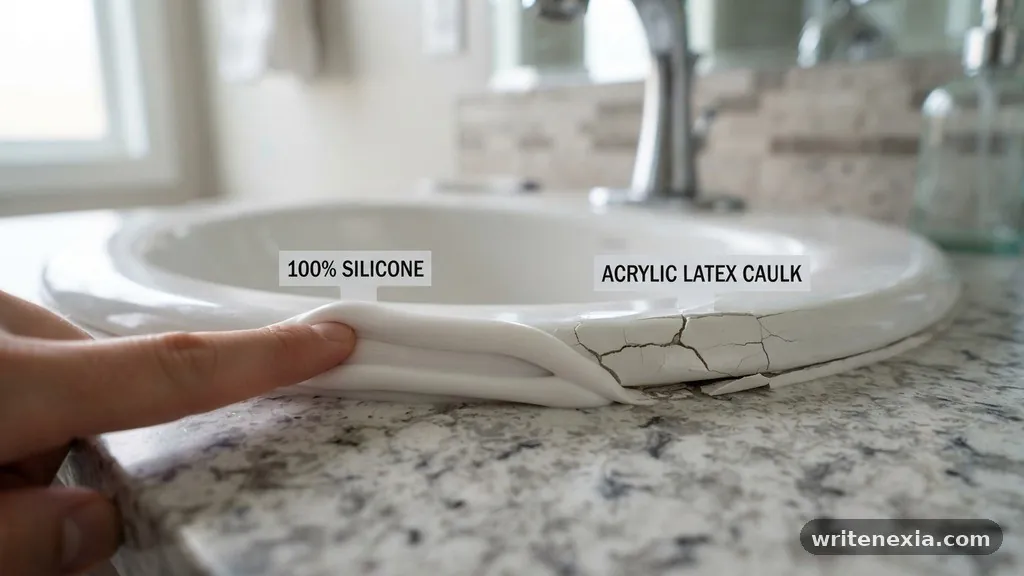
Flexibility is the primary reason silicone dominates in high-movement areas. When a heavy bathroom sink is filled with water, it exerts a subtle downward pressure on the joint between the sink and the countertop.
If the sealant is too rigid, the seam will eventually develop micro-cracks that allow water to migrate into the vanity cabinet below. Silicone retains its elasticity for years, effectively acting as a shock absorber that maintains a seal even under constant physical stress.
In contrast, acrylic latex is significantly less elastic. While it performs well in static joints—such as where a wall meets a baseboard—it struggles when subjected to the persistent vibrations or weight shifts common in plumbing fixtures.
If you use latex caulk around a sink, you may notice it pulling away from the edges after a few months of heavy use. This failure point creates an entry path for water, potentially leading to rot or mold growth that remains hidden until significant damage has occurred.
Comparing Application and Cleanup
Working with silicone requires a steady hand and a bit of patience. Because it is a solvent-based or moisture-curing material, it can be messy; once it touches a surface, it is difficult to remove without specialized solvents or physical scraping.
You cannot easily smooth silicone with just your finger or water, as it will stick to your skin and smear across the countertop. Professionals often use masking tape on either side of the joint to create a clean, crisp line before applying the bead.
Acrylic latex is the polar opposite in terms of user experience. You can easily smooth out a bead of latex caulk using a wet finger or a damp sponge, making it very simple to achieve a professional-looking finish.
If you make a mistake, you can simply wipe it away with water before it sets. This makes it an excellent training material for beginners, but remember that the ease of application does not compensate for its lower moisture resistance in a bathroom setting.
The Role of Mold and Mildew Inhibitors

Bathroom environments are breeding grounds for fungi due to the combination of heat, organic debris, and moisture. Manufacturers recognize this and often include biocides in both silicone and acrylic latex formulations designed for kitchen and bath use.
These chemicals are intended to prevent the growth of black mold and mildew on the surface of the sealant. However, the effectiveness of these additives depends heavily on the quality of the product and the environment.
Pure silicone is naturally resistant to mold because it is non-porous; mold has no “niche” to grow into on its surface. Acrylic latex, being more porous, is much more susceptible to colonization by fungi if the surface is not kept clean and dry.
Even with added biocides, a latex caulk bead in a frequently wet area will likely show signs of staining much faster than a silicone bead. If you live in a high-humidity climate or have a poorly ventilated bathroom, the inherent resistance of silicone is a major advantage.
Surface Compatibility and Adhesion
The material of your countertop significantly influences which sealant you should choose. Silicone adheres exceptionally well to non-porous surfaces like polished granite, marble, glass, and stainless steel.
It forms a chemical bond that is difficult to break, which is exactly what you want for a sink that sees daily water usage. Note, however, that some types of silicone, particularly “acetoxy” cured versions, can release acetic acid that might etch certain types of natural stone.
Always look for a “neutral-cure” silicone when working with sensitive stone countertops to avoid staining or chemical reactions. Acrylic latex adheres well to porous surfaces like wood, drywall, or painted surfaces, but it often struggles to maintain a long-term bond with smooth, non-porous materials like ceramic or stone.
If you apply latex caulk to a polished marble vanity, it may peel off in strips after the first few cleaning cycles. Always verify that your chosen sealant is chemically compatible with both the sink material and the countertop substrate.
Comparing Key Characteristics
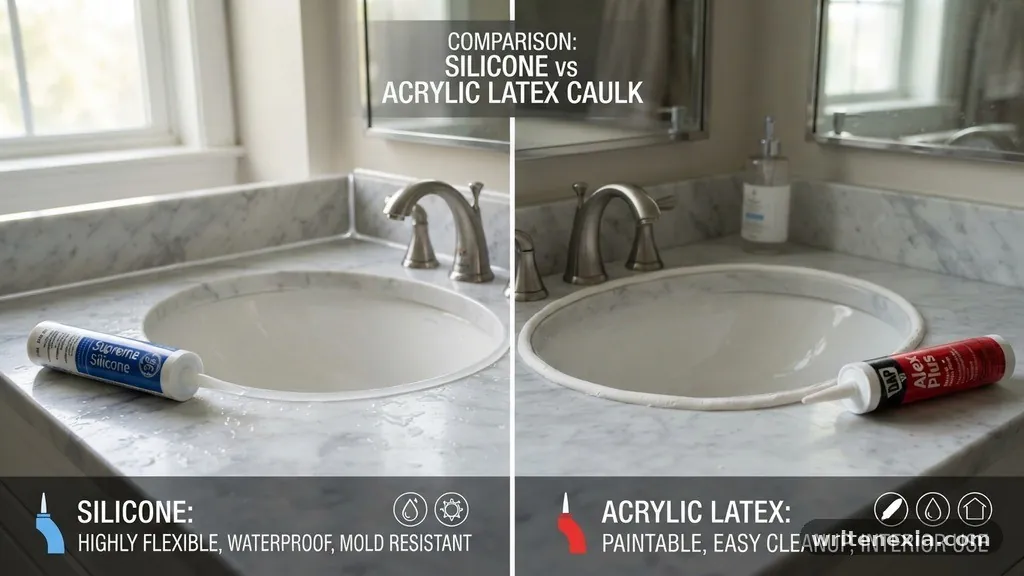
When evaluating silicone vs acrylic latex caulk for bathroom sink countertops, it is useful to see how they stack up across several performance metrics. The following table provides a quick reference for these differences:
| Feature | 100% Silicone | Acrylic Latex |
|---|---|---|
| Water Resistance | Excellent | Moderate |
| Flexibility | High | Low to Medium |
| Ease of Cleanup | Difficult (Solvent) | Easy (Water) |
| Paintability | None | High |
| Shrinkage | Minimal | Moderate |
Environmental and Health Considerations
When applying any sealant, ventilation is critical. Silicone sealants often release vinegar-like odors (acetic acid) or other chemical byproducts as they cure.
While these odors generally dissipate within 24 to 48 hours, they can be irritating to the respiratory system, so keeping the bathroom window open or running an exhaust fan is essential. Once fully cured, silicone is inert and safe for contact with water used in the bathroom.
Acrylic latex products are generally lower in VOCs (Volatile Organic Compounds) and have a milder scent, making them more pleasant to work with in small, enclosed spaces. However, because they are water-based, they can be susceptible to freezing during transit or storage, which permanently ruins their chemical structure.
Always check the storage conditions of your caulk before applying it to ensure the product hasn’t been compromised. When choosing between these two, consider both the immediate application environment and the long-term safety of the finish.
Preparation and Tooling Techniques
Regardless of the material you choose, the success of the seal depends 90% on surface preparation. You must remove every trace of the old caulk using a plastic scraper or a dedicated caulk removal tool.
Never try to apply new sealant over old, failing caulk, as the new material will not adhere properly and will create a weak point for water intrusion. Once the old material is removed, clean the surface thoroughly with rubbing alcohol to remove grease, soap scum, and dust.
Allow the area to dry completely before applying the new bead. Any trapped moisture will prevent the sealant from bonding and can lead to immediate failure. When applying the bead, maintain a consistent pressure on the caulk gun to ensure a uniform thickness.
For silicone, use a specialized smoothing tool or a gloved finger dipped in a mild soapy water solution to shape the bead. For latex, a damp sponge is usually sufficient to achieve a clean, smooth line that meets the countertop edge perfectly.
Frequently Asked Questions
Is it possible to paint over silicone caulk?
No, paint will not adhere to 100% silicone. The surface is too slick and repels liquid, including paint, causing it to bead up or peel off immediately. If you need a paintable seal, you must use a high-quality acrylic latex or a paintable hybrid sealant.
Can I apply new silicone directly over old silicone?
This is generally not recommended. New silicone does not bond well to cured silicone, meaning the new bead will likely peel away from the old one within a short time. You should always scrape out the old material and clean the surface thoroughly before applying a new bead.
Why is my caulk turning black?
If your caulk is turning black, it is likely infested with mold or mildew. This occurs because the caulk is porous, or because the sealant was not designed for high-moisture environments. Once mold has penetrated the material, it is usually impossible to clean, and the best solution is to remove the caulk and replace it with a high-quality, mold-resistant silicone.
Does “siliconized” acrylic mean it is as good as pure silicone?
Not exactly. Siliconized acrylic is a hybrid that offers better flexibility and water resistance than standard latex, but it still does not match the performance of 100% silicone in terms of water impermeability. It is a good middle-ground product, but for a high-traffic sink area, pure silicone remains the superior choice.
How long should I wait before using the sink after caulking?
You should wait at least 24 hours for most silicone and latex products to cure before exposing them to water. While the surface may feel dry to the touch in an hour or two, the internal structure of the sealant needs time to solidify and adhere fully to the surfaces. Using the sink too early can break the seal and allow water to get behind the bead.
Key Takeaways for Your Project
Selecting the right sealant for your bathroom sink is a balance between performance requirements and your personal comfort with application tools. For most homeowners, the superior water resistance and flexibility of 100% silicone make it the clear winner for sink-to-countertop joints.
While it requires more effort to apply and clean up, the protection it provides against water damage is worth the extra time. If you prioritize ease of application and the ability to paint the joint to match your walls, ensure you select a premium, mold-resistant acrylic latex and be prepared to monitor the seal for signs of wear.
Ultimately, preventing water damage is the goal when comparing silicone vs acrylic latex caulk for bathroom sink countertops. Take the time to properly clean your surfaces, use a steady hand during application, and allow for a full curing period before returning your sink to service.
By choosing the right material for your specific countertop and sink setup, you ensure that your bathroom remains a clean, dry, and functional space for years to come. Don’t hesitate to reach out to a local hardware professional if you are unsure about the compatibility of a specific product with your vanity material.
xpyloudvrwimkhgtezvyqjddoxygxk