

BLOG
Top 10 Plant Arrangements: Do Balcony Styling TipsIntroduction

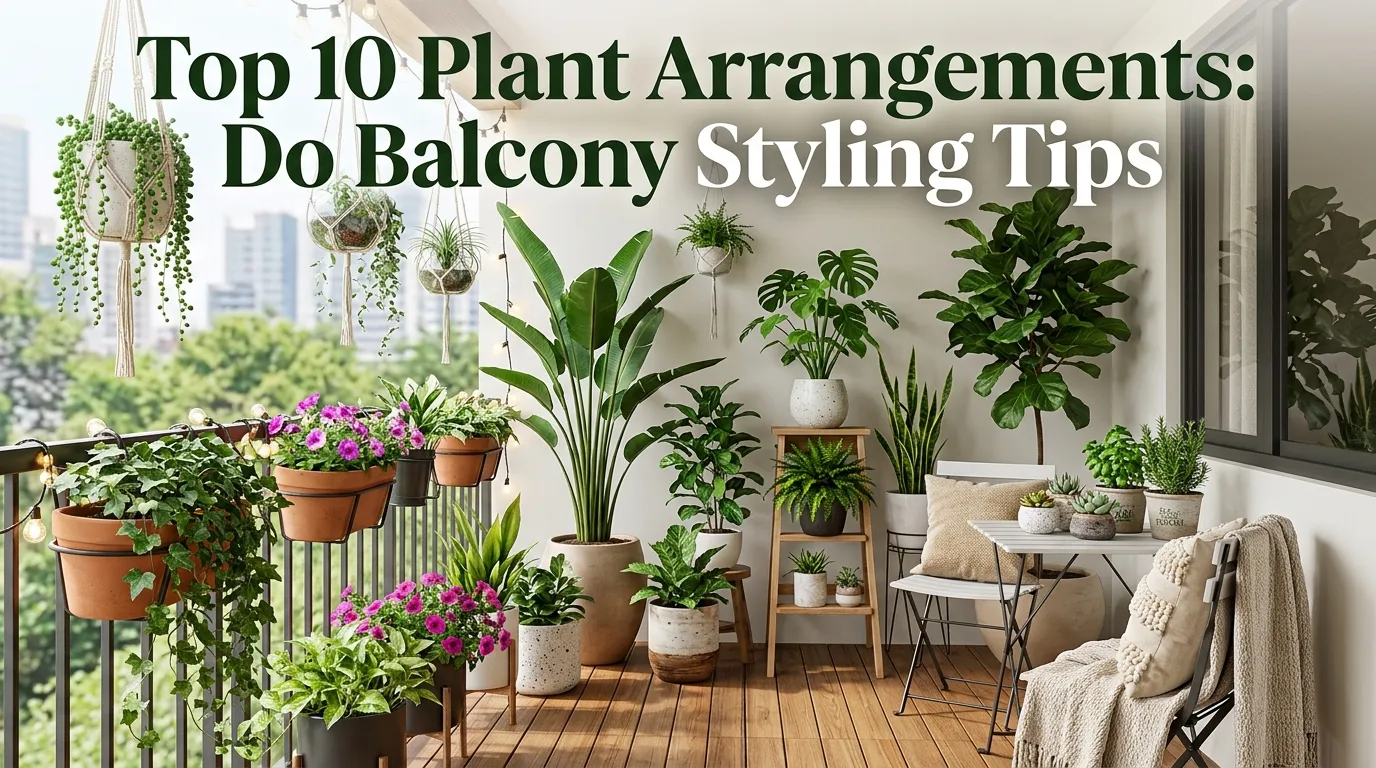
A balcony feels more beautiful when plants are styled with intention instead of placed wherever space is left. The right mix of height, color, texture, and container style can turn a narrow apartment balcony into a calm green corner, a cozy coffee spot, or a small outdoor room. You do not need a huge patio or expensive furniture to make it work. What matters most is how you group the plants, where you place them, and how each pot supports the overall mood. These Plant Arrangements are designed for USA apartments, condos, and small homes where every inch needs to look useful and pretty.
1. Tall Corner Cluster
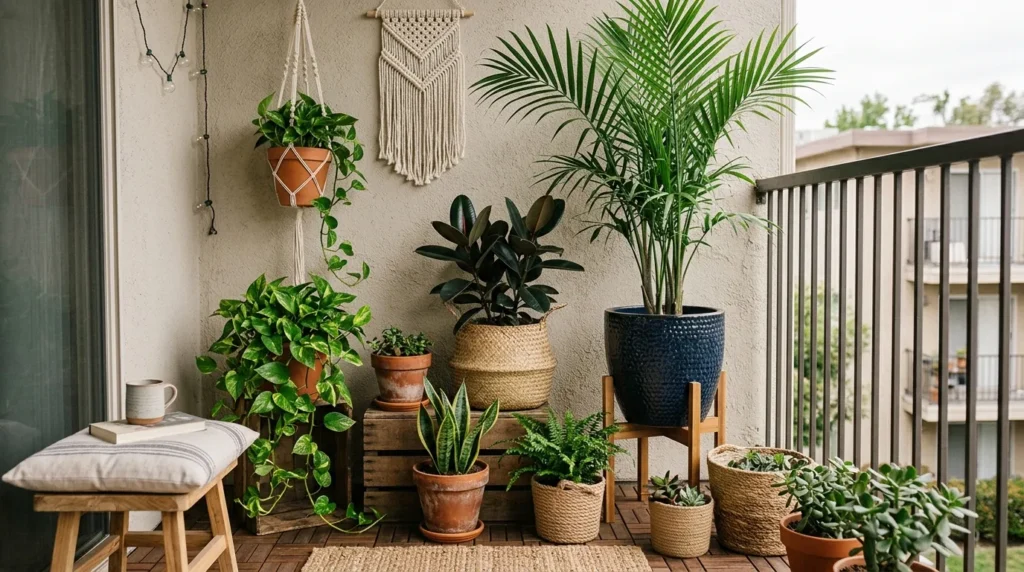
- Adds height and fullness to an empty balcony corner
- Works with palms, snake plants, rubber plants, and grasses
- Creates a strong green backdrop without using the whole floor
- Best with three different plant heights for natural layering
- Materials: large pots, plant saucers, potting mix, and stable stands
A tall corner cluster is one of the easiest ways to make a balcony look designed. Instead of spreading large plants across the floor, group them in one corner to create height and impact. Start with one tall plant at the back, one medium plant beside it, and one smaller plant in front. This simple triangle shape feels balanced without looking too perfect. In my experience, large leafy plants make a small balcony feel calmer because they soften hard walls, railings, and apartment surfaces.
This setup transforms an unused corner into a lush green anchor. It works beautifully beside a chair, bistro table, or outdoor rug because the plants create a natural backdrop. Use matching planters for a polished look or mix woven baskets and terracotta for a warmer style. Make sure taller pots are heavy enough to stay stable in wind. If your balcony gets strong sun, choose palms or grasses. For shade, try snake plants or pothos. The result feels full, stylish, and easy to maintain.
2. Railing Color Row
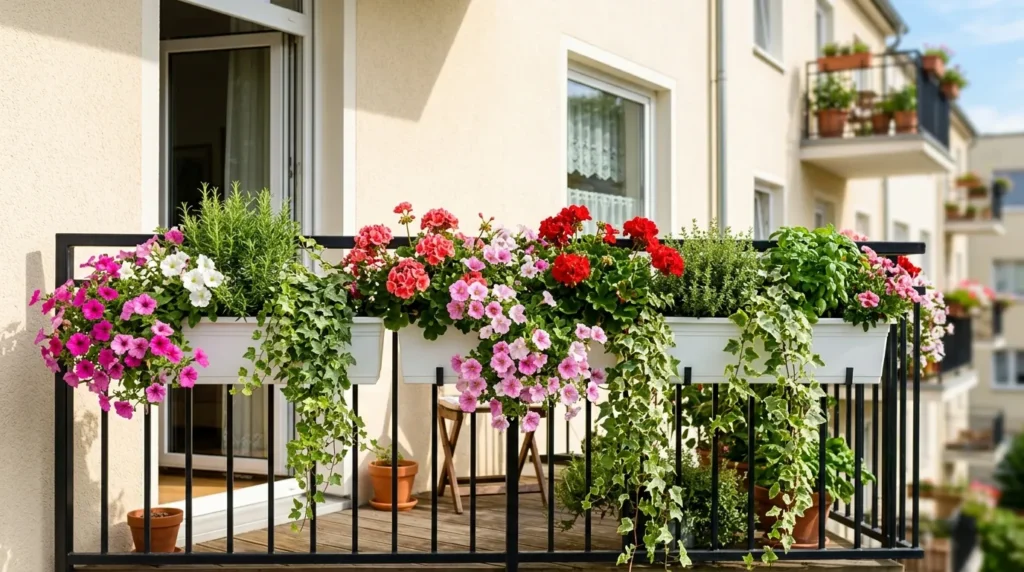
- Adds flowers and greenery without taking floor space
- Makes the balcony look cheerful from inside and outside
- Works with petunias, geraniums, begonias, herbs, and ivy
- Great for renters using removable railing planters
- Materials: railing boxes, drainage trays, hooks, and lightweight soil
A railing color row is perfect when you want instant beauty without crowding the balcony. Use long railing boxes filled with flowers, herbs, and trailing greenery to create a soft border along the edge. Choose two or three main colors so the arrangement feels clean instead of chaotic. Petunias, geraniums, begonias, pansies, and ivy work well depending on sunlight. I’ve noticed that railing boxes look more expensive when the flowers repeat in a pattern instead of being mixed randomly.
This idea transforms a plain balcony railing into a colorful garden frame. It also keeps the floor open for seating, walking, or a small table. Place upright flowers toward the back of the planter, filler greenery in the middle, and trailing plants near the front edge. This creates depth and movement. Use self-watering planters if your balcony gets strong sun, because railing boxes dry faster than ground pots. The final look feels fresh, bright, and perfect for small apartment balconies that need color without clutter.
3. Tiered Green Layers
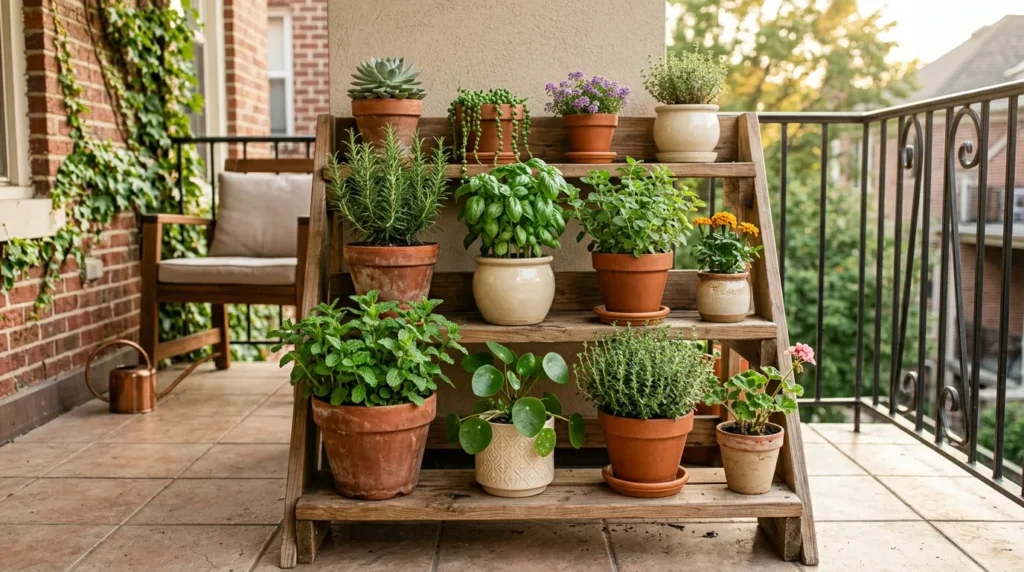
- Organizes several plants in one compact vertical display
- Adds height without filling the balcony floor
- Works with herbs, succulents, leafy plants, and flowers
- Makes watering and plant care easier
- Materials: ladder shelf, tiered stand, small pots, and saucers
Tiered green layers are ideal when you own several small plants but do not want the balcony to look messy. A ladder shelf, three-tier rack, or slim corner stand can hold multiple pots in a clean, vertical layout. Place heavier plants on the bottom shelf, medium leafy plants in the center, and small flowers or succulents at the top. That’s why many designers recommend tiered displays for narrow balconies. They create structure while still letting each plant have its own place.
This setup transforms scattered pots into one styled balcony feature. It works well against a wall, beside a sliding door, or in a corner that needs more life. Use similar planter colors to make the arrangement feel calm, or mix terracotta and cream for a relaxed garden look. Keep plants with similar watering needs close together so care stays simple. A trailing plant on the top shelf adds softness as vines fall downward. The result feels organized, layered, and visually rich without making the balcony difficult to use.
4. Hanging Vine Mix
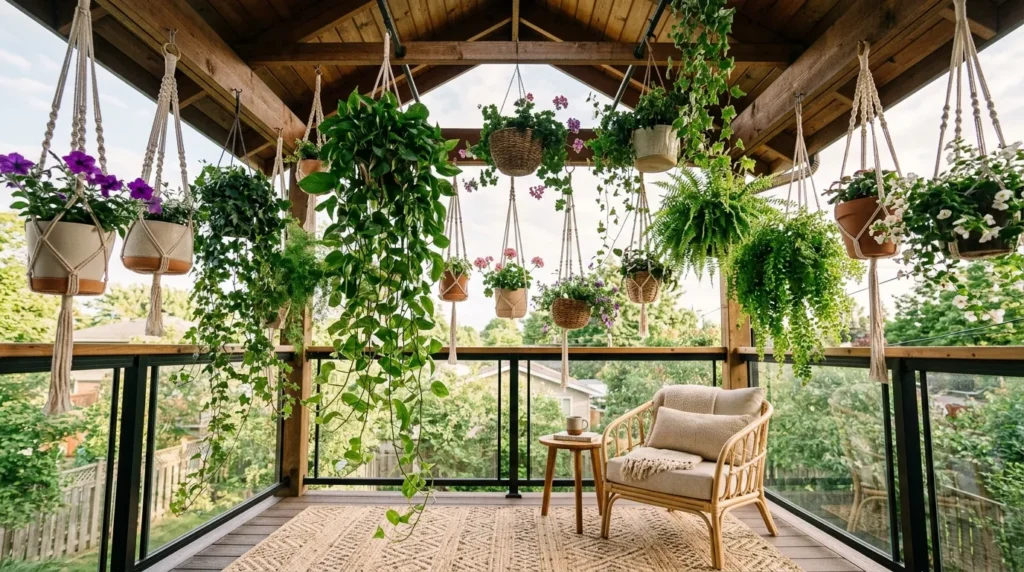
- Uses overhead space for a fuller garden look
- Adds softness, movement, and visual height
- Works with pothos, ivy, string plants, ferns, and trailing flowers
- Keeps the floor open for chairs or tables
- Materials: hanging baskets, macrame holders, ceiling hooks, and liners
A hanging vine mix makes a balcony feel lush without using valuable floor space. Hang a few baskets or macrame planters from secure hooks, then fill them with trailing plants that can fall naturally. Pothos, ivy, string of pearls, spider plants, and trailing begonias all create beautiful movement. Keep the baskets at slightly different heights so the arrangement feels natural. In my experience, hanging greenery makes small balconies feel taller because it draws the eye upward and softens the ceiling line.
This idea transforms empty air space into a floating garden layer. It works especially well above a reading chair, bistro table, or corner bench. Use lightweight baskets and check that hooks are safely installed before watering, because wet soil gets heavier. Choose coco liners for a natural cottage look or simple white pots for a modern style. Hanging plants often dry faster than floor plants, so check moisture more often. The final balcony feels airy, cozy, and beautifully styled without looking crowded.
5. Window Box Blend
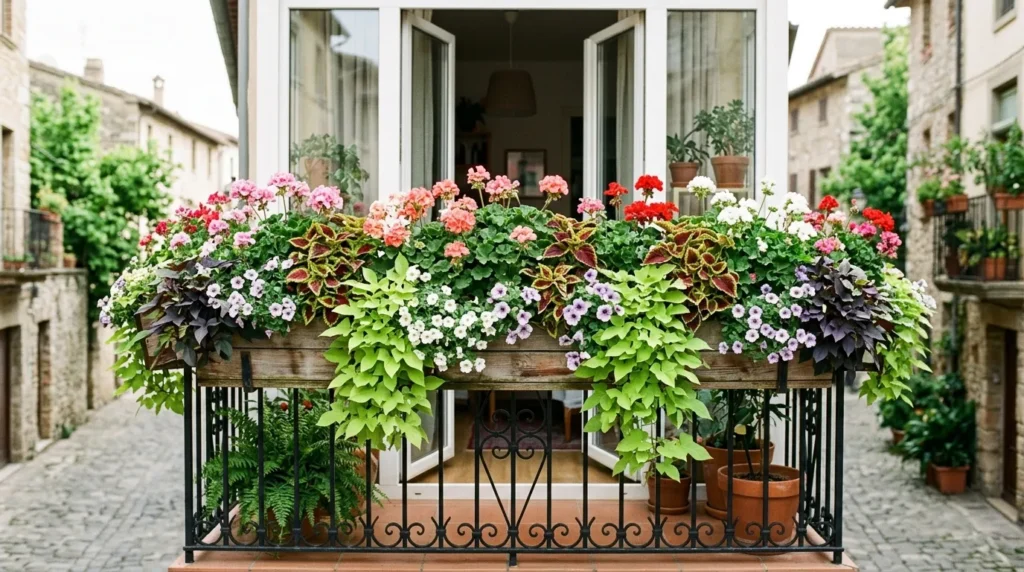
- Creates a layered flower-and-leaf display
- Works along balcony ledges, railings, or wall edges
- Adds seasonal color in a compact container
- Best with upright, filler, and trailing plants together
- Materials: window boxes, compost-rich soil, drainage holes, and plant food
A window box blend is perfect for people who love flowers but need a neat container system. The best formula is simple: use tall or upright flowers in the back, fuller plants in the middle, and trailing greenery near the front. This creates a professional layered look in one narrow planter. Try geraniums with ivy, petunias with sweet potato vine, or begonias with coleus. I’ve noticed that this “thriller, filler, spiller” method makes even affordable plants look fuller and more intentional.
This setup transforms a plain ledge or railing into a colorful garden strip. It works beautifully on small balconies because the planter is long but not bulky. Choose flower colors that match your decor, such as white and lavender for a soft look or coral and yellow for summer energy. Keep the box watered evenly and remove faded blooms so the display stays fresh. A window box blend is practical, pretty, and easy to update each season, making it one of the most flexible balcony styling ideas.
6. Herb Flower Pairing
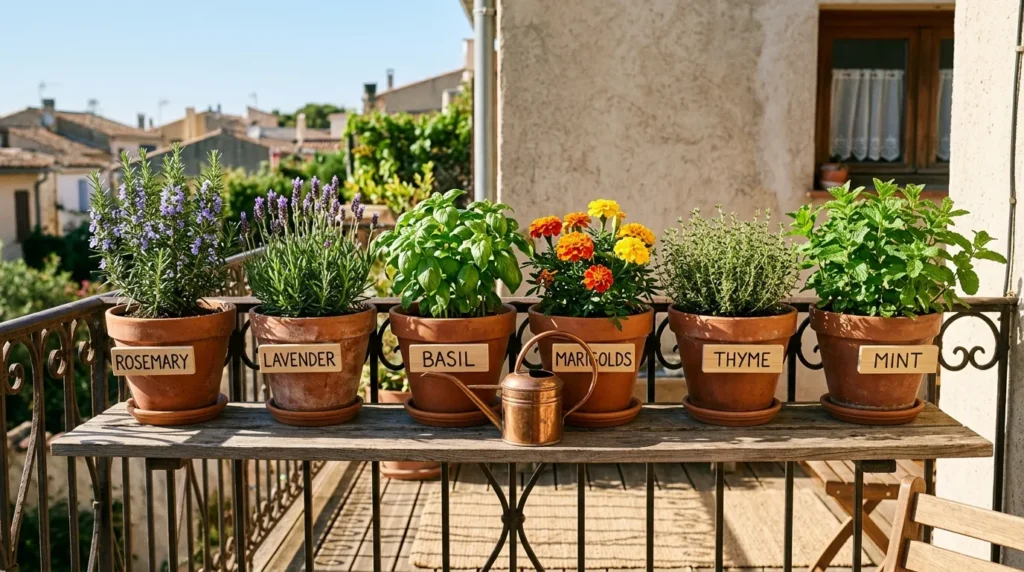
- Combines beauty with everyday cooking use
- Works with basil, lavender, rosemary, marigolds, mint, and thyme
- Adds fragrance, color, and texture to the balcony
- Best for sunny balconies near the kitchen door
- Materials: terracotta pots, plant labels, herb soil, and drainage trays
Herb flower pairing gives your balcony both charm and purpose. Instead of keeping herbs and flowers separate, style them together in groups that look pretty and stay useful. Rosemary pairs beautifully with lavender, basil looks fresh beside marigolds, and thyme works well near small white flowers. This mix adds fragrance, color, and texture without needing a complicated layout. In my experience, herb-and-flower groupings feel more personal than decorative pots alone because they connect the balcony to daily routines.
This idea transforms a small outdoor corner into a mini kitchen garden with personality. Place herbs you use most often near the door so they are easy to reach while cooking. Keep mint in its own pot because it spreads quickly. Use plant labels for a charming detail and choose terracotta or ceramic containers for a warm garden feel. The flowers help soften the practical look of herbs, while the herbs make the flowers feel more useful. It is simple, beautiful, and beginner-friendly.
7. Privacy Plant Line
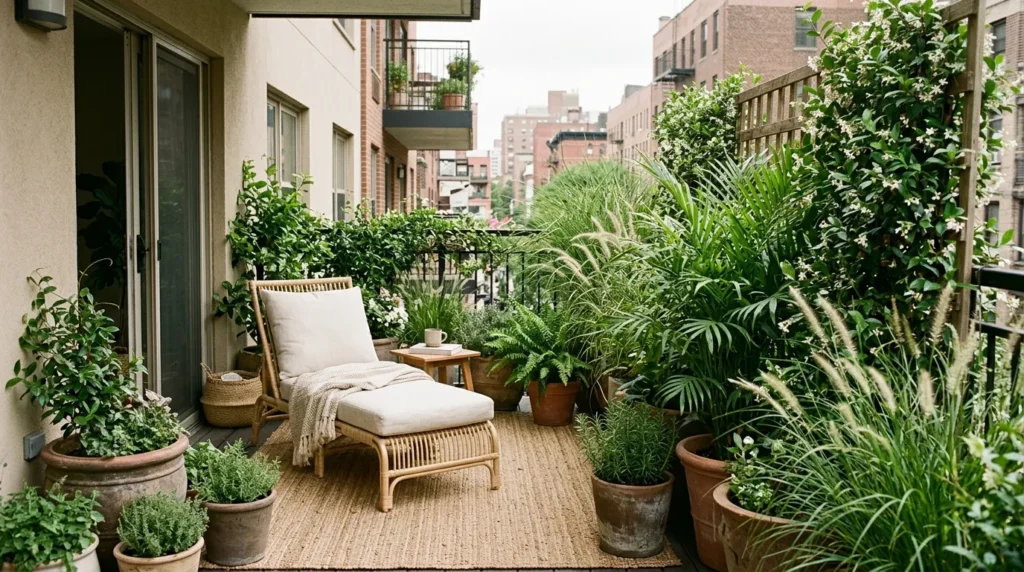
- Creates a soft screen from neighbors or street views
- Works with tall grasses, palms, bamboo, jasmine, and trellis plants
- Adds structure while keeping the balcony natural
- Best along one exposed side of the balcony
- Materials: tall planters, trellis panels, bamboo screen, and heavy pots
A privacy plant line is helpful when your balcony feels too open. Use tall plants or vertical supports along the side where you need the most coverage. Ornamental grasses, bamboo palms, areca palms, jasmine, and climbing vines can soften views while still allowing air and light to move through. Heavy planters are important if the balcony is windy. I’ve seen this work well in city apartments where people want to relax outside without feeling watched by nearby windows.
This setup transforms an exposed balcony into a more comfortable green retreat. Place the tallest plants at the back or side, then layer medium and smaller pots in front so the screen feels natural. A slim trellis can support climbing plants without taking much room. If you want quick coverage, combine a bamboo screen with real greenery. Keep the line neat by trimming plants regularly. This style adds privacy, texture, and calm while still looking fresh and decorative.
8. Tabletop Mini Garden
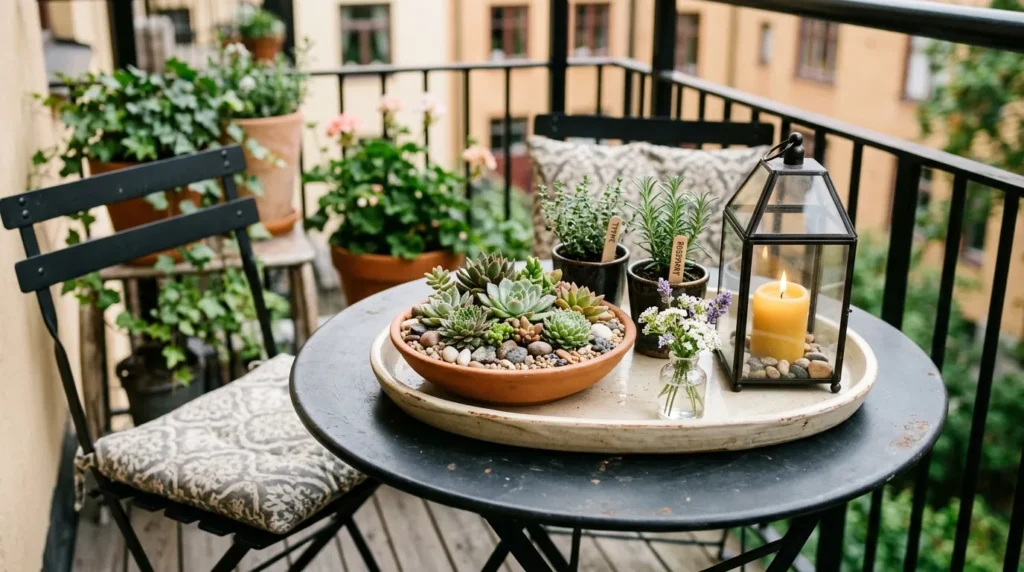
- Adds greenery without using extra floor space
- Works on bistro tables, side tables, and narrow shelves
- Best with succulents, mini herbs, small flowers, and candles
- Creates a pretty centerpiece for tiny balconies
- Materials: shallow bowls, trays, pebbles, small pots, and lanterns
A tabletop mini garden is ideal when your balcony is too small for many pots. Use one small table as a styled plant surface with succulents, mini herbs, tiny flowers, or a shallow bowl arrangement. Keep the display low enough so the table remains useful for coffee or snacks. A tray helps the setup feel organized and makes it easy to move. I’ve noticed that small plant centerpieces look best when mixed with natural textures like pebbles, wood, ceramic, or terracotta.
This idea transforms a simple balcony table into a decorative green focal point. It adds plant life without blocking the floor, railing, or seating area. Succulents work well for sunny balconies, while small ferns or pothos cuttings work better in shaded spaces. Add one candle lantern or solar light for evening warmth. Keep the color palette simple so the table does not feel busy. A tabletop mini garden is flexible, renter-friendly, and easy to refresh whenever the season or your decor changes.
9. Floor Pot Triangle
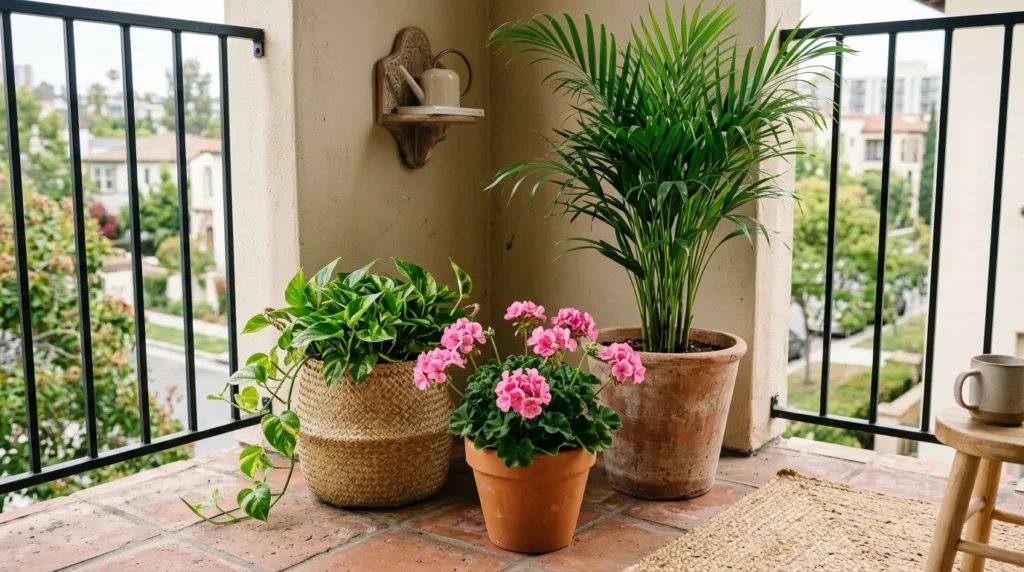
- Creates balance with three different plant sizes
- Works with large, medium, and small containers
- Makes random pots look styled and intentional
- Best for corners, seating areas, or balcony entrances
- Materials: mixed pots, saucers, plant stands, and textured containers
A floor pot triangle is a simple styling trick that makes Plant Arrangements look professional. Choose three pots in different heights and place them in a loose triangle shape. The tallest plant should sit at the back, the medium plant slightly to one side, and the smallest plant in front. This creates depth and keeps the display from looking flat. Use plants with different leaf shapes, such as a palm, pothos, and flowering pot, so the group feels more dynamic.
This setup transforms random floor pots into a balanced balcony display. It works beside a chair, near a door, or in an empty corner that needs softness. Keep pot colors connected so the arrangement feels styled even if the plants are different. For a modern look, use black or white planters. For a warmer mood, use terracotta and woven baskets. Make sure saucers catch water so the balcony floor stays clean. The triangle method is easy, practical, and perfect for beginners.
10. Evening Green Glow
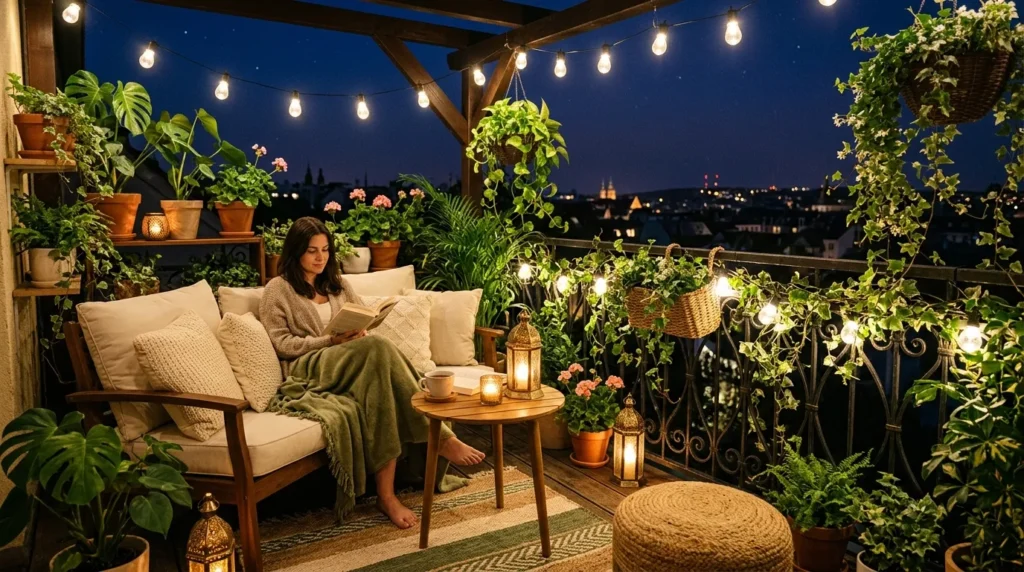
- Combines plants with warm balcony lighting
- Creates a cozy nighttime outdoor mood
- Works with string lights, lanterns, leafy plants, and vines
- Best for relaxing after work or hosting casually
- Materials: solar lights, LED lanterns, outdoor-rated string lights, and planters
An evening green glow turns your balcony into a relaxing nighttime escape. Plants look completely different under warm lighting because leaves catch the glow and create soft shadows. Use outdoor-rated string lights along the railing, lanterns near floor pots, or small solar lights inside planters. Choose bold leafy plants, trailing vines, or tall grasses because their shapes show beautifully at night. In my experience, warm white lighting feels much more inviting than bright cool lighting for small outdoor spaces.
This idea transforms a daytime balcony garden into a cozy evening lounge. Place lights where they highlight plant shapes instead of shining directly into your eyes. Add one comfortable chair, a small table, and layered greenery around the edges. Keep cords safe, weather-protected, and away from watering zones. A few lanterns near the floor can make the balcony feel calm and finished. The final look is soft, intimate, and perfect for scrolling, reading, or enjoying a quiet drink after a long day.