

BLOG
Top 10 Rooftop Garden Tips: Do Artificial Grass Styling

Introduction
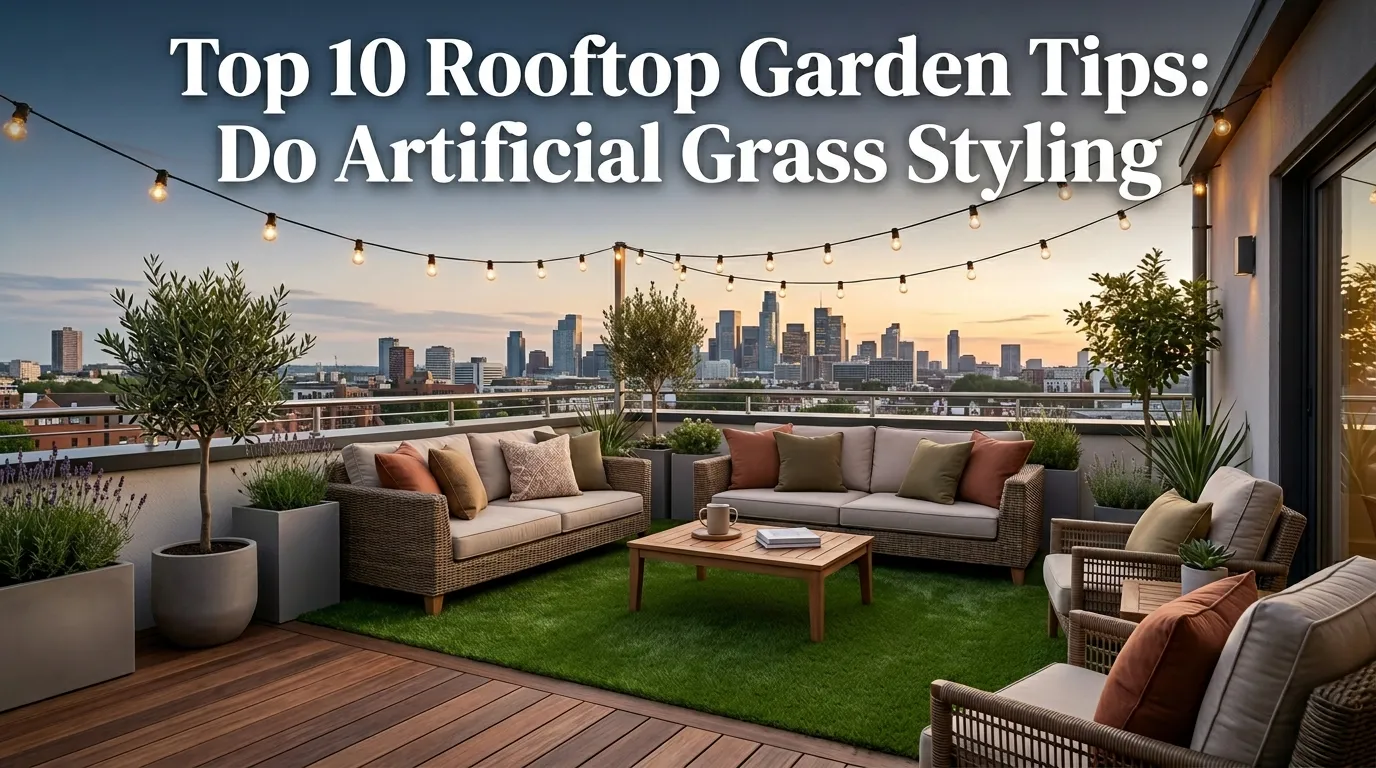
Rooftop gardens transform underutilized spaces into relaxing, functional, and visually appealing retreats. Rooftop garden designs allow homeowners to enjoy greenery, fresh air, and aesthetic charm even in urban environments. In my experience, incorporating artificial grass, planters, seating, and decorative features can create a luxurious outdoor space without heavy maintenance. This guide highlights ten practical rooftop garden tips, covering layout ideas, plant selection, materials, and décor strategies. Each tip provides actionable advice, ensuring your rooftop is not only stylish and Instagram-ready but also functional, comfortable, and a haven for family, friends, and personal relaxation.
1. Artificial Grass Foundation
- Creates a low-maintenance green base
- Enhances aesthetics and comfort
- Works for small to large rooftop spaces
- Materials: synthetic turf, padding, adhesive
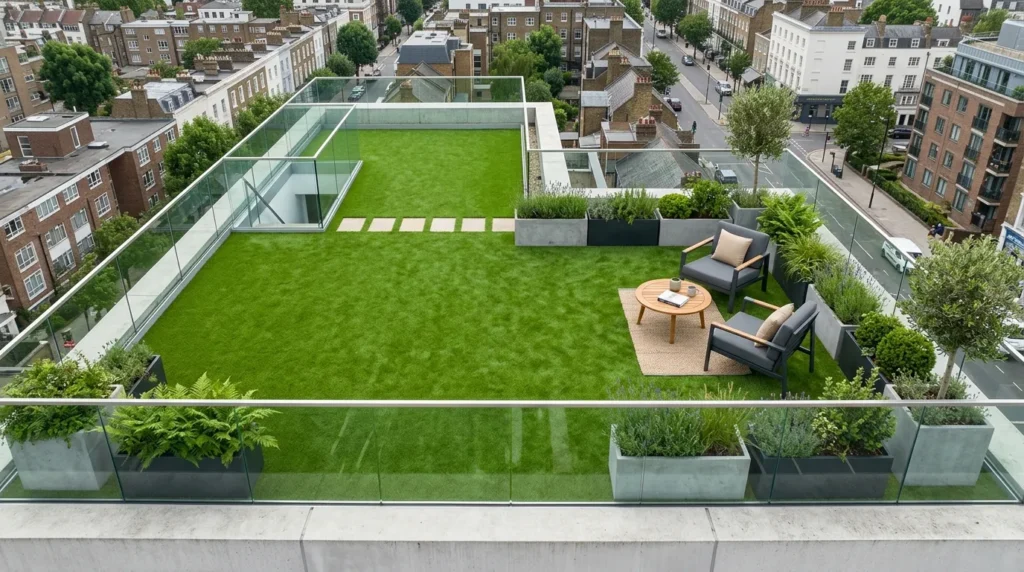
Using artificial grass as a rooftop foundation provides a lush, green appearance without the need for constant care. I’ve noticed that selecting high-quality synthetic turf with UV protection ensures longevity and prevents color fading. A layer of padding underneath adds comfort and safety, especially for areas frequented by children or pets. Artificial grass creates a uniform, clean look, complementing planters, furniture, or pathways. This approach is ideal for small rooftops seeking a functional, visually appealing surface that mimics natural lawn aesthetics with minimal maintenance.
This tip transforms a bare rooftop into a vibrant, usable space. The grass adds texture, color, and a soft underfoot surface while reducing the need for irrigation. It visually enlarges the area, creating a more inviting atmosphere. Homeowners appreciate its practicality, durability, and aesthetic appeal. Paired with planters or seating, artificial grass establishes a modern, Pinterest-ready foundation for rooftop garden design.
2. Modular Planter Systems
- Maximizes greenery without heavy soil
- Allows flexible plant arrangement
- Works with herbs, flowers, and shrubs
- Materials: wood, metal, composite
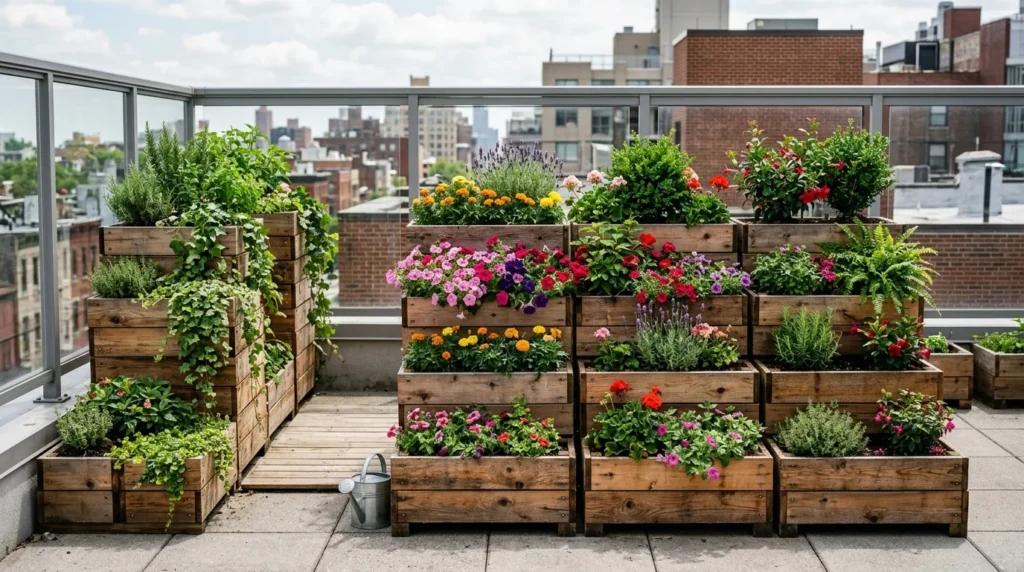
Modular planter systems are versatile for rooftop gardening. By stacking or arranging planters in flexible layouts, you can create visually appealing greenery without heavy soil loads. I’ve noticed that using composite or lightweight wooden planters ensures durability while remaining easy to rearrange. These systems accommodate flowers, small shrubs, or herbs, making them practical for urban rooftops. Modular planters can also act as dividers, creating separate zones for dining or lounging. This approach is excellent for maximizing greenery on limited rooftop space while maintaining structural safety.
This tip transforms rooftop spaces into organized, layered gardens. Modular planters allow creative layouts and easy rearrangement for seasonal plant rotations. The elevated design enhances visibility and accessibility, improving usability. Homeowners value its flexibility, aesthetic appeal, and minimal structural impact. Modular planters provide a functional and Pinterest-ready solution for maximizing rooftop greenery efficiently.
3. Vertical Green Walls
- Maximizes greenery without taking floor space
- Enhances privacy and ambiance
- Works with modular wall panels or trellis systems
- Materials: planters, vertical trellis, climbing plants
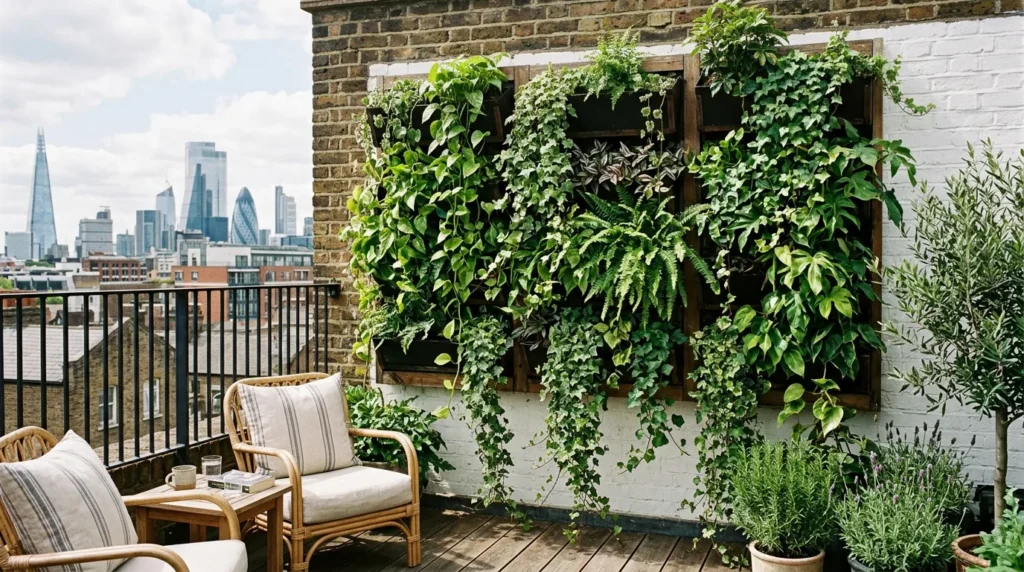
Vertical green walls bring lushness to limited rooftop space. By installing modular planters or trellis systems along walls or fences, you create a living backdrop while saving floor area. I’ve noticed that combining trailing vines, flowering plants, and herbs provides color, texture, and seasonal interest. Vertical walls also offer privacy from neighboring buildings. Artificial or live plants can be used depending on maintenance preference. This design works particularly well in urban rooftop gardens, enhancing ambiance, aesthetics, and functionality without overcrowding the floor.
This tip transforms plain walls into vibrant, textured focal points. Vertical greenery adds depth, color, and dimension while improving privacy and visual appeal. Homeowners appreciate its low footprint, functionality, and Instagram-ready aesthetic. Combined with seating or pathways, vertical green walls elevate rooftop spaces, creating a serene and modern garden environment.
4. Raised Decking Platforms
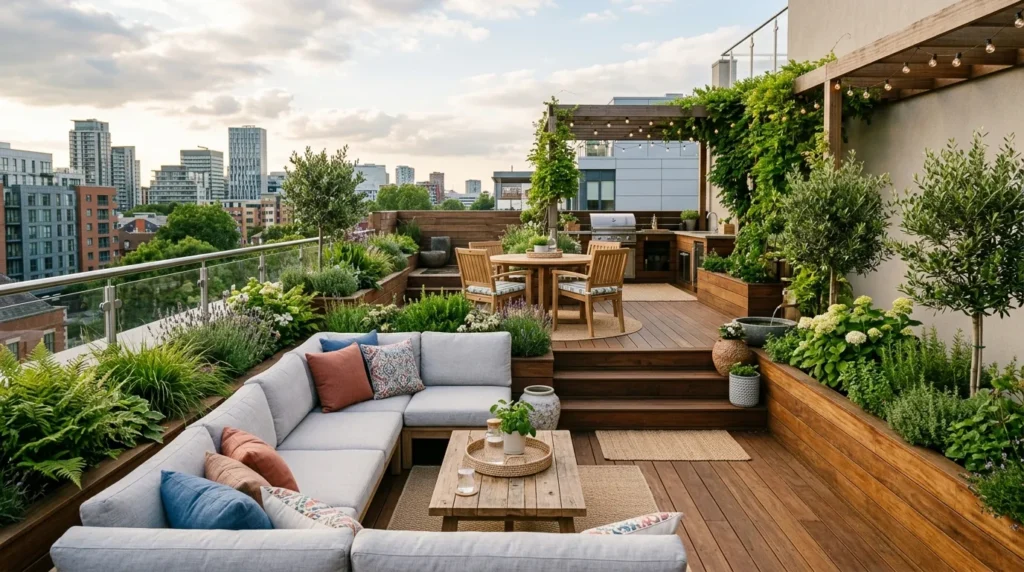
- Creates seating and lounge zones
- Defines areas without heavy landscaping
- Works for medium to large rooftops
- Materials: hardwood, composite decking, bamboo
Raised decking platforms provide structure and functionality. By elevating seating areas, you create distinct zones while adding visual interest. I’ve noticed that using hardwood or composite materials ensures durability, slip resistance, and longevity in rooftop environments. Decking allows safe furniture placement and encourages organized layouts without interfering with artificial grass or planter arrangements. This design is ideal for medium to large rooftops, offering a multifunctional space for dining, relaxing, or entertaining while maintaining a modern aesthetic.
This tip transforms a flat rooftop into a layered, visually dynamic space. Elevation creates focal points and defined areas for seating or lounging. Homeowners appreciate its practicality, durability, and ability to enhance aesthetic appeal. Decking integrates seamlessly with greenery and planters, creating a Pinterest-worthy rooftop garden suitable for family or social gatherings.
5. Rooftop Water Features
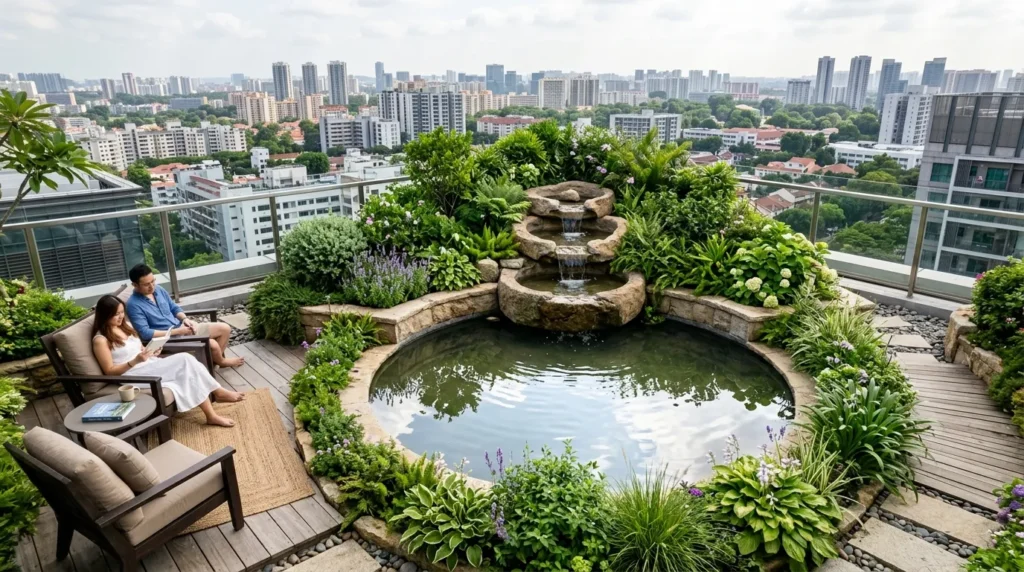
- Adds visual and auditory tranquility
- Complements plants and hardscape
- Works with small or medium fountains
- Materials: stone, ceramic, steel
Water features introduce movement, sound, and a focal point. I’ve noticed that incorporating fountains or small ponds on rooftops enhances ambiance, creating a calming retreat. Materials like stone, ceramic, or steel provide durability while blending with modern designs. Proper placement ensures accessibility, safety, and visual balance. Water features can complement greenery, furniture, or pathways, adding a soothing dimension. They are suitable for small or medium rooftop gardens, transforming ordinary areas into luxurious, serene environments.
This tip transforms functional rooftop gardens into sensory experiences. Moving water attracts attention, softens the atmosphere, and improves relaxation. Homeowners value the combination of aesthetic beauty and tranquility. Pairing fountains with seating or lighting enhances usability and Instagram-worthy appeal. Water features are a key strategy for creating a modern, serene, and functional rooftop garden.
6. Outdoor Lighting Design
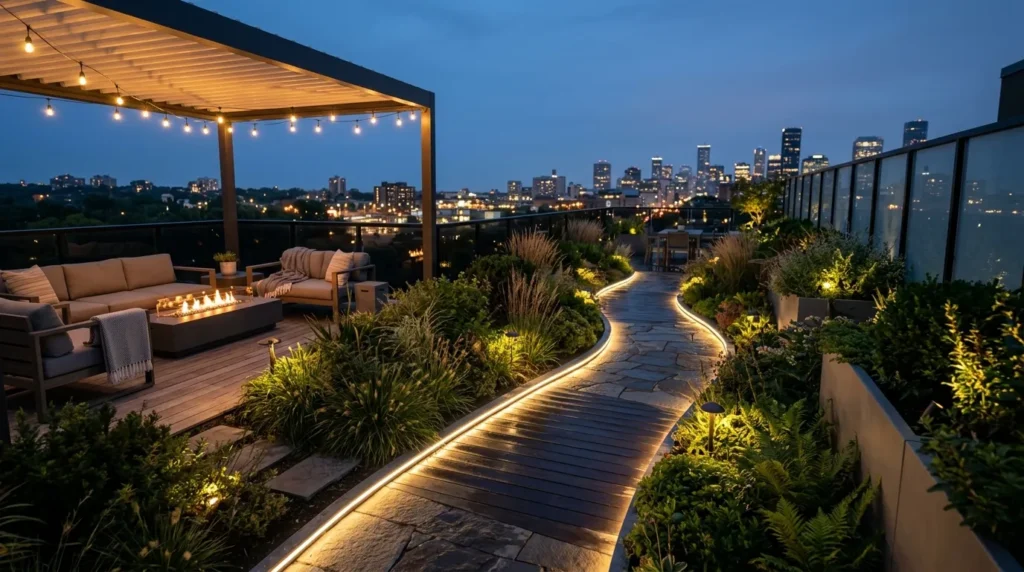
- Extends usability after sunset
- Highlights focal points and textures
- Works with LED strips, lanterns, or solar lights
- Materials: waterproof lights, wiring, dimmers
Strategic outdoor lighting enhances safety, aesthetics, and mood. I’ve noticed that using LED strips along pathways, spotlights for planters, or solar lanterns provides flexibility and ambiance. Properly placed lighting emphasizes artificial grass texture, deck areas, and water features. Dimmable options allow control over intensity. Lighting also improves visibility and creates a cozy atmosphere for evening gatherings. This approach is vital for medium to large rooftop gardens, transforming them into functional and visually appealing spaces for night use.
This tip transforms rooftop gardens into inviting, usable spaces after dark. Lights highlight textures, colors, and architectural elements while enhancing safety. Homeowners appreciate the extended usability and ambiance. Proper lighting planning contributes to Pinterest-ready aesthetics, making nighttime garden photography and entertaining effortless. Outdoor lighting is essential for combining practicality with elegance in rooftop design.
7. Modular Furniture Arrangement
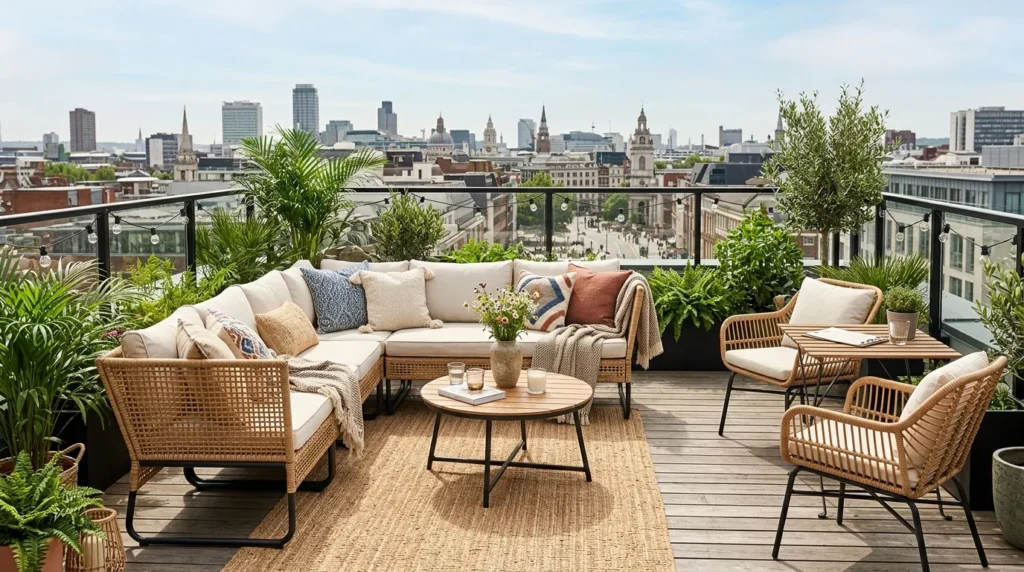
- Defines zones and enhances comfort
- Works with seating, tables, and loungers
- Flexible layouts for seasonal changes
- Materials: rattan, metal, or weather-resistant composites
Modular furniture creates adaptable, comfortable zones on rooftops. I’ve noticed that rattan or weather-resistant furniture withstands elements while maintaining style. Arranging seating, tables, or loungers strategically defines relaxation, dining, or social zones. Modular setups allow seasonal adjustments or reconfiguration for events. Cushions and covers add texture and comfort, complementing artificial grass or decking. This approach works for medium to large rooftops, balancing aesthetics, comfort, and functionality.
This tip transforms empty rooftop spaces into functional, stylish retreats. Modular furniture allows flexibility, adapting to seasonal or event needs. Homeowners value comfort and practicality combined with a modern look. With greenery and décor integration, these arrangements create Pinterest-worthy outdoor living spaces. Modular furniture is essential for maximizing usability without sacrificing style.
8. Potted Plant Diversity
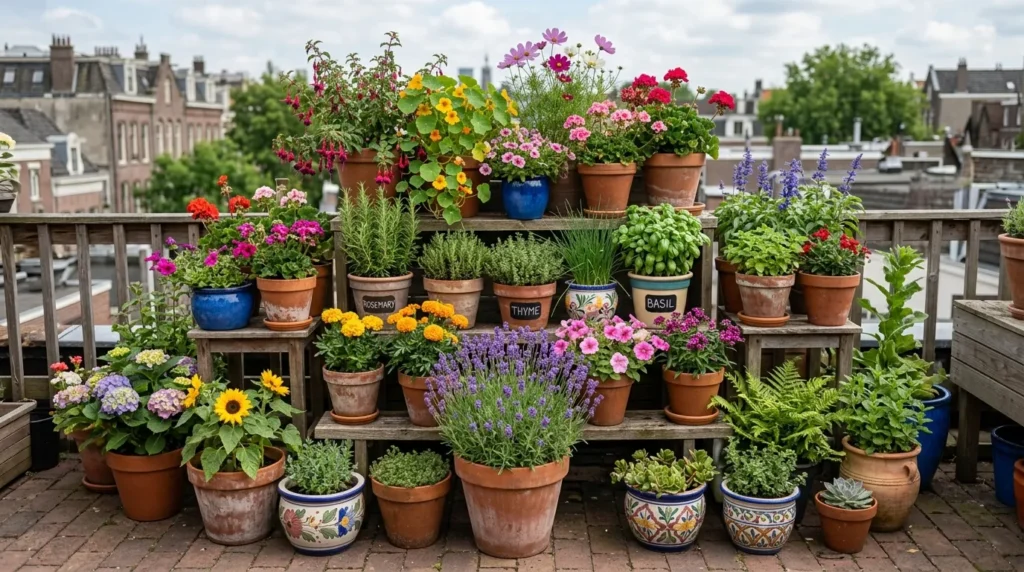
- Adds color, texture, and fragrance
- Works with small to medium rooftop areas
- Mixes flowers, shrubs, and herbs
- Materials: terracotta, ceramic, or metal pots
Using diverse potted plants enhances texture, color, and natural aroma. I’ve noticed that combining flowers, herbs, and ornamental shrubs creates visual depth and seasonal interest. Terracotta or ceramic pots provide durability and complement modern rooftop aesthetics. Arranging plants at different heights adds dimension, while clustering creates natural focal points. Potted plants also allow flexibility, enabling rearrangement or seasonal rotation. This approach is ideal for small to medium rooftops, maximizing greenery without overloading space.
This tip transforms flat patios into vibrant, textured rooftop gardens. Mixed potted plants enhance visual interest and sensory appeal. Homeowners appreciate adaptability, aesthetics, and ease of maintenance. Clustered arrangements, paired with artificial grass or decking, create Pinterest-ready appeal, providing natural charm and modern functionality.
9. Outdoor Shade Structures
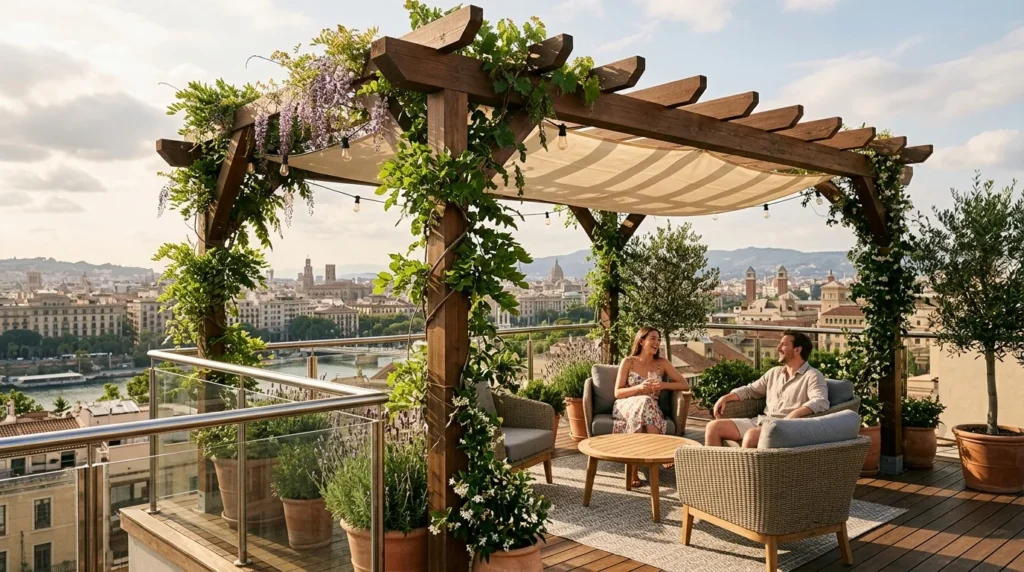
- Provides comfort from sun and wind
- Works with pergolas, umbrellas, or canopies
- Materials: wood, steel, or fabric
- Enhances furniture usability
Shade structures improve comfort, usability, and style. I’ve noticed that pergolas, retractable awnings, or umbrellas provide protection while complementing rooftop aesthetics. Materials should be weather-resistant and durable. Shade zones allow seating, dining, or social activities without discomfort. Integrating planters or climbing vines enhances visual appeal. This approach is essential for medium to large rooftop gardens, extending usability and creating defined, functional zones while maintaining a modern aesthetic.
This tip transforms open rooftops into comfortable, versatile spaces. Shade structures create shelter, comfort, and style while enhancing furniture use. Homeowners value usability, design coherence, and climate adaptability. Integrated with greenery and artificial grass, shaded areas provide Pinterest-worthy appeal for outdoor lounging or entertaining.
10. Compact Rooftop Layout
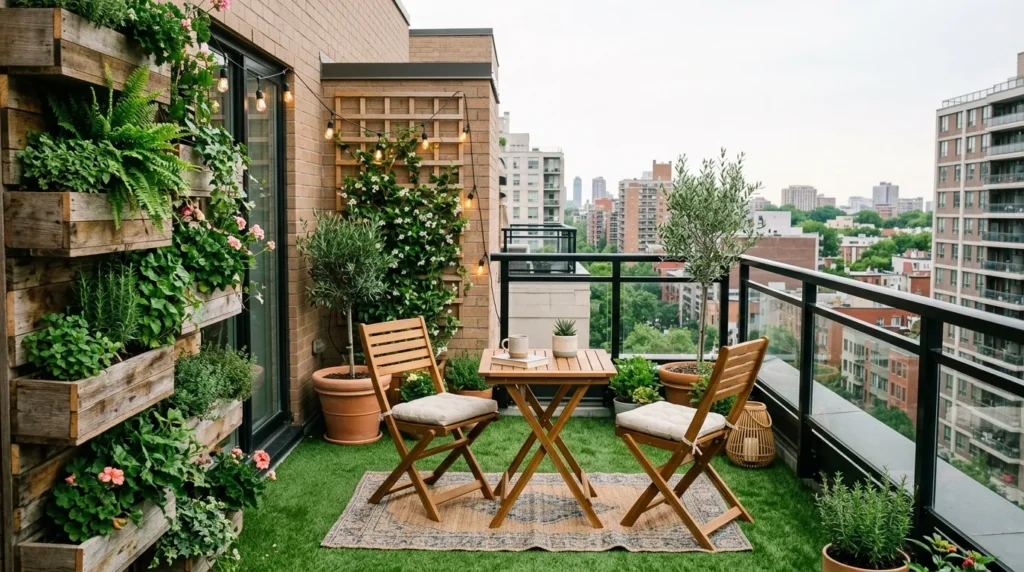
- Optimizes small urban spaces
- Combines artificial grass, planters, and seating efficiently
- Works for apartments or rooftops with limited area
- Materials: modular furniture, pavers, vertical planters
Compact layouts make small rooftop spaces functional and attractive. I’ve noticed that arranging artificial grass patches, modular planters, and seating efficiently maximizes utility while maintaining aesthetics. Vertical greenery adds depth without taking floor space. Small patios benefit from multi-functional furniture or foldable options, enabling flexibility. This approach works for urban apartments, condos, or rooftop terraces. Proper layout planning ensures greenery, relaxation, and entertaining areas coexist harmoniously.
This tip transforms constrained rooftops into inviting, stylish gardens. Optimized layouts allow comfortable seating, greenery, and decorative elements in limited space. Homeowners appreciate efficiency, aesthetics, and ease of maintenance. Compact rooftop designs offer Pinterest-worthy results by maximizing usability, comfort, and visual appeal even in small urban areas.