

BLOG
Undermount Sink vs Drop-In Sink: Which Is Safer for Thin Countertops?

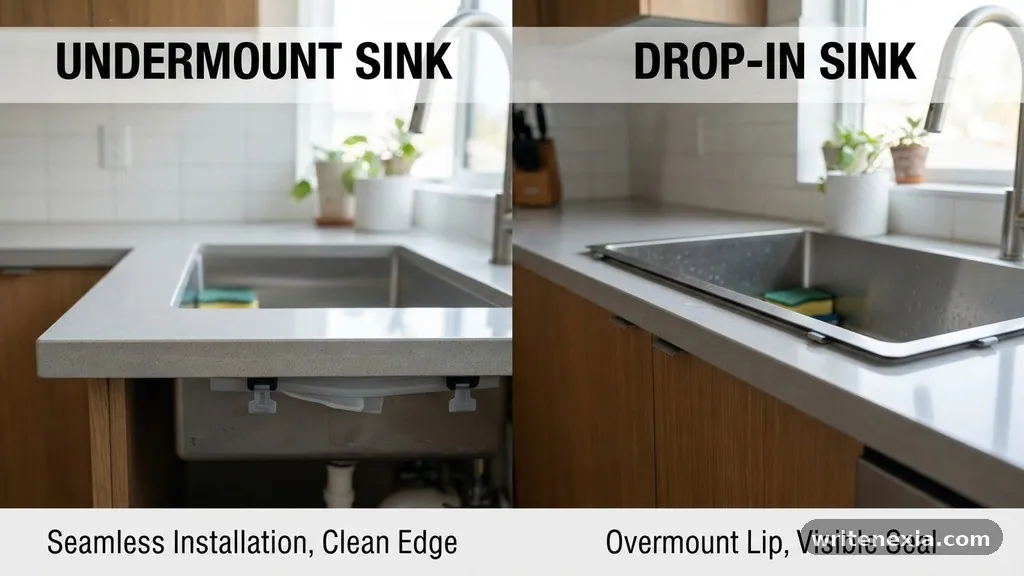
Choosing between an undermount sink vs drop-in sink for thin countertops requires a clear understanding of structural load and material integrity. If you are working with materials like thin laminate, tile, or delicate stone, the weight distribution and mounting method become critical factors in preventing cracks or water damage.
While the sleek aesthetic of an undermount model is popular, a drop-in sink often provides the necessary mechanical support for thinner surfaces. This article explains the technical trade-offs between these two styles to help you decide which is safer for your specific kitchen or bathroom project.
The Core Difference in Mounting Mechanics
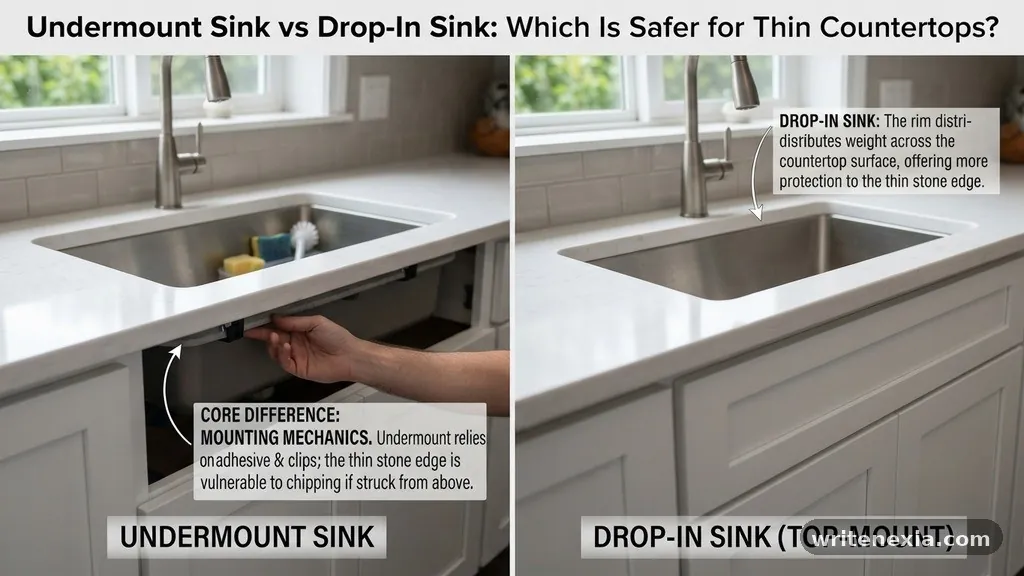
The primary distinction between these two styles lies in how the basin attaches to your surface. A drop-in sink, often called a top-mount, features a prominent rim that rests directly on top of the counter.
This rim carries the weight of the sink and its contents, transferring the load to the structure beneath. Because the countertop material itself does not have to support the entire weight of the basin from underneath, this method is inherently more stable for fragile or thin materials.
In contrast, an undermount sink attaches to the underside of the counter using clips, anchors, and industrial-grade epoxy. The countertop must be strong enough to hold the sink’s weight, the weight of the water, and the force exerted by the faucet.
When your surface is thin, this creates a significant risk of stress fractures or complete failure. You are essentially asking the material to act as a structural support beam, which many thin materials are not designed to do.
Evaluating Structural Load on Thin Surfaces
Thin countertops, such as those made from 1.5cm stone or budget-friendly laminate, are highly susceptible to cracking near sink cutouts. When you install an undermount sink, you remove material right up to the edge of the basin.
This leaves a narrow strip of stone or composite that must support the sink’s entire vertical load. If the adhesive fails or the stone has a natural weak point, the weight can snap that narrow strip.
Drop-in sinks avoid this issue by distributing the weight across the wider surface area of the counter surrounding the cutout. The lip of the sink covers the edge, which actually adds a layer of protection against chips and cracks.
If your countertop is less than 2cm thick, the mechanical advantage of the top-mount design is significant. It acts as a bridge, reinforcing the perimeter of the cutout rather than relying on the structural integrity of the narrow edge.
Comparing Installation Requirements
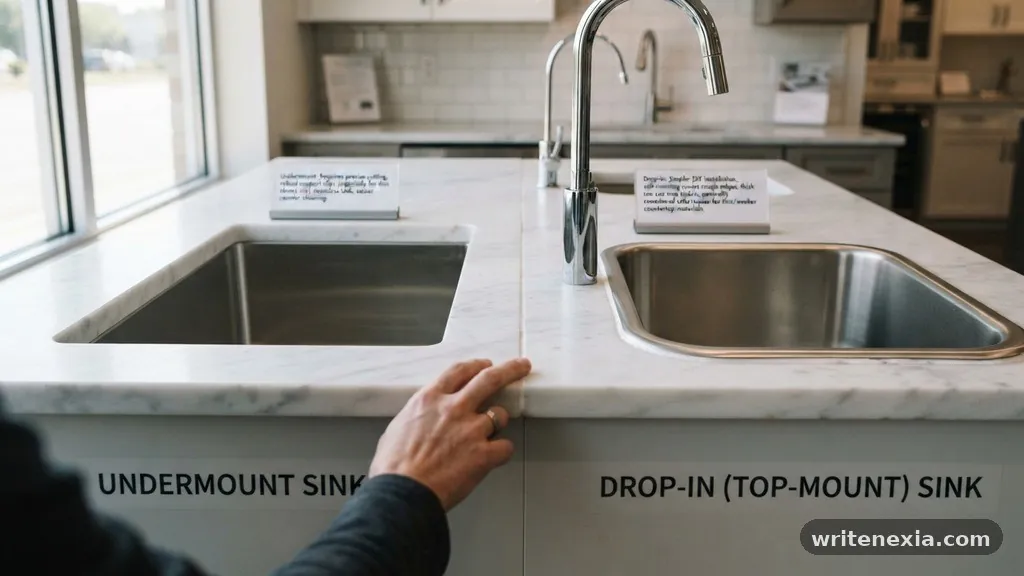
Installing an undermount sink requires a high level of precision and, in many cases, professional assistance. The cutout must be perfectly polished and finished because the edge is visible from underneath and to the side.
You also need to ensure the mounting system is compatible with the specific thickness of your material. If your counter is too thin, standard clips might not even have enough material to bite into, forcing you to rely solely on epoxy.
Drop-in installations are generally more forgiving for DIY projects and thinner materials. You simply drop the sink into the hole, secure it with clips, and seal the rim with a bead of silicone.
This process does not require specialized tools for polishing the interior edge of the stone. If you are working with a material that is difficult to cut or prone to splintering, the drop-in approach is the safer bet for a clean, long-lasting finish.
Maintenance and Water Seepage Risks
One of the biggest concerns with any sink installation is water damage. With a drop-in sink, the rim sits above the counter, which theoretically keeps water from pooling at the edge.
However, the caulk line between the rim and the counter can deteriorate over time, allowing water to seep into the substrate. If you have a laminate or wood counter, this can lead to swelling and rot if the seal isn’t maintained.
Undermount sinks offer a cleaner look but present different maintenance challenges. Because there is no rim, you can wipe crumbs directly into the basin, which is a major convenience.
The downside is the exposed edge of the countertop material, which is constantly exposed to moisture. If the silicone seal between the sink and the stone fails, water will migrate into the underside of the counter, potentially causing delamination or structural weakening.
Material Suitability for Different Countertops
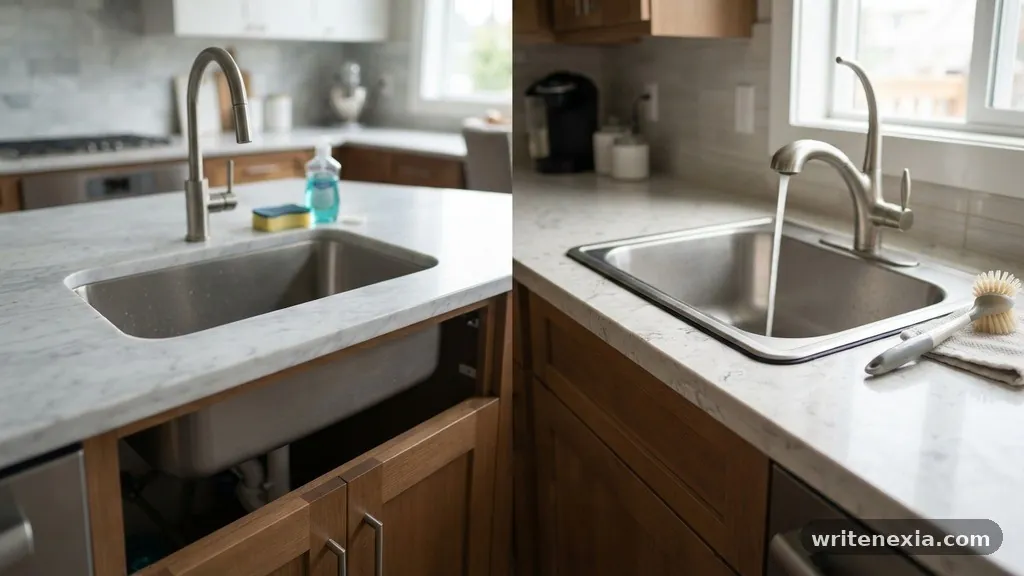
The choice of sink is often dictated by the countertop material you select. Granite, quartz, and marble are common choices, but their thickness varies significantly.
Solid surfaces like Corian are often used in thinner profiles, which might struggle with the weight of a heavy, water-filled undermount basin. Laminate, while versatile, is almost exclusively paired with drop-in sinks because the core material is susceptible to moisture.
| Countertop Material | Recommended Sink Style | Why? |
|---|---|---|
| Natural Stone (Thin) | Drop-in | Prevents edge cracking |
| Laminate | Drop-in | Protects exposed core |
| Thick Quartz (3cm+) | Undermount | Structural strength allows it |
| Solid Surface | Integrated or Undermount | Seamless bonding capability |
Aesthetics versus Practicality
Many homeowners gravitate toward undermount sinks because of their modern, minimalist appearance. They create a seamless transition from the counter to the sink, which is a hallmark of high-end kitchen design.
This look is undoubtedly popular in real estate listings and can influence the perceived value of a home. However, you must balance this visual preference against the reality of your countertop’s physical limitations.
A drop-in sink is often viewed as more traditional or utilitarian, but modern designs have come a long way. There are now low-profile, “flush-mount” drop-in sinks that sit nearly level with the counter.
These provide a much cleaner aesthetic than the old-fashioned, bulky rims of the past. If you want the modern look but are worried about the safety of an undermount installation on a thin surface, these low-profile options are a perfect middle ground.
Long-Term Durability and Repair
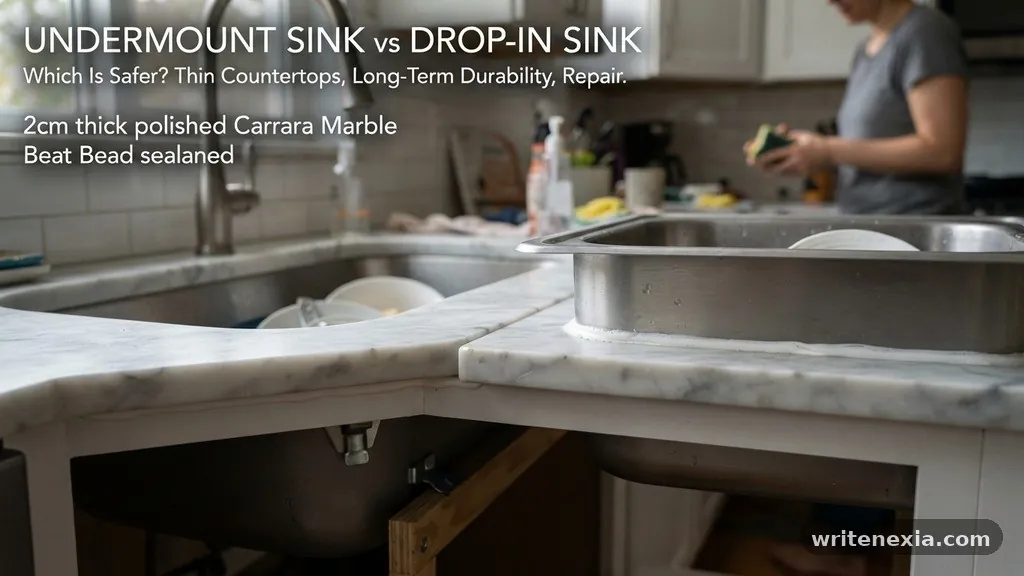
When an undermount sink fails, the repair process is often invasive and expensive. If the adhesive bond breaks, you may need to remove the entire plumbing setup and re-bond the sink, which risks damaging the stone cutout.
In severe cases, the weight of the falling sink can crack the countertop, leading to a total replacement of the surface. This is a rare occurrence with a properly installed unit, but it is a genuine risk for thin, brittle materials.
Drop-in sinks are much easier to replace or repair. Because the sink is not glued to the underside, you can simply remove the clips, cut the sealant, and lift the sink out.
This is a significant advantage if you decide to upgrade your faucet or sink basin years down the line. For those who prioritize long-term flexibility and low repair costs, the drop-in design is far more practical.
Common Mistakes to Avoid
Many DIYers fail when they assume all countertops are strong enough to support an undermount basin. They might pick a beautiful, thin slab of marble and insist on an undermount sink, only to find the stone cracking during the first year of use.
Always consult with your fabricator regarding the minimum thickness requirements for an undermount installation. If they advise against it, listen to their expertise to avoid a costly disaster.
Another common error involves using the wrong type of adhesive or sealant. Undermount sinks require high-strength, waterproof epoxy that can withstand constant temperature fluctuations from hot water.
Using standard bathroom caulk for an undermount sink is a recipe for failure. Ensure that your installer uses a professional-grade product that is rated for the specific weight and material of your sink.
Key Considerations for Your Decision
* Countertop Thickness: Anything under 2cm is generally unsafe for heavy undermount basins without extra reinforcement.
* Material Type: Porous materials like wood or cheap laminate should almost always use a drop-in sink to protect the edges.
* Budget: Undermount sinks require more labor for the cutout and polishing, increasing the cost of installation.
* Replacement Frequency: If you plan to update your kitchen in the future, drop-in sinks allow for easier swaps.
* Weight of the Sink: Cast iron sinks are extremely heavy and place a much larger burden on the counter than stainless steel.
FAQ
Is it possible to reinforce thin countertops for an undermount sink?
Yes, it is possible to add structural support, such as plywood sub-layers or metal rails, to the underside of the counter. This creates a stronger base for the sink clips to anchor into. However, this adds complexity and cost to the installation process. You should only attempt this if you have clear instructions from a professional fabricator.
Do drop-in sinks always look outdated?
Not necessarily. While the thick, plastic-rimmed sinks of the 1980s are certainly out of style, modern top-mount sinks feature ultra-thin, stainless steel rims. These are designed to be barely noticeable and can provide a very sleek, contemporary look. They offer the safety of a drop-in installation with a much more refined visual profile.
Can I install an undermount sink on a laminate countertop?
While some specialized products allow for this, it is generally discouraged. Laminate is made of layers of paper and resin, which can absorb water if the edge is exposed. Even with a perfect seal, the risk of water damage to the core is high. Most experts recommend sticking with a drop-in sink for any laminate surface to ensure long-term durability.
Which sink is easier to keep clean?
Undermount sinks are generally easier to keep clean because they lack a raised rim. You can sweep water and debris directly from the counter into the sink without hitting a lip. However, the underside of the counter edge can accumulate grime if not wiped regularly. Drop-in sinks require more effort to wipe around the rim where it meets the counter.
Does the weight of the faucet affect my choice?
Yes, the faucet adds weight and mechanical stress to the countertop cutout. If you have a heavy, commercial-style pull-down faucet, it will exert a lot of force on the material. When combined with an undermount sink on a thin counter, this creates a “weak point” that can lead to cracking. A drop-in sink helps mitigate this by providing a solid, supported frame for both the sink and the faucet.
Final Thoughts
The debate regarding an undermount sink vs drop-in sink is ultimately a matter of matching your hardware to the physical limitations of your materials. While the undermount style offers a desirable, clean look, it places a significant structural burden on your countertop. If you are working with thin or delicate materials, a drop-in sink provides the necessary mechanical stability to ensure your kitchen remains functional for years.
Consider your specific countertop thickness and your long-term maintenance preferences before committing to a design. Taking the time to evaluate these factors now will save you from the stress of structural repairs later. Whether you choose the seamless look of an undermount or the practical security of a drop-in, prioritize the integrity of your surface to ensure a lasting result.