

BLOG
Best Heavy-Duty Steel Brackets for Supporting Granite Vanity Tops

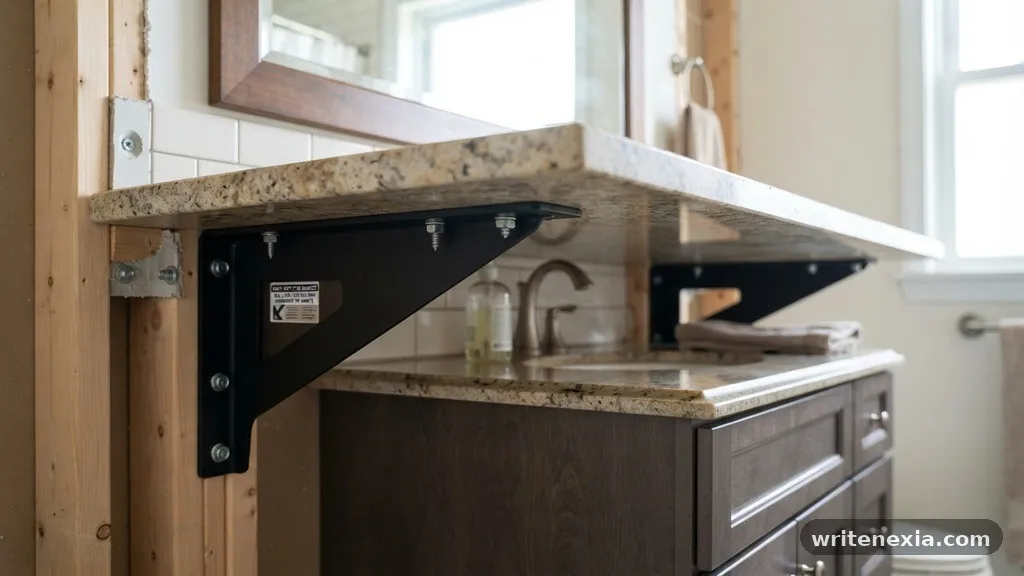
Choosing the best Heavy-Duty Steel Brackets for Supporting Granite Vanity Tops is a critical decision that prevents cracking and ensures your bathroom remains safe for years. Because granite is exceptionally heavy and prone to snapping under its own weight if left unsupported, installing the right hardware is essential for any successful renovation.
By prioritizing structural integrity and correct placement, you can avoid costly repairs while achieving a sleek, professional look. This article provides the technical details you need to select, space, and mount high-quality steel supports that keep your stone surfaces stable and level.
Weight Load Requirements
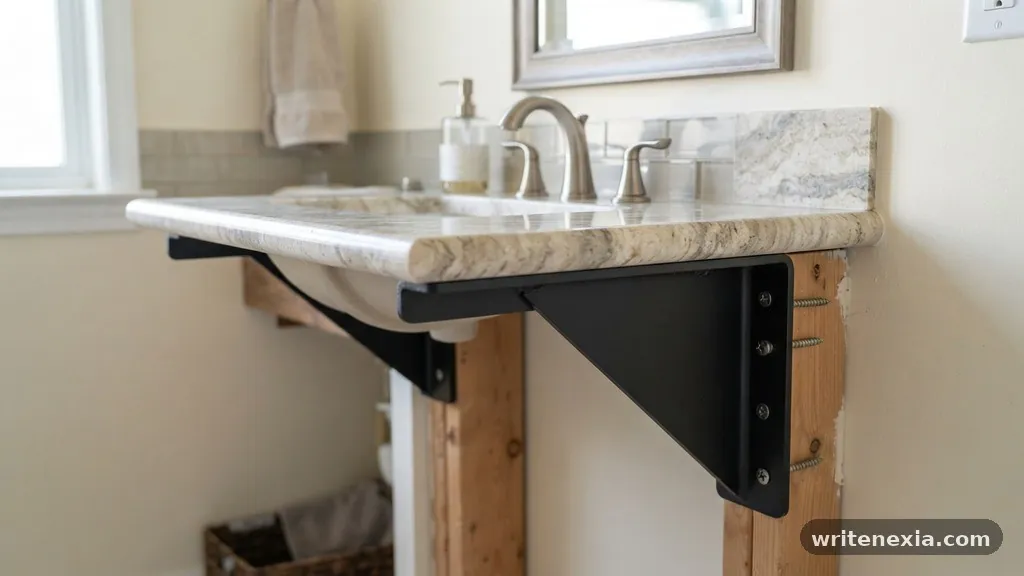
The primary purpose of selecting the best Heavy-Duty Steel Brackets for Supporting Granite Vanity Tops is to manage the immense weight of the stone. A standard 3cm thick slab of granite typically weighs between 18 and 20 pounds per square foot. If your vanity features an extended overhang or a floating design, the stress on the edge of the cabinetry or the wall studs increases exponentially. You must ensure your hardware is rated for these specific loads to prevent bowing or catastrophic failure.
Most professional-grade steel brackets are fabricated from 1/4-inch or 3/8-inch thick hot-rolled steel. These materials provide the necessary rigidity to handle the leverage applied by heavy stone slabs.
Avoid lightweight aluminum or thin gauge sheet metal, as these materials often flex under sustained pressure. A true heavy-duty bracket remains rigid, ensuring the stone does not develop hairline fractures over time.
Hidden Versus Decorative Designs
Homeowners often choose between hidden steel brackets and decorative corbels, but the structural requirements remain the same. Hidden brackets are designed to be recessed into the wall studs or cabinet frame, creating a floating effect where the granite appears unsupported. These are ideal for modern bathrooms where clean lines and a minimalist aesthetic are the primary goals. Because they lack the physical mass of a corbel, they rely entirely on the tensile strength of the steel and the quality of the mounting hardware.
Decorative corbels, conversely, provide a visual sense of support while also acting as a physical brace. These are often made from cast iron, solid wood, or steel with ornate finishes.
While they are aesthetically pleasing, you must still ensure the core material is load-bearing. A purely decorative corbel that is glued to the drywall without being anchored into a stud will not protect your granite from cracking.
Material Thickness and Steel Quality
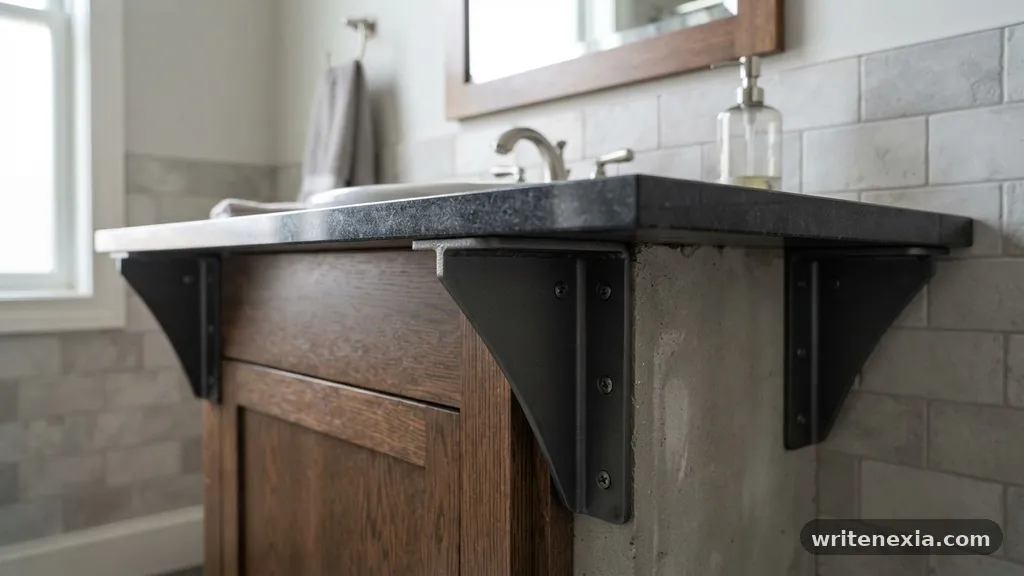
When you evaluate the best Heavy-Duty Steel Brackets for Supporting Granite Vanity Tops, the quality of the steel is just as important as the design. Look for brackets made from 1018 cold-rolled steel or similar high-carbon steel alloys. These materials are specifically chosen for their high yield strength, meaning they can support significant weight without permanently deforming. Cheap, low-grade steel may bend over time, leading to a slight sag that ruins the level surface of your vanity.
The thickness of the metal is the most reliable indicator of performance. A 1/4-inch thick bracket is usually the minimum requirement for a standard vanity depth of 22 to 24 inches.
If your granite has a large overhang exceeding 10 inches, you should upgrade to 3/8-inch or even 1/2-inch thick steel. These dimensions offer enough resistance to keep the stone perfectly flat, even if someone leans heavily against the edge of the vanity.
Correct Spacing and Layout
Proper spacing is the most overlooked factor in granite support, yet it is just as vital as the bracket quality itself. You should generally space your supports no more than 24 to 30 inches apart along the length of the vanity. If you have a long vanity, you must calculate the number of brackets based on the total span of the granite. Placing supports too far apart allows the stone to flex between the connection points, which is the most common cause of stress fractures.
You must also align your brackets with the structural members of your home, such as wall studs or custom support blocking inside the vanity cabinet. Installing a bracket into drywall alone will result in the fastener pulling out under the weight of the stone. Always use heavy-duty lag bolts or structural screws that penetrate at least 2 to 3 inches into the wooden framing behind the wall.
Installation Techniques for Stability
The installation process begins with ensuring your mounting surface is perfectly level before the granite is even placed. If the wall or the cabinet frame is uneven, the granite will sit at an angle, creating uneven pressure points on the steel brackets. Use shims to adjust the height of individual brackets until they form a perfectly level plane across the entire width of the vanity. This step is tedious but necessary to ensure the stone sits flush against every support point.
Once the brackets are level, you must secure them using the correct fasteners. Standard wood screws are rarely strong enough to handle the sheer force of a granite slab.
Use structural lag screws with a large diameter to ensure they bite deeply into the studs. If you are mounting into concrete or masonry walls, use high-quality wedge anchors or sleeve anchors to prevent the bracket from shifting.
Comparing Support Options
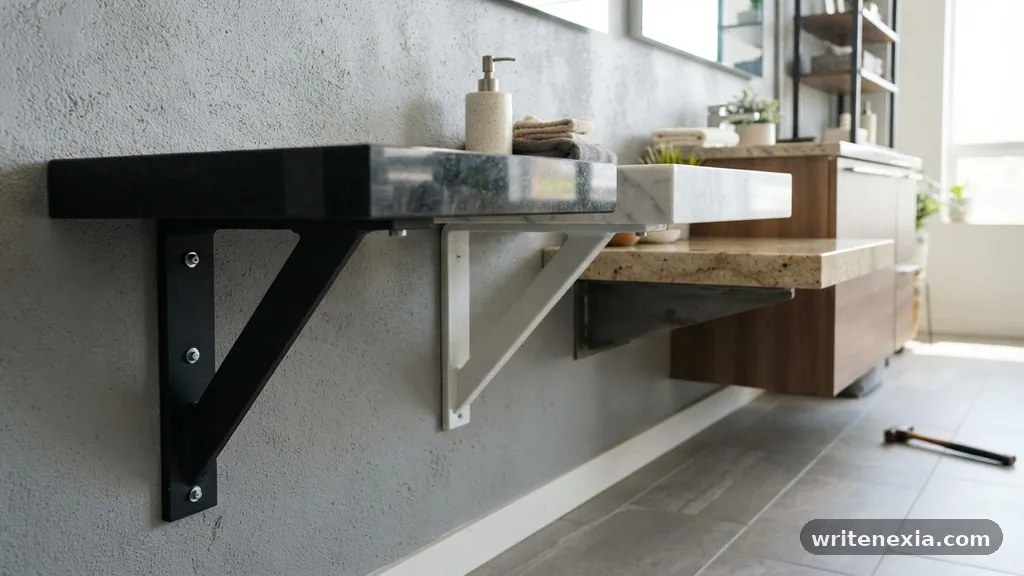
| Support Type | Material | Best Use Case | Load Capacity |
|---|---|---|---|
| Hidden Steel Plate | 1/4″ Steel | Modern floating vanities | High |
| Decorative Corbel | Cast Iron | Traditional or rustic styles | Moderate |
| L-Bracket | 3/8″ Steel | Heavy-duty wall mounting | Very High |
| Cabinet-Mounted Brace | Steel/Wood | Standard vanity tops | Moderate |
Adhesives and Finishing Touches
While steel brackets provide the structural foundation, adhesives play a role in keeping the granite from sliding or shifting. A small bead of high-quality silicone adhesive on the top surface of each bracket creates a bond between the metal and the stone. This prevents the granite from vibrating or moving slightly when items are placed on the surface. Do not use rigid epoxy to glue the stone to the brackets, as the stone needs to expand and contract slightly with temperature changes.
If your brackets are visible, such as in a floating vanity design, consider the finish of the steel. Powder coating is the industry standard for durability, as it resists moisture and prevents rust in bathroom environments.
Black or grey powder-coated finishes typically blend well with modern stone colors. If your brackets are hidden, you can choose raw or primed steel, provided you apply a rust-resistant paint to prevent oxidation over time.
Common Mistakes to Avoid
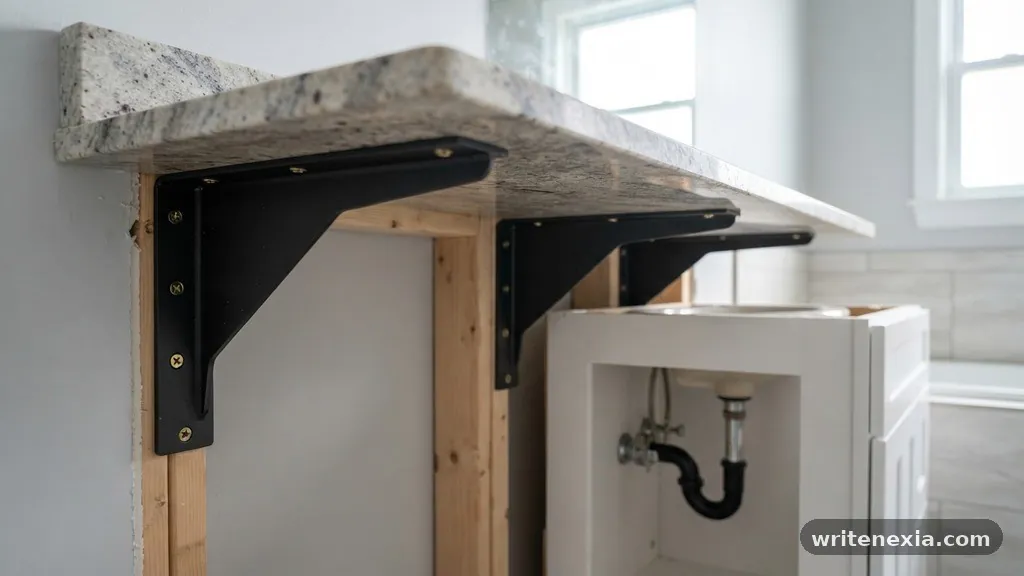
One of the most frequent errors is assuming that the vanity cabinet itself is strong enough to support an extended granite overhang. Most standard vanity cabinets are constructed from thin plywood or particle board that cannot support the weight of granite without reinforcement. If you plan to have a significant overhang, you must install internal steel plates that tie into the wall studs. Relying on the cabinet to hold the weight will eventually lead to the cabinet sides bowing or the granite cracking at the weakest point.
Another mistake is failing to account for the thickness of the granite when calculating the bracket length. A 22-inch deep vanity top requires a bracket that extends almost to the edge of the stone for maximum support.
If your bracket is too short, the outer edge of the granite remains unsupported, creating a fulcrum point that puts immense pressure on the inside edge. Always choose a bracket length that provides support within 2 to 4 inches of the front edge of the stone.
Working with Professional Fabricators
When ordering custom granite, consult with your stone fabricator about your support plan before the vanity top is cut. They have seen countless installations and can advise you on whether your chosen bracket layout is sufficient for the specific type of granite you have selected. Some granite varieties are more brittle than others, and a fabricator may recommend additional support for stone with large natural fissures. They can also help you determine the exact placement for the brackets to ensure they don’t interfere with plumbing or drawers.
If you are buying brackets online, verify the load ratings provided by the manufacturer. Reputable companies will provide technical specifications detailing the weight capacity per pair of brackets.
Do not purchase generic hardware from big-box stores that lacks specific weight ratings. When in doubt, it is always safer to over-engineer your support system by adding an extra bracket rather than risking the integrity of expensive stone.
Maintenance and Long-Term Care
Once installed, check your supports periodically to ensure the fasteners remain tight. Over time, the natural expansion and contraction of the home’s framing can cause screws to loosen slightly. A quick annual inspection allows you to tighten any bolts that have backed out, keeping the entire assembly rigid. If you notice any rust or degradation on the brackets, clean the affected area and apply a touch-up paint to maintain the seal.
Keep an eye on the seam between the stone and the wall or bracket. If you notice the silicone bead pulling away or widening, it may indicate that the vanity is shifting or that a support point has failed.
Addressing these small signs early prevents the granite from developing larger cracks that are impossible to repair invisibly. A well-installed support system should last as long as the granite itself, provided it remains properly secured and protected from moisture.
Frequently Asked Questions
Do granite vanity tops always need support brackets?
Yes, if the granite overhangs the vanity cabinet by more than 6 inches, it requires mechanical support. Granite is a natural stone that is incredibly heavy but brittle, meaning it can snap easily if the unsupported span is too long. While some small vanities seem stable, using heavy-duty steel brackets is the only way to guarantee the stone won’t crack under weight.
How much weight can a single steel support bracket hold?
The weight capacity depends entirely on the thickness of the steel and the mounting method. A high-quality 1/4-inch thick steel bracket properly anchored into a wood stud can typically support between 100 and 200 pounds of distributed weight. Always check the manufacturer’s specific load ratings, as these can vary significantly based on the length and design of the bracket.
Can I mount these brackets directly into drywall?
Never mount support brackets into drywall alone. Drywall lacks the density to hold the heavy-duty fasteners required for granite, and it will fail under the weight of the stone. You must locate the wall studs and use structural lag screws to mount the brackets directly into the house framing for a safe installation.
What is the ideal spacing between brackets?
For most granite vanity tops, you should space your supports between 24 and 30 inches apart. If your vanity is longer, add more brackets to maintain this interval, ensuring no section of the granite is left unsupported for too long. Always align these with the structural studs or internal blocking to ensure the weight is distributed properly.
Is it necessary to use adhesive with the brackets?
Using a small amount of silicone adhesive between the bracket and the granite is recommended. It creates a secure bond that prevents the granite from sliding or vibrating during daily use. However, you should avoid using rigid epoxies or heavy-duty construction adhesives that could prevent the stone from shifting naturally with house temperature changes.
Selecting the Right Hardware for Your Project
Selecting the best Heavy-Duty Steel Brackets for Supporting Granite Vanity Tops is the most effective way to protect your investment and ensure a high-quality finished result. By focusing on steel thickness, proper stud-based installation, and correct spacing, you create a foundation that will support your stone for decades. Never cut corners on the hardware, as the cost of replacing a cracked slab far exceeds the price of premium steel supports. Whether you are aiming for a floating, minimalist look or a classic aesthetic, there is a steel bracket design that fits your needs while providing the structural strength required. Start your project by identifying the load requirements of your specific granite slab, then choose brackets that exceed those specifications to give yourself peace of mind. If you need further assistance with your layout, reach out to your local granite fabricator to confirm your installation plan before you begin the work.