

BLOG
Full-Tile Wall vs 4-Inch Countertop Riser: Which Looks More Modern?
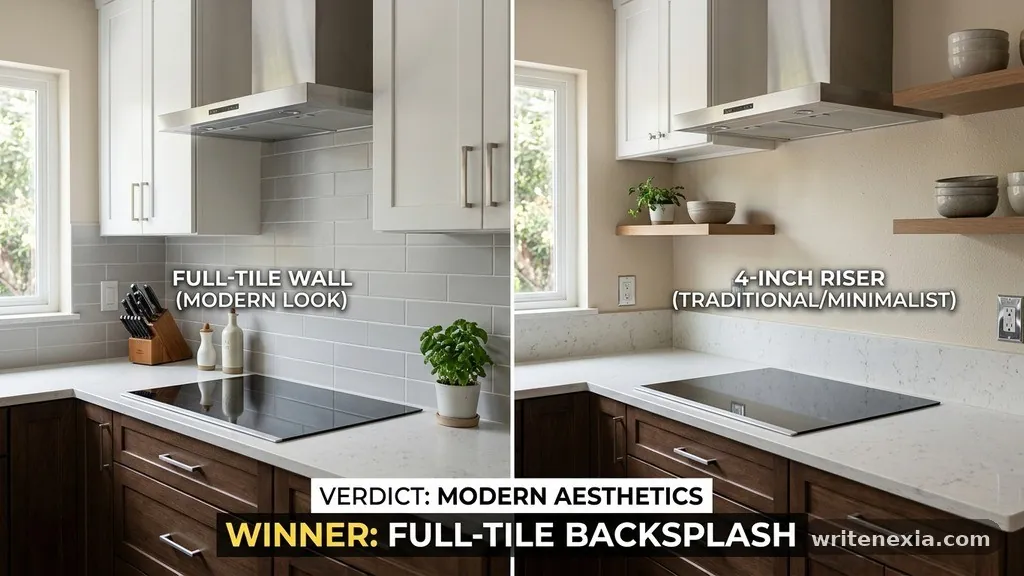
Choosing between a full-tile wall and a 4-inch countertop riser significantly influences the aesthetic trajectory of your kitchen renovation. While the 4-inch riser was once the industry standard for protecting walls from moisture, contemporary design preferences have shifted toward cleaner, more expansive surfaces. Deciding between a full-tile wall vs 4-inch countertop riser involves balancing practical maintenance needs with the desire for a cohesive visual impact.
Understanding how these two approaches interact with your cabinetry and lighting will help you determine which look best suits your home. This article examines the functional and stylistic trade-offs required to make an informed design decision for your space.
The Verdict on Modern Aesthetics

If your primary goal is to achieve a modern kitchen aesthetic, the full-tile wall is the clear winner. The 4-inch riser is widely considered a dated design element, often associated with builder-grade homes from the 1990s and early 2000s. By extending tile from the countertop all the way to the upper cabinets or even to the ceiling, you create a sense of verticality that makes a room feel taller.
This continuous surface treatment eliminates the horizontal break that occurs with a short riser. That break often chops the wall into awkward segments, which can make a compact kitchen feel smaller and more cluttered.
A full-tile installation offers a smooth, intentional appearance that serves as a backdrop for your decor rather than a functional afterthought. Modern interior design emphasizes simplicity and clean lines, both of which are naturally supported by a floor-to-ceiling or counter-to-cabinet tile application.
Understanding the 4-Inch Riser Legacy
The 4-inch backsplash originated as a cost-effective way to protect drywall from water splashes and food splatter. It was frequently cut from the same slab material as the countertop, creating a matching strip that provided a small buffer. While this is undeniably functional for preventing stains on painted walls, it does little to contribute to the overall style of the room.
Many homeowners find that the 4-inch riser creates a “shelf” effect that collects dust and crumbs over time. This narrow ledge requires regular cleaning, and because it is often made of stone or quartz, it can be prone to staining if the sealant wears off.
In the context of current design trends, the 4-inch riser often makes a kitchen feel stuck in a specific era. If you are aiming for a timeless or contemporary look, this specific feature is one of the first elements designers recommend removing.
Visual Impact of Full-Wall Tiling

A full-tile wall transforms your backsplash into a focal point rather than a mere utility. When you run tile from the countertop to the underside of your upper cabinets, you create a uniform plane that draws the eye upward. This technique is particularly effective in small or dark kitchens, where a light-colored or reflective tile can bounce light around the room.
You gain more than just visual height; you gain a sense of luxury. High-end residential projects almost exclusively favor full-height backsplashes because they demonstrate attention to detail and a commitment to quality materials.
Choosing a bold pattern, a unique texture, or even a simple subway tile in a stacked bond pattern can add depth to your wall. This approach allows the kitchen to feel finished and intentional, bridging the gap between the horizontal work surface and the vertical storage units.
Comparing Material and Installation Costs
The financial difference between these two options is substantial, primarily due to the quantity of materials and the labor involved. A 4-inch riser is essentially a byproduct of your countertop installation, often included in the initial quote from your stone fabricator. Because it uses remnants from your slab, the cost is often negligible or bundled into the overall countertop price.
In contrast, a full-tile installation requires purchasing a significantly larger volume of tile, grout, and setting materials. You also have to account for the labor costs associated with professional tile installation, which is a separate trade from stone fabrication.
| Feature | 4-Inch Riser | Full-Tile Wall |
|---|---|---|
| Material Cost | Low (often included) | Moderate to High |
| Installation Complexity | Simple | High (requires precision) |
| Maintenance Needs | Moderate (ledge cleaning) | Low (smooth surface) |
| Visual Appeal | Dated/Functional | Modern/High-End |
Maintenance and Cleaning Considerations
Cleaning is a major factor that homeowners often overlook when deciding between these two options. A 4-inch riser creates a horizontal joint where the stone meets the wall, which is a common area for caulk to crack or peel. You then have a secondary transition point where the wall meets the top of the riser, which can be difficult to wipe down without bumping the wall paint.
A full-tile wall, when installed correctly, creates a seamless surface that is incredibly easy to maintain. High-quality porcelain or ceramic tiles are resistant to moisture, heat, and grease. Because there is no ledge, there is nowhere for dust or food debris to accumulate.
You simply wipe the wall down with a damp cloth, and the surface remains clean and hygienic. For those who cook frequently, the ease of cleaning a full-tile backsplash is a significant long-term benefit.
Design Flexibility and Style Choices

Choosing a full-tile wall opens up a massive array of design possibilities that a 4-inch riser simply cannot accommodate. You are limited to the material of your countertop if you go with a riser, which can feel heavy and monotonous. With a full-tile backsplash, you can introduce different colors, textures, and finishes to contrast with your cabinets and floors.
You can mix and match materials to create a unique personality for your kitchen. For example, consider these popular options for a modern backsplash:
These choices allow you to customize the space to match your personal style, whether you prefer minimalist Scandi design or a bold, industrial aesthetic.
Impact on Resale Value
Real estate trends heavily favor kitchens that look updated and well-maintained. A kitchen featuring a 4-inch riser is often perceived as a sign of an older, unrenovated space. If you are planning to sell your home in the near future, upgrading to a full-tile wall is a high-impact renovation that can increase your home’s marketability.
Buyers are increasingly educated about design trends and look for kitchens that require no immediate updates. A full-height backsplash is viewed as a “completed” project, whereas a 4-inch riser might signal to a buyer that they will need to hire a contractor to tile the wall themselves. While you may not recoup 100% of the cost of the tile work, you are certainly improving the overall value perception of your home.
Integration with Kitchen Hardware
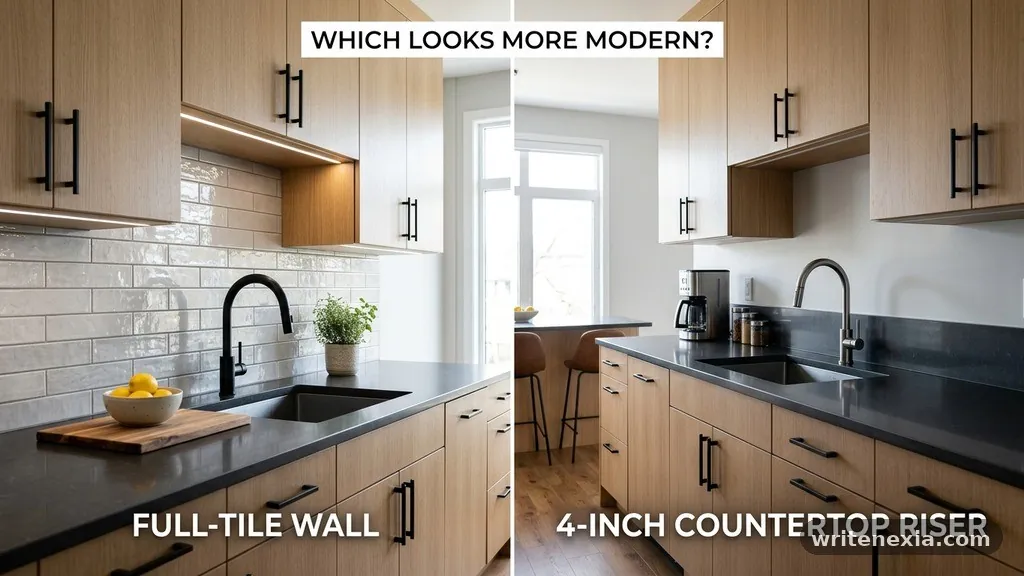
When you opt for a full-tile wall, you must consider how your electrical outlets and light switches will interact with the surface. A 4-inch riser usually keeps these components on the drywall, which is easier for an electrician to manage. With a full-tile installation, your outlets will sit on top of the tile, requiring precise cuts and potentially decorative outlet covers to match the aesthetic.
You should coordinate with your tile setter and electrician early in the process to ensure a clean finish. Using color-matched or flush-mount electrical components can significantly enhance the premium feel of your kitchen.
Don’t overlook these small details, as they are what separate a professional-looking renovation from a DIY project. For more insight on these technical requirements, you can consult the National Kitchen & Bath Association for professional design standards.
Handling Transitions and Corners
One of the biggest challenges in kitchen design is managing the transition between the backsplash and the surrounding walls. A 4-inch riser typically terminates abruptly, which can look unfinished if not handled with care. A full-tile wall allows you to wrap the tile around corners or into window frames for a more cohesive look.
Using edge trim, such as Schluter strips or bullnose tiles, helps protect the edges of your tile and provides a clean transition to the painted wall. These details prevent the tile from looking like it was simply “stuck on” the wall. A professional finish in these areas is crucial to achieving that modern, upscale feel you are aiming for.
Common Mistakes to Avoid
Many homeowners make the mistake of choosing a tile that is too busy for their space. If your countertops have a strong pattern, such as marble or granite with heavy veining, a simple, neutral tile is usually the best choice for a full-height wall. Over-complicating the backsplash can create visual noise that makes the kitchen feel chaotic.
Another common error is failing to account for the thickness of the tile. If you are tiling behind a range, ensure that the depth of the tile does not interfere with the installation of your range hood or other appliances. Always measure the distance between your countertop and cabinets carefully to ensure your chosen tile size fits without requiring awkward, tiny slivers of tile at the top or bottom.
Frequently Asked Questions
Is a 4-inch backsplash considered outdated?
Yes, most designers consider the 4-inch riser to be a dated feature that belongs to older construction styles. While it remains functional, it is rarely chosen in modern, high-end kitchen renovations.
Should the backsplash be lighter or darker than the countertop?
This depends on your goal; a lighter backsplash can make a small kitchen feel more open and airy. A darker backsplash can add drama and contrast, but it requires good task lighting to ensure the workspace remains functional.
Is vertical tile a trend in modern kitchens?
Vertical stacking is a very popular trend in contemporary design. It helps draw the eye upward, making ceilings feel higher and providing a clean, architectural look that feels very current.
Can I tile over an existing 4-inch riser?
It is generally not recommended to tile directly over an existing stone riser. The best practice is to remove the riser, repair the drywall, and then install the new tile directly onto the wall surface for a professional, flush finish.
How do I choose the right grout for a full-tile wall?
Choose a grout color that closely matches your tile to create a seamless, monolithic look, or go with a contrasting color to highlight the pattern of the tile. Ensure you use a high-quality, stain-resistant grout, especially in areas prone to grease splatter.
Conclusion
Deciding between a full-tile wall vs 4-inch countertop riser ultimately comes down to your priorities regarding aesthetics, budget, and maintenance. While the 4-inch riser offers a simple, budget-friendly way to protect your walls, it lacks the visual impact and modern elegance that a full-height backsplash provides. A full-tile wall creates a cohesive, high-end look that is easier to clean and significantly more attractive to potential buyers.
If you are aiming for a kitchen that feels updated and sophisticated, the shift toward full-wall tiling is a worthwhile investment. By carefully selecting your materials and focusing on professional installation, you can create a functional space that stands the test of time. Take the time to look at samples in your own lighting, consider your budget, and choose a design that elevates your daily kitchen experience.
Related Posts

How to Get Hair Dye Stains Out of White Quartz Bathroom Counters
-
Posted by
snighatfatima99@gmail.com

Is Bar Keepers Friend Safe to Use on Quartz Bathroom Vanities?
-
Posted by

Can You Cut a Pre-Cut Vanity Top Down from 37 Inches to 35 Inches?
-
Posted by
Why Is Water Pooling Around the Faucet Base on Your New Vanity Top?
-
Posted by
fsd8do